EN
 AR
 HR
 CS
 NL
 FI
 FR
 DE
 EL
 HI
 IT
 KO
 PT
 RO
 RU
 ES
 TL
 ID
 LV
 LT
 SR
 VI
 ET
 HU
 TH
 AF
 MS
 HY
 AZ
 KA
 BN
 GU
 LO
 MN
 MY
 KK
 MG
 KY
Shell-and-Tube Heat Exchanger Salt-Solution Crystallization Blockage: How to Clean and How to Select the KT-307 Mechanical Unclogging Solution
When salt-solution crystallization blocks the tubes of a shell-and-tube heat exchanger, the cleaning method should be selected based on the composition of the crystalline deposit, tube inner diameter, blockage severity, and heat exchange tube material. For salts that can be re-dissolved, water dissolution or targeted chemical cleaning can be carried out first. For tubes with dense crystals, hard crystalline blocks, or complete blockage, mechanical breaking can be used after confirming that the tube is suitable for mechanical cleaning—using a flexible shaft, drill rod, and specialized cutting tool, followed by appropriate flushing to discharge debris.
The Anhui Kuaitong KT-307 Intelligent Heavy-Duty Pipe Unclogging Machine uses a 5500W motor, supports 0–4000 rpm stepless speed control, and features intelligent torque adjustment, flexible shaft overload protection, and water/air flushing functions. For salt-solution crystallization blockages suitable for mechanical cleaning, corresponding flexible shafts and cutting tools can be configured based on heat exchange tube inner diameter, tube material, and crystal hardness for in-tube drilling, breaking, and unclogging.
It should be emphasized that the KT-307 is a mechanical pipe unclogging device. It is not responsible for determining the chemical composition of salts, nor can it replace chemical dissolution. For salt-solution crystallization projects, the nature of the crystals should first be confirmed before deciding whether mechanical treatment is required.
1. Why Is Ordinary Flushing Not Always Effective for Salt-Solution Crystallization Blockage in Shell-and-Tube Heat Exchangers?
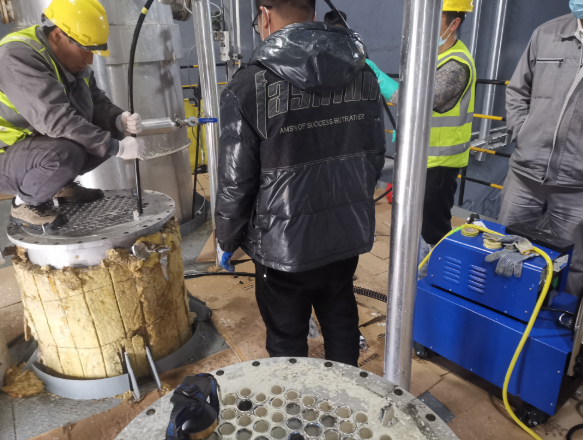
When salt solution flows through heat exchange tubes, changes in temperature and concentration may cause the solution to become supersaturated. Dissolved salts gradually precipitate and form crystals.
As crystals adhere, grow, and accumulate, the following conditions may occur inside the tubes:
A relatively thick crystalline layer forms on the inner tube wall.
Crystals gather locally in the tube, reducing the flow area.
Crystal particles combine with each other to form dense blockages.
Multiple heat exchange tubes experience crystalline deposition simultaneously.
Some tubes become completely blocked, and conventional flushing cannot pass through.
The cause of crystallization must be determined based on salt composition. Salts such as sodium chloride may crystallize due to solution cooling, while some salts such as calcium sulfate may be more likely to form deposits when the temperature rises. Evaporative concentration, mixing of different solutions, and pH changes can also cause crystallization.
Therefore, not all salt-solution crystallization should be treated as ordinary scale, and acid cleaning, alkaline cleaning, or mechanical cleaning cannot be directly selected when the composition is unknown.
2. For Salt-Solution Crystallization Blockage, Should Chemical Cleaning or Mechanical Unclogging Be Selected First?
This depends on the solubility characteristics of the crystalline deposit and the degree of tube blockage.
|
On-Site Condition |
Treatment Method to Evaluate First |
Main Considerations |
|
Crystalline deposit can be dissolved in water |
Water dissolution, circulation flushing |
Allow salts to re-enter solution and be discharged |
|
Crystalline deposit requires a specific medium for dissolution |
Targeted chemical cleaning |
First confirm chemical effectiveness and material compatibility |
|
Crystalline deposit has formed hard blocks |
Evaluate mechanical unclogging feasibility |
Break or strip the blockage with cutting tools |
|
Tube completely blocked, flushing cannot pass |
Evaluate mechanical blockage removal |
First determine blockage location and tube wall load capacity |
|
Crystalline deposit contains multiple salts and impurities |
Combined cleaning plan |
First analyze main components, then treat in stages |
2.1 Why Can't Acid Cleaning Be Used Directly?
Different salts have different solubility characteristics. Acidic cleaning agents are not universal solvents for all salt crystals.
If the cleaning agent does not match the crystalline deposit, problems may include limited cleaning effectiveness, tube corrosion, seal damage, or new precipitation during cleaning.
Before purchasing equipment or developing a construction plan, it is recommended to sample the crystalline deposit, understand the main salt composition, and conduct a small-sample dissolution test.
2.2 When Should Mechanical Unclogging Be Considered?
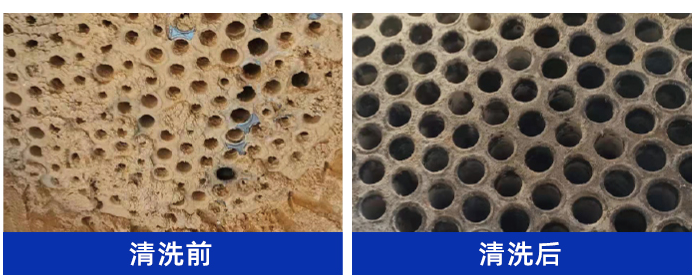
When relatively hard crystalline blocks have formed inside heat exchange tubes and conventional water washing or circulation cleaning cannot loosen, dissolve, or discharge them, mechanical unclogging can be further evaluated.
The characteristic of mechanical unclogging is that power is transmitted into the tube through a flexible shaft or drill rod, and the front-end cutting tool mechanically drills, breaks, and strips the blockage.
However, mechanical cleaning is not the first choice for all crystallization blockages. For salts that can be effectively dissolved, dissolution followed by flushing is usually more targeted. For thin-walled heat exchange tubes and special-material tubes, the risk of mechanical cleaning should be evaluated more cautiously.
3. How Does the KT-307 Handle Hard Crystalline Blockage Inside Shell-and-Tube Heat Exchangers?
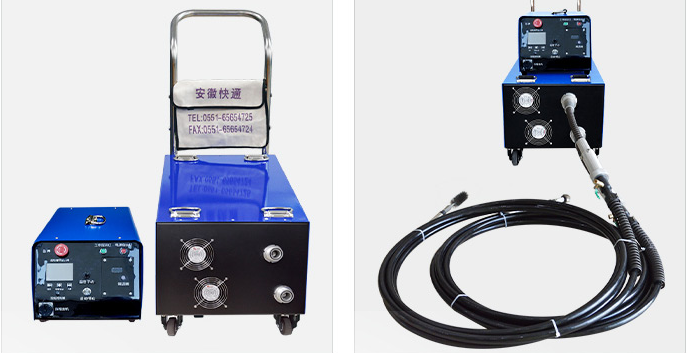
The KT-307 Intelligent Heavy-Duty Pipe Unclogging Machine is mainly used for hard blockage treatment inside industrial pipes. The equipment drives a flexible shaft or drill rod through a motor, transmitting power to a cleaning tool inside the pipe to break and unclog crystalline blocks, hard scale, and other blockages suitable for mechanical treatment.
3.1 5500W Motor Drive for Mechanical Unclogging Power
The KT-307 is equipped with a 5500W motor and drives a front-end cutting tool to rotate through a flexible shaft or drill rod.
When relatively hard and dense crystalline blockages exist inside heat exchange tubes, corresponding alloy steel heavy-duty unclogging cutting tools or descaling cutting tools can be selected based on tube inner diameter and crystal conditions, allowing the cutting tool to act directly on the blockage location.
Unlike methods relying solely on water pressure flushing, this method mainly treats hard blockages through mechanical drilling and breaking.
3.2 Intelligent Torque Adjustment to Reduce Shaft Kinking and Breakage Risk
When a heat exchange tube is completely blocked, the cutting tool may encounter significant resistance during advancement. If the torque on the flexible shaft exceeds its applicable range, kinking, deformation, or damage may occur.
The KT-307 can set the corresponding torque working range based on flexible shaft specifications and is equipped with flexible shaft overload protection.
Operators can select corresponding parameters based on the current flexible shaft model and pipe working conditions, controlling shaft stress while ensuring unclogging power.
3.3 0–4000 rpm Stepless Speed Control for Cleaning Intensity Control
Different tube diameters, crystal hardness, and cutting tool structures require different working parameters.
The KT-307 supports 0–4000 rpm stepless speed control. During operation, the cutting tool can first contact the crystalline blockage at low speed, and then speed can be gradually adjusted based on cutting tool operation status, pipe resistance, and cleaning results.
For thin-walled heat exchange tubes, copper tubes, and other special-material tubes, maximum speed should not be simply used. Cleaning intensity should be controlled based on contact between the cutting tool and tube wall.
3.4 Multiple Flexible Shaft Specifications for Different Tube Diameters and Configurations
The KT-307 is compatible with flexible shaft specifications including 6 mm, 8 mm, 10 mm, 12 mm, 16 mm, 18 mm, 22 mm, and 27 mm. Heavy-duty unclogging shafts, bendable shafts, and other applicable types can be configured based on working conditions.
Different flexible shafts mainly perform different power transmission and pipe passage tasks:
|
Flexible Shaft Type |
Main Application |
Selection Focus |
|
Heavy-duty unclogging shaft |
Suitable for straight tubes and severe blockage treatment |
Tube diameter, blockage severity, and shaft load capacity |
|
Bendable shaft |
Suitable for evaluated bent tube configurations |
Bend radius, number of bends, and shaft flexibility |
|
Steel-belt dry cleaning shaft |
For corresponding dry mechanical cleaning conditions |
Cleaning method and pipe configuration |
|
Other specification shafts |
Configured based on special tube diameters and construction requirements |
Subject to actual technical confirmation |
Note that flexible shaft specifications are not necessarily better when larger. If the shaft diameter is too large, it may not enter small-diameter heat exchange tubes. If the diameter is too small, it may not meet the power transmission requirements of certain blockage conditions.
3.5 Multiple Cutting Tools for Different Crystals and Deposits
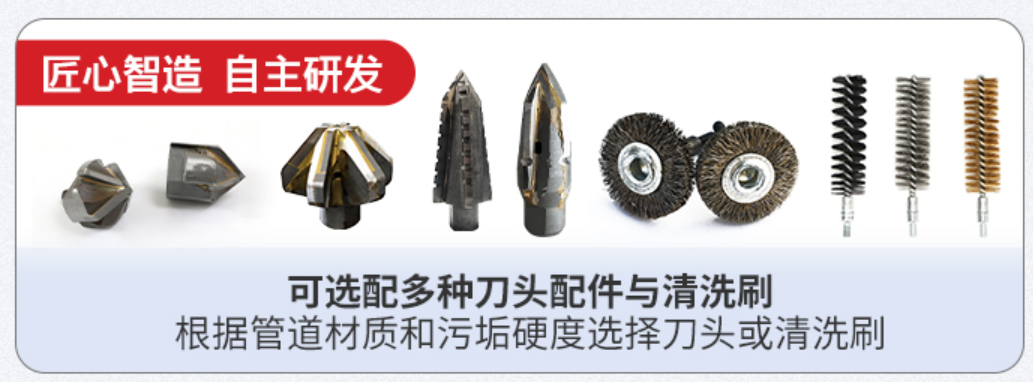
The KT-307 can be equipped with corresponding cleaning accessories based on crystal hardness, tube material, and tube diameter.
|
Cleaning Accessory |
Main Application Direction |
|
Patented stepped (pyramid-type) cutting tool |
Progressive mechanical breaking based on blockage form |
|
Alloy steel heavy-duty unclogging cutting tool |
Suitable for mechanical penetration of corresponding hard blockages |
|
Alloy descaling cutting tool |
For attached deposits suitable for mechanical removal |
|
Three-jaw expansion cutting tool |
Selected based on tube inner diameter and cleaning requirements |
|
Gear-type descaling cutting tool |
For corresponding in-tube mechanical descaling |
|
Sprocket expansion cutting tool |
For suitable in-tube cleaning conditions |
|
Stainless steel drill rod |
Mechanical drilling with corresponding drill bits |
|
Wire descaling brush |
For suitable tube wall brushing |
|
Pipe polishing brush |
For corresponding surface treatment |
The KT-307 alloy steel cutting tools have an optional diameter range of 6.5–50 mm. Non-standard sizes can be confirmed or customized based on actual pipe conditions.
For salt-solution crystallization blockage in heat exchange tubes, cutting tools cannot be selected only by crystal hardness. Heat exchange tube material, wall thickness, and inner diameter must also be considered to avoid damaging the tube wall during mechanical cleaning.
3.6 Water Flushing and Air Flushing to Help Discharge Broken Crystals
The KT-307 supports both water flushing and air flushing modes.
For heat exchange pipes that permit water introduction, a combination of mechanical rotation and water flushing can be used based on site conditions to carry broken and loosened crystal debris out of the tube.
Some configurations support direct water feed at the front end of the flexible shaft, allowing water flow to reach the cleaning location and assist in discharging loosened deposits.
However, the flushing medium should be determined based on the solubility characteristics of the salts and on-site debris discharge conditions. For conditions not suitable for direct water introduction, whether other debris discharge methods can be used should first be confirmed.
4. KT-307 Intelligent Heavy-Duty Pipe Unclogging Machine Technical Parameters
|
Parameter Item |
|
|
Product Type |
Heavy-duty blocked pipe unclogging machine |
|
Rated Voltage |
380V |
|
Motor Power |
5500W |
|
Operating Speed |
0–4000 rpm, stepless adjustment |
|
Applicable Pipe Diameter |
6.35–800 mm* |
|
Power Unit Weight |
120 kg |
|
Power Unit Dimensions |
850 × 530 × 470 mm |
|
Control Cabinet Weight |
19 kg |
|
Control Cabinet Dimensions |
495 × 345 × 275 mm |
|
Quick-Connect Water Hose Length |
20 m |
|
Working Modes |
Water flushing, air flushing |
|
Operation Methods |
Manual operation, remote control operation |
|
Equipment Structure |
Split-type design with power unit and control cabinet |
|
Flexible Shaft Specifications |
6, 8, 10, 12, 16, 18, 22, 27 mm, etc., configured according to working conditions |
|
Cutting Tool Specifications |
Alloy steel cutting tools with optional diameter 6.5–50 mm; special specifications to be confirmed |
-
6.35–800 mm is the product application range under different combinations of flexible shafts, drill rods, and cleaning accessories. It does not mean that a single flexible shaft or a single cutting tool can cover all pipe diameters. Specific configuration must be confirmed based on heat exchange tube inner diameter, tube length, material, and structure.
5. What Information Should Be Provided Before Purchasing the KT-307 for Shell-and-Tube Heat Exchangers?
For equipment selection in salt-solution crystallization blockage projects, providing only a pipe diameter is not sufficient. The following information should be provided before purchase:
|
Selection Information |
Specific Content |
Impact on Equipment Configuration |
|
Heat exchange tube inner diameter |
For example, actual measured pipe inner diameter |
Determines flexible shaft and cutting tool specifications |
|
Single tube length |
Actual heat exchange tube length |
Determines flexible shaft or drill rod length |
|
Pipe configuration |
Straight tube, U-shaped tube, or other structure |
Determines whether a bendable shaft is needed |
|
Bend radius |
Radius at the bent position of U-shaped tubes |
Evaluates flexible shaft passage capability |
|
Pipe material |
Carbon steel, stainless steel, copper alloy, titanium, etc. |
Determines cutting tool material and cleaning method |
|
Wall thickness |
Actual heat exchange tube wall thickness |
Controls mechanical cleaning risk |
|
Crystal composition |
Main salts and other deposits |
Determines cutting tool and flushing method |
|
Blockage severity |
Wall crystallization, localized blockage, or complete blockage |
Determines whether mechanical blockage removal is needed |
|
Site conditions |
Water supply, debris discharge, power supply, and operating space |
Determines construction configuration |
Can the KT-307 Be Used for U-Shaped Heat Exchange Tubes?
This must be determined based on the actual structure. The bend radius, number of bends, tube diameter, flexible shaft diameter, and front-end cutting tool dimensions of U-shaped tubes all affect tool passage capability.
If the bend radius is small or the pipe structure is complex, it should first be confirmed whether the bendable shaft and cleaning accessories can pass through. If necessary, a sample tube can be provided for testing.
How Should Small-Diameter Heat Exchange Tubes Be Configured?
For small-diameter heat exchange tubes, the actual inner diameter and blockage conditions should be confirmed first, then corresponding specifications of flexible shafts, drill rods, and cutting tools should be selected.
The KT-307 includes small-specification flexible shafts and small-diameter drill rod configuration directions, but whether it can enter a specific heat exchange tube must be determined based on cutting tool outer diameter, connection structure, and actual pipe inner diameter.
6. For Salt-Solution Crystallization Blockage Projects, What Working Conditions Is the KT-307 Suitable For?
The following conditions can be prioritized for evaluation:
Relatively hard salt crystal blocks exist inside heat exchange tubes, and ordinary flushing is difficult to remove.
Crystals have formed localized blockage requiring mechanical treatment from inside the pipe.
Some heat exchange tubes are completely blocked and, after sampling and evaluation, are confirmed suitable for mechanical penetration.
Pipe inner diameter, length, and material meet the configuration requirements of flexible shafts, drill rods, and cutting tools.
The site can meet equipment operation, flushing and debris discharge, and safe maintenance conditions.
The following conditions require caution:
Crystal composition has not been confirmed, and suitability for mechanical treatment cannot be determined.
Heat exchange tube wall thickness is relatively thin or the tube material is relatively soft.
Pipe inner diameter is too small for the cutting tool to enter safely.
U-shaped bend radius is too small, and tool passage capability cannot be confirmed.
The pipe has severe corrosion, deformation, or other structural defects.
The site does not have shutdown, isolation, pressure relief, and safe maintenance conditions.
7. Construction Process for Using the KT-307 on Salt-Solution Crystallization Blockage
After confirming that the equipment and cleaning accessories are suitable, construction can be organized according to the following process:
Step 1: Shutdown and safety isolation
Complete heat exchanger shutdown, medium isolation, pressure relief, cooling, and draining according to on-site maintenance procedures. Confirm that the internal equipment environment meets construction requirements.
Step 2: Understand the crystalline deposit
Collect crystal samples, confirm the main salts and other impurities, and determine whether they can be dissolved by water or an appropriate chemical medium.
Step 3: Confirm pipe dimensions and structure
Measure heat exchange tube inner diameter, length, material, and wall thickness, and understand whether U-shaped bends and complex structures exist.
Step 4: Select flexible shaft and cutting tool
Select heavy-duty unclogging shafts, bendable shafts, or corresponding drill rods based on blockage severity, and match alloy steel heavy-duty unclogging cutting tools, alloy descaling cutting tools, and other accessories.
Step 5: Set working parameters
Select the corresponding torque range based on flexible shaft specifications. Start at a lower speed, observe cutting tool and flexible shaft operation status, and then gradually adjust parameters.
Step 6: Mechanical unclogging and debris discharge
Allow the cutting tool to act on the crystalline blockage location and break and strip crystals suitable for mechanical treatment. Select water flushing or air flushing based on site conditions to promptly discharge loosened crystal debris.
Step 7: Check cleaning results
Check pipe patency, residual materials, and tube wall condition according to project requirements. If necessary, combine dissolution cleaning to treat residual soluble crystals.
8. Frequently Asked Questions About KT-307 Equipment Selection
1. Can the KT-307 break all salt-solution crystals directly?
No such guarantee can be made before confirming the working conditions. The equipment can drill and break hard crystalline blockages suitable for mechanical treatment, but actual results depend on crystal hardness, pipe material, inner diameter, cutting tool specifications, and construction parameters.
2. After salt-solution crystallization blockage, should chemical cleaning or mechanical unclogging be performed first?
This should be determined based on crystal composition and blockage conditions. For soluble portions, chemical or water dissolution treatment can be evaluated first. For hard blockages that cannot be effectively dissolved, mechanical unclogging can be evaluated. Complex conditions can use a staged combined plan.
3. Can the KT-307 handle completely blocked heat exchange tubes?
The KT-307 product positioning includes treatment of completely blocked industrial tube bundles. Whether it can be used for a specific heat exchange tube requires confirmation of blockage material, tube diameter, tube material, wall thickness, and tool configuration. It cannot be judged solely by equipment power.
4. What flexible shaft specifications does the KT-307 support?
Flexible shaft specifications include 6, 8, 10, 12, 16, 18, 22, and 27 mm, etc. Specific shaft types and configurations must be confirmed based on tube diameter, tube length, and pipe structure.
5. Can the KT-307 clean U-shaped heat exchange tubes?
Bendable shafts can be evaluated for U-shaped tubes, but whether they can pass depends on bend radius, number of bends, tube diameter, flexible shaft diameter, and front-end cutting tool dimensions. For complex bent tubes, drawings or sample tubes should be provided for confirmation first.
6. Can the equipment use water flushing?
The KT-307 supports water flushing mode, and some configurations support direct water feed at the front end of the flexible shaft. However, for salt-solution crystallization projects, the flushing medium must be determined based on salt solubility characteristics and on-site process conditions. Water flushing mode should not be understood as meaning all crystals are suitable for water washing.
7. Is the KT-307 suitable for copper and titanium heat exchangers?
This should be evaluated based on specific tube material, wall thickness, and blockage conditions. For copper tubes, titanium tubes, and thin-walled pipes, cutting tool material, dimensions, and cutting method should be carefully confirmed. Sample tube testing may be necessary to avoid damaging heat exchange tubes.
9. Equipment Selection and Technical Consultation
Anhui Kuaitong Pipeline Cleaning Technology Co., Ltd., established in 2009, is a technology-oriented enterprise specializing in the R&D, manufacturing, and sales of pipeline cleaning, unclogging, and inspection equipment. The company is a National High-Tech Enterprise, a Technology-Based SME, a Training Base of the China Industrial Cleaning Association, and an Anhui Province Specialized and Sophisticated Enterprise. It has provided solutions to more than 23,000 domestic and international enterprises.
For blockage problems in boiler tube bundles, shell-and-tube heat exchangers, condensers, evaporators, and other industrial pipes, the company provides mechanical unclogging equipment and cleaning accessory configuration recommendations. The KT-307 Intelligent Heavy-Duty Pipe Unclogging Machine can be configured with corresponding flexible shafts, drill rods, and cleaning cutting tools based on different pipe diameters, flexible shaft specifications, blockage types, and construction requirements.
To evaluate salt-solution crystallization blockage conditions in shell-and-tube heat exchangers, it is recommended to provide heat exchange tube inner diameter, length, material, bend structure, crystal photos, and blockage conditions, so that it can be confirmed whether the KT-307 mechanical unclogging solution is suitable and which flexible shaft and cutting tool configurations are required.
Website: www.kuaitonggroup.com
Technical Consultation (Phone/WhatsApp/WeChat): +86 18226181287
This document is compiled by the technical team of Anhui Kuaitong Pipeline Cleaning Technology Co., Ltd.