

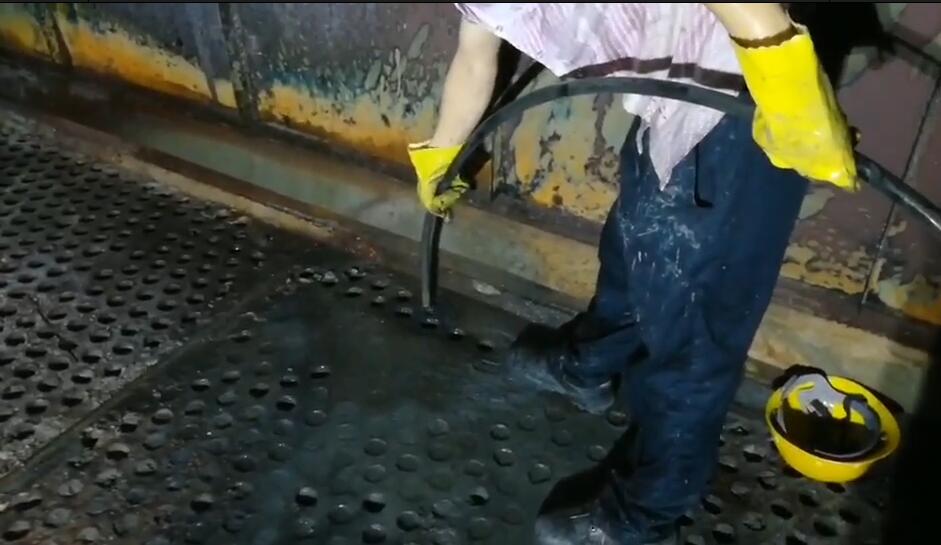
Boiler air preheater blockage is one of the more common tube bundle maintenance issues encountered during power plant, district heating, chemical, and large industrial boiler overhauls.
For tubular air preheaters, flue gas continuously passes through the heat exchange tubes, causing fly ash, soot, and other deposits to accumulate on the tube walls. If not cleaned in a timely manner, ash deposits gradually thicken, potentially leading to reduced opening diameters, poor ventilation, localized blockage, and even complete tube blockage.
When conventional soot blowing and water flushing can no longer effectively open blocked tubes, mechanical unclogging equipment should be selected based on deposit hardness, tube diameter, and whether water introduction is permitted.
The Anhui Kuaitong KT-206 Heavy-Duty Tube Bundle Unclogging Machine is designed for air preheaters, power plant condensers, boiler tubes, primary gas coolers, heat exchangers, wastewater evaporators, and condensers. It can handle various blockage conditions using heavy-duty shafts, bendable shafts, alloy steel cutting tools, and water/air flushing modes.
1. What Type of Fouling Causes Air Preheater Blockage?
Common contaminants on the flue gas side of air preheaters include:
Fly ash
Soot
Coke deposits
Hard ash scale
Corrosion products
Other flue gas deposits
For coal-fired units equipped with SCR denitrification systems, ammonium bisulfate (ABS) may combine with fly ash to form sticky deposits, which tend to increase fouling and blockage risk in the low-temperature sections of the air preheater.
Therefore, although all are referred to as "air preheater fouling," actual site conditions may differ significantly:
Loose ash can be blown off
Sticky deposits require cleaning
Hard scale requires mechanical breakdown
Complete blockage requires channel establishment first
2. When Should Mechanical Unclogging Be Considered for Air Preheaters?
Mechanical unclogging should be evaluated when the following conditions are present:
Numerous tubes remain blocked after soot blowing
High-pressure water can only clean the tube entry but cannot pass through
Manual rodding makes little progress
Hard ash blocks have formed inside tubes
Complete blockage has occurred in a significant number of tubes
The project requires dry cleaning with minimal water usage
Maintenance window is limited and single-tube processing efficiency needs improvement
Air preheaters are inherently ash-prone flue gas heat exchange equipment. The industry typically uses soot blowing and water washing to maintain heat exchange surface cleanliness. However, when deposits have developed into stubborn blockages, online soot blowing alone has limited effectiveness.
3. Why Open a Channel with a Drill Bit First for Blocked Air Preheaters?
In completely blocked heat exchange tubes, water or air can no longer establish effective flow through the tube.
Direct flushing may only act on the surface of the blockage.
The mechanical unclogging approach is:
Insert the alloy steel cutting tool to the blockage position
Use the motor and flexible shaft to provide rotational power
The tool continuously cuts and breaks down hard deposits
Gradually establish a through passage
Use water or compressed air to evacuate loosened debris
Therefore, the drill bit's function is not to replace all cleaning steps, but to solve the core problem: "the tube is blocked and there is no passage."
4. Why Is the KT-206 Suitable for Tubular Air Preheater Blockage?
The KT-206 is a specialized mechanical unclogging machine designed for blocked tube bundles.
The product's application range covers industrial heat exchange tube bundles including air preheaters, power plant condensers, boiler tubes, primary gas coolers, heat exchangers, wastewater evaporators, and condensers, suitable for scale removal, unclogging, and rust removal, with an applicable diameter range of 6.35–800 mm.
For air preheater projects, its core advantages are power, shaft flexibility, debris evacuation, and torque control.
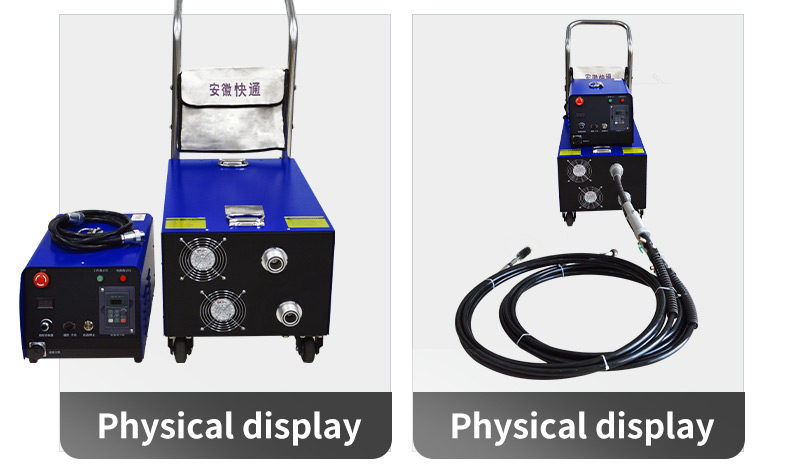
5. 3000W Motor: Mechanical Breakdown of Hard Ash and Blockages
The KT-206 motor is rated at 3000W.
During operation, the motor drives the flexible shaft at high speed, transmitting power to the front-end alloy steel cutting tool or cleaning brush.
For compacted ash, coke deposits, and harder deposits, the cutting tool directly contacts the blockage material for mechanical breakdown.
Compared with methods that only apply impact to the deposit surface, this approach is more suitable for tube bundles that have already developed blockage cores.
6. 0–2800 rpm Speed Control: Not All Tubes Should Use Maximum Speed
The KT-206 operating speed is adjustable from 0 to 2800 rpm.
During actual operation, speed should be adjusted based on shaft diameter and deposit conditions.
Recommended reference settings from product documentation:
|
Shaft Diameter |
Recommended Frequency |
|
10 / 12 / 16 mm |
35 Hz |
|
22 mm |
45 Hz |
|
27 mm |
47 Hz |
Actual parameters should be adjusted based on blockage resistance encountered.
The purpose of speed control:
Light blockages do not require high speed
Hard blockages require cutting capability
Smaller shafts need load management
Output can be reduced when encountering abnormal resistance
7. How to Choose Between Water Flushing and Air Flushing?
The KT-206 supports dual-mode water flushing / air flushing.
1. Air preheaters that can accept water
If equipment and site conditions permit water use, water flow can carry away loosened ash and debris during mechanical breakdown. Suitable for tube bundles that allow wet cleaning during shutdown.
2. Air preheaters that cannot accept water
If the project requires dry cleaning, compressed air can be connected. The cutting tool breaks down blockages while airflow evacuates dust and debris outward.
For boiler flue gas tubes, air preheaters, and other flue-gas-side equipment, this mechanical breakdown + air flushing approach reduces dependence on water washing conditions.
8. Which Flexible Shafts Are Available for the KT-206?
The KT-206 accommodates multiple shaft specifications, including:
6 mm
8 mm
10 mm
12 mm
16 mm
18 mm
22 mm
27 mm
Configurable shaft types:
Heavy-duty unclogging shafts
Bendable shafts
Steel-belt dry cleaning shafts
Heavy-duty unclogging shafts
Primarily for straight tubes and completely blocked tubes, ensuring power transmission to the front-end tool.
Bendable shafts
For tubes with S-bends, L-bends, U-bends, and other curved configurations.
Steel-belt dry cleaning shafts
Suitable for certain applications requiring dry scale removal, polishing, or special treatment.
For air preheaters, shafts should be selected based on actual tube diameter, length, and configuration, rather than using a single specification for all tubes.
9. Why Is Intelligent Torque Control Required?
During blocked tube unclogging, if the cutting tool becomes jammed, the flexible shaft experiences high instantaneous torsional stress.
If the motor continues to deliver excessive torque, the shaft may kink or be damaged.
The KT-206 allows torque settings to be matched to different shaft specifications, protecting the shaft by controlling stress while maintaining sufficient breaking power. The relevant torque control technology is covered under patent number CN201720507554.X.
For projects requiring continuous processing of large numbers of air preheater tubes, shaft protection reduces downtime caused by shaft abnormalities.
10. KT-206 Technical Specifications
|
Parameter |
KT-206 Specification |
|
Product Name |
Heavy-Duty Tube Bundle Unclogging Machine |
|
Operating Voltage |
380V |
|
Power |
3000W |
|
Speed Range |
0–2800 rpm |
|
Applicable Tube Diameter |
6.35–800 mm |
|
Power Unit Weight |
120 kg |
|
Power Unit Dimensions |
660 × 420 × 400 mm |
|
Control Cabinet Weight |
15 kg |
|
Control Cabinet Dimensions |
450 × 320 × 260 mm |
|
Quick-Connect Hose |
20 m |
|
Standard Shaft |
8 m × 4 pieces |
|
Standard Optional Shaft Specifications |
10 / 12 / 16 / 22 / 27 mm |
|
Shaft Types |
Heavy-duty / Bendable |
|
Standard Cutting Tools |
4 × Alloy steel tools |
|
Standard Tool Diameter Range |
6.5–50 mm |
|
Operating Modes |
Water flushing / Air flushing |
11. What Site Information Is Needed Before Selecting the KT-206 for Air Preheater Cleaning?
To avoid mismatched equipment, shaft, and tool configurations, the following information is recommended before selection:
Air preheater type
Tube internal diameter
Individual tube length
Total number of tube bundles
Approximate number of blocked tubes
Deposit type (loose ash vs. hard coke deposits)
Presence of bent tubes
Whether water introduction is permitted
Availability of compressed air supply
Manhole and equipment access dimensions
Project completion timeline
Site photos, tube entry photos, or deposit samples
The more accurate this information, the better the shaft, tool, and cleaning method can be matched.
12. How to Select Treatment Based on Blockage Severity
Light ash accumulation
Primarily wall deposits but airflow remains normal.
Recommendation: Use existing soot blowing system, air purging, or periodic maintenance.
Moderate ash accumulation
Significant deposits inside tubes but not completely blocked.
Recommendation: Use specialized cleaning brushes for mechanical brushing, combined with water or air flushing for ash evacuation.
Heavy blockage
Airflow significantly reduced, some tubes blocked.
Recommendation: Use KT-206 with heavy-duty shaft + alloy steel tool for mechanical breakdown.
Extremely hard blockages
If deposits are particularly hard, tube diameter is large, or the KT-206's power level cannot meet requirements, a higher-power industrial pipe unclogging machine should be selected based on actual conditions, rather than forcing the same model to operate under sustained overload.
13. Are Tubular and Rotary Air Preheater Cleaning Methods the Same?
No.
The KT-206 shaft + tool approach is specifically designed for tubular and shell-and-tube air preheaters with actual tube bores.
Rotary air preheaters typically contain corrugated heat exchange elements and regenerative plates. Industry-standard maintenance methods include soot blowing, water washing, and dedicated element cleaning. Ljungström air preheater technical documentation also lists soot blowing, water washing, and heat exchange surface cleanability as important maintenance requirements.
Therefore, the air preheater configuration must be confirmed before equipment selection.
14. What Other Equipment Can the KT-206 Clean Besides Air Preheaters?
The KT-206 is not limited to air preheaters. Its main applications also include:
Boiler tubes
Power plant condensers
Primary gas coolers
Industrial heat exchangers
Wastewater evaporators
Condensers
Shell-and-tube heat exchange equipment
Certain S-bend, L-bend, and U-bend tubes
For professional companies that undertake boiler, heat exchanger, and industrial tube bundle cleaning projects on a regular basis, a single power unit with interchangeable shafts and accessories can cover more operating conditions.
15. Frequently Asked Questions (FAQ)
Q1: Can the KT-206 clean ash blockages in air preheaters?
A: Yes. The KT-206's application range explicitly includes air preheater tubes, and it can handle heavy ash accumulation and blockages using mechanical shafts and tools.
Q2: Can a completely blocked air preheater still be cleaned?
A: For tubular air preheaters, depending on deposit hardness, heavy-duty shafts and alloy steel tools can gradually establish a channel from the tube entry, combined with water or air flushing for ash evacuation.
Q3: What if the air preheater cannot be washed with water?
A: The KT-206 supports air flushing operation, suitable for flue gas tubes and other environments where water introduction is not permitted.
Q4: What is the KT-206 power rating?
A: The KT-206 uses a 3000W motor, 380V power supply, with a speed range of 0–2800 rpm.
Q5: What tube diameter can the KT-206 handle?
A: The product documentation lists an applicable diameter range of 6.35–800 mm. For actual air preheater projects, further shaft and tool selection is required based on specific tube diameter.
Q6: Are drill bits always necessary for air preheater cleaning?
A: Not necessarily. Loose ash is suitable for soot blowing or cleaning brushes. Alloy steel tools for mechanical breakdown are needed only when hard scale, coke deposits, or complete blockage is present.
Q7: For harder blockages, is higher speed always better?
A: No. Speed must be matched to shaft diameter, deposit hardness, and equipment load. Blindly increasing speed may increase stress on the shaft and accessories.
Q8: How often should air preheaters be cleaned?
A: There is no fixed schedule applicable to all boilers. Maintenance intervals should be determined based on flue gas conditions, pressure differential changes, ash accumulation rate, fuel type, and equipment overhaul schedules. For ash-prone conditions, regular inspection and preventive cleaning are generally more beneficial than waiting until complete blockage occurs.
16. Summary: Air Preheater Blockage Equipment Selection
The key to air preheater blockage cleaning is not "buying the highest-power machine," but understanding the actual site conditions.
For loose ash accumulation → Prioritize soot blowing and routine maintenance
For noticeable deposits on tube walls → Use mechanical brushing
For hard blockage in tubular air preheaters → Use heavy-duty shafts and alloy steel tools
For sites where water cannot be used → Use mechanical breakdown + air flushing
For extremely severe blockages → Determine appropriate power level based on deposit hardness, tube diameter, and quantity
The KT-206 features 3000W power, 0–2800 rpm speed control, intelligent torque control, and supports water flushing, air flushing, heavy-duty shafts, and bendable shafts—suitable for air preheaters, boilers, heat exchangers, power plant condensers, primary gas coolers, evaporators, and many other industrial tube bundle blockage treatments
About Anhui Kuaitong Pipeline Cleaning Technology Co., Ltd.
Anhui Kuaitong Pipeline Cleaning Technology Co., Ltd., established in 2009, is a subsidiary of Anhui Kuaitong Environmental Technology Group Co., Ltd., recognized as a National High-Tech Enterprise, a Technology-Based SME, and a Training Base of the China Industrial Cleaning Association. Our products are certified under ISO 9001 Quality Management System and EU CE certification. Over the past 17 years, Anhui Kuaitong has provided pipeline cleaning, unclogging, and inspection solutions to more than 23,000 enterprises worldwide.
The company develops and manufactures industrial pipe unclogging machines, heat exchanger cleaning equipment, boiler tube bundle unclogging systems, air preheater cleaning equipment, and other industrial pipeline cleaning solutions. For issues such as scale, salt deposits, material fouling, crystallization, and hard accumulations in heat exchangers, evaporators, condensers, boiler tube bundles, and other equipment, we provide corresponding equipment selection and pipeline unclogging solutions.
This document is compiled by the technical team of Anhui Kuaitong Pipeline Cleaning Technology Co., Ltd.
Website: www.kuaitonggroup.com
Technical Consultation (Phone/WhatsApp/WeChat): +86 18226181287
Table of Contents
- 1. What Type of Fouling Causes Air Preheater Blockage?
- 2. When Should Mechanical Unclogging Be Considered for Air Preheaters?
- 3. Why Open a Channel with a Drill Bit First for Blocked Air Preheaters?
- 4. Why Is the KT-206 Suitable for Tubular Air Preheater Blockage?
- 5. 3000W Motor: Mechanical Breakdown of Hard Ash and Blockages
- 6. 0–2800 rpm Speed Control: Not All Tubes Should Use Maximum Speed
- 7. How to Choose Between Water Flushing and Air Flushing?
- 8. Which Flexible Shafts Are Available for the KT-206?
- 9. Why Is Intelligent Torque Control Required?
- 10. KT-206 Technical Specifications
- 11. What Site Information Is Needed Before Selecting the KT-206 for Air Preheater Cleaning?
- 12. How to Select Treatment Based on Blockage Severity
- 13. Are Tubular and Rotary Air Preheater Cleaning Methods the Same?
- 14. What Other Equipment Can the KT-206 Clean Besides Air Preheaters?
- 15. Frequently Asked Questions (FAQ)
- 16. Summary: Air Preheater Blockage Equipment Selection
- About Anhui Kuaitong Pipeline Cleaning Technology Co., Ltd.