
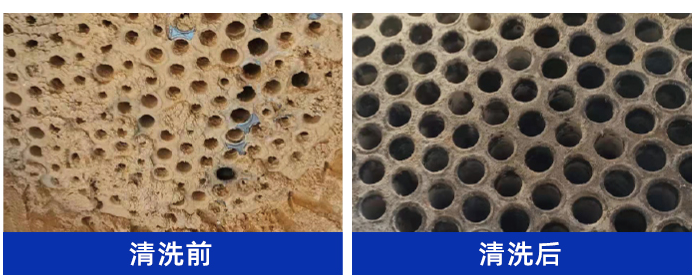
When crystallized salt blockage occurs in evaporator heater tube bundles, the first step is to confirm the salt composition, hardness, tube material, and blockage severity. For deposits that can be dissolved or flushed, chemical cleaning or water cleaning can be evaluated. For tubes that have hardened, severely reduced in diameter, or become completely blocked—and where conventional cleaning methods are ineffective—mechanical breaking using a flexible shaft driving an alloy cutting tool can be evaluated, followed by appropriate debris discharge and subsequent cleaning. The Kuaitong KT-307 Heavy-Duty Blocked Tube Bundle Unclogging Machine features 5500W power, a dual-shaft structure, stepless speed control, and intelligent torque control. It can be used for severe blockage treatment in industrial tube bundles that meet the equipment's applicable conditions.
The key to selection is not simply pursuing power, but determining whether the equipment can adapt to actual tube diameter, tube material, blockage material, and operating conditions.
1. Why Is Crystallized Salt Blockage in Evaporator Heater Tube Bundles Difficult to Clean?
When evaporator heaters concentrate salt-bearing materials, water continuously evaporates, and salts and other non-volatile substances may gradually become enriched. When local supersaturation occurs, or when temperature, concentration, and flow conditions change, salts may precipitate and deposit on the inner walls of heat exchange tubes.
If deposits accumulate over time, crystallization layers of varying degrees may form, potentially causing tube diameter reduction or complete blockage in severe cases.
Common on-site conditions include:
Wall Crystallization: Salts form a deposit layer on the tube wall, and the effective flow area gradually decreases.
Localized Hard Scale: Crystals deposit together with other substances, forming a relatively hard attached layer.
Composite Material Blockage: Salts, impurities, sludge, and other deposits mix, increasing cleaning difficulty.
Complete Blockage: The blockage seals the tube passage, making it difficult for water flow and conventional cleaning tools to enter.
Note: Different types of crystallized salts may have different solubility characteristics and mechanical strength. The decision to use a particular chemical agent or cutting tool cannot be made solely based on whether the deposit appears white, gray, or as a hard block.
2. For Crystallized Salt Blockage in Tube Bundles, Should Chemical Cleaning or Mechanical Unclogging Be Considered First?
This depends on the blockage characteristics and whether the tube can still allow flow.
|
On-Site Condition |
Treatment Direction to Evaluate |
Issues to Note |
|
Light, soluble deposits |
Compatible chemical cleaning |
First confirm salt composition and compatibility of agent with tube material |
|
Loose, easily discharged deposits |
Water cleaning or appropriate flushing |
Confirm drainage and debris discharge conditions |
|
Attached scale layer on tube wall, sufficient space remaining |
Mechanical brushing |
Brush head specifications should match tube diameter and scale hardness |
|
Hard crystals difficult to remove by conventional cleaning |
Evaluate mechanical breaking |
Verify tube wall condition, cutting tool specifications, and advancement method |
|
Severe tube diameter reduction or complete blockage |
Evaluate mechanical unclogging and subsequent cleaning |
Consider blockage removal, debris discharge, and tube wall protection |
For completely blocked tubes, chemical cleaning may face the problem that the agent cannot effectively enter the blockage core. For deposits that can be dissolved by appropriate chemical agents, it is also unnecessary to always use mechanical drilling.
Therefore, the correct selection sequence should be: first determine the blockage material, then determine the flow condition, and finally decide which treatment method to use.
3. What Is the KT-307, and What Type of Blockage Problems Is It Suitable For?
The KT-307 is a Kuaitong heavy-duty blocked tube bundle unclogging machine, primarily designed for severe blockage, hard deposits, and some completely blocked conditions in industrial tube bundles.
The equipment's main configurations and functions include:
5500W power configuration
Dual-shaft structure
0–4000 rpm stepless speed control
Manual and wireless remote control configurations
Intelligent torque control
Flexible shaft adaptive protection functions
Alloy steel cutting tools and matching flexible shafts
Dry mechanical unclogging or water-assisted cleaning based on working conditions
The applicable tube diameter range is 6.35–800 mm, but this does not mean the same set of shafts and cutting tools can cover all diameters, nor does it mean all tube materials, crystallized salts, and blockage lengths are applicable. Specific configuration and working capability need to be verified based on equipment version and site conditions.
For crystallized salt blockage in evaporator heater tube bundles, the KT-307's application focus is: when the blockage has formed an obvious physical obstruction and conventional water cleaning or brushing cannot effectively handle it, evaluate whether mechanical tools can directly act on the blockage.
4. How Does the KT-307 Handle Hardened Crystallized Salt Blockage?
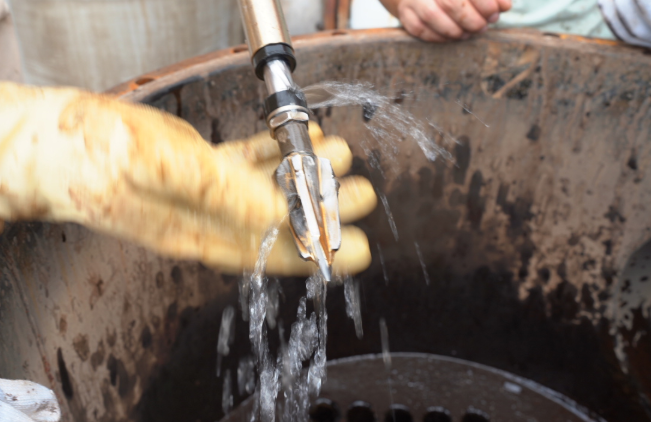
The basic principle of mechanical unclogging is to transmit power from the power unit through a flexible shaft to the in-tube tool end, then use a matching cutting tool to cut, drill, or break the blockage.
For evaporator heater tube bundles, actual operations can follow this approach:
Step 1: Confirm blockage location and tube parameters
First confirm tube inner diameter, length, material, blockage location, and whether bent structures exist. If the tube wall has corrosion, thinning, or deformation, evaluate whether mechanical tools are suitable for entry.
Step 2: Select matching shaft and cutting tool
Cutting tool size must match the tube inner diameter and blockage conditions. An oversized tool may increase jamming and tube wall damage risk; an undersized tool may reduce treatment efficiency.
Step 3: Gradually act on the blockage
Transmit rotational power through the flexible shaft to the in-tube working end to progressively break or cut the blockage. When abnormal resistance is encountered, stop and inspect to confirm the blockage condition and whether the cutting tool and shaft match. Do not attempt to solve the problem solely by increasing speed or forcing advancement.
Step 4: Remove broken debris
After the blockage is broken, debris must be discharged using methods suitable for site conditions. Depending on process and tube conditions, water-assisted cleaning or other removal methods can be evaluated.
Step 5: Check flow and tube condition
After unclogging is completed, check whether the tube has restored flow, and inspect residual deposits, tube wall condition, and equipment integrity according to maintenance requirements.
Mechanical unclogging does not automatically equal thorough descaling. For tubes with remaining attached layers, subsequent cleaning may still be required.
5. What Role Do the KT-307's 5500W Power and Dual-Shaft Structure Play?
5.1 5500W Power Configuration
The KT-307 uses 5500W power, primarily designed for severe blockage conditions in industrial tube bundles. During mechanical unclogging, power must be transmitted through the flexible shaft to the in-tube cutting tool, so shaft specifications, transmission load, and cutting tool matching must also be considered.
Higher power does not mean any tube can be forcibly operated on. For thin-walled, corroded, or damaged heat exchange tubes, careful evaluation is essential.
5.2 Dual-Shaft Structure
The dual-shaft structure facilitates selecting corresponding shafts and tool configurations based on construction tasks. Different tubes may have different inner diameters, blockage severity, and operating requirements, so configuration should be based on actual tube conditions.
The dual-shaft structure does not mean both shafts must be used simultaneously in all conditions. Specific operation should follow the equipment manual and construction requirements.
5.3 0–4000 rpm Stepless Speed Control
Stepless speed control allows operators to adjust speed based on tube diameter, cutting tool type, blockage hardness, and working resistance.
For hard crystals, operating parameters should be adjusted gradually. Blindly using maximum speed may not improve treatment effectiveness and may increase the risk of tool overload and tube wall damage.
5.4 Intelligent Torque Control and Flexible Shaft Protection
After crystallized salt forms a hard blockage, the cutting tool may encounter significant advancement resistance. Torque control and flexible shaft protection functions help manage working load and reduce the risk of shaft overload caused by unreasonable operation.
These functions are auxiliary protective measures and cannot replace correct tool selection, tube inspection, and standardized operation.
5.5 Dry Unclogging and Water-Assisted Cleaning
For blockages suitable for mechanical treatment, mechanical methods can be used to progressively break them down. If the site permits water use and drainage, debris discharge, and process conditions meet requirements, water-assisted cleaning can be evaluated.
Specific selection should consider the solubility characteristics of the salts, equipment structure, debris discharge path, and subsequent waste liquid treatment requirements.
6. What Conditions Need to Be Verified Before Selecting the KT-307 for Evaporator Heater Tube Bundles?
Before equipment procurement, the following information should be verified:
1. Tube inner diameter
Provide the actual inner diameter, not just the equipment's nominal diameter. Inner diameter directly affects shaft, cutting tool, and other tool selection.
2. Tube length
Tube length affects shaft configuration, tool advancement, and debris discharge method. Long tubes cannot be judged as suitable solely based on the power unit's applicable diameter range.
3. Tube material and wall condition
The tube material type should be specified, and corrosion, wear, deformation, and wall thickness conditions should be understood as much as possible. For tubes with obvious damage, risk assessment should be performed first.
4. Blockage characteristics
Describe the type, hardness, and whether other materials are mixed in the crystallized salt, and whether it can be dissolved by appropriate chemical agents. Where conditions permit, deposit samples or site photos can be provided to assist judgment.
5. Blockage severity
Distinguish between light crystallization, obvious diameter reduction, severe hard blockage, and complete blockage. Different blockage levels may require different tools and operating plans.
6. Equipment version and configuration
Confirm the actual KT-307 version, power parameters, shafts, cutting tools, power supply conditions, and control methods to be purchased. For power requirements such as 380V/50Hz, on-site power supply conditions should be verified in advance.
Only when the above conditions match the equipment's capabilities can the suitability of the KT-307 for the project be more accurately evaluated.
7. Why Can't Equipment Selection for Evaporator Crystallized Salt Blockage Be Based Only on Power?
Different evaporators may vary greatly in tube inner diameter, length, material, and structure. Even if two machines have the same power, actual working capability is affected by tool specifications, transmission method, operating parameters, and operating method.
For example:
For light deposits in tubes that still allow flow, compatible chemical cleaning or mechanical brushing may be prioritized.
For loose materials that can be carried away by water flow, water cleaning can be evaluated.
For hard crystals, severe diameter reduction, or completely blocked tubes, mechanical breaking and unclogging can be evaluated.
For bent structures, thin walls, or corroded tubes, particular attention should be paid to tool passage capability and tube wall protection.
Therefore, the focus of KT-307 selection is to determine whether its heavy-duty mechanical unclogging capability matches the project's actual blockage conditions, rather than simply comparing power levels.
8. Which Industrial Tube Bundle Equipment Is the KT-307 Suitable For?
The KT-307's application direction includes industrial evaporators, heat exchangers, condensers, surface condensers, boiler tube bundles, air preheaters, and similar equipment that meet the equipment's applicable conditions.
These devices may experience crystallized salt, hard deposits, material fouling, or other blockage problems, but different equipment varies significantly in structure, tube material, and process media.
For evaporator heater projects, it is particularly necessary to clarify which type of heat exchange structure the equipment belongs to, whether the tubes are straight or bent, what the tube diameter and length are, and whether the blockage has hardened. Only after completing these verifications can the required KT-307 shafts, cutting tools, and operating method be further determined.
9. How to Reduce the Risk of Re-Blockage After Evaporator Heater Tube Bundle Unclogging?
Mechanical unclogging primarily solves blockages that have already occurred and cannot alone eliminate all causes of crystallization.
To reduce the risk of re-blockage, maintenance should be carried out in the following areas:
Record blockage location, number of blocked tubes, and deposit characteristics at each shutdown.
Monitor key parameters such as concentration, temperature, and flow rate in conjunction with process conditions.
Establish a regular inspection mechanism for tube sections prone to crystallization.
When early diameter reduction or localized deposition is detected, promptly analyze the cause and arrange treatment.
Select cleaning methods based on salt composition and equipment material to avoid inappropriate chemical cleaning.
After unclogging, check flow conditions and evaluate whether further descaling is needed according to equipment maintenance procedures.
If crystallization problems recur, process and equipment personnel should jointly analyze material composition, operating conditions, and deposition mechanisms, and adjust operating or maintenance plans as necessary.
10. Frequently Asked Questions (FAQ)
1. Can the KT-307 handle completely blocked evaporator heater tube bundles with crystallized salt?
If it is a hard blockage or severe physical blockage in industrial tube bundles, the KT-307 can be a candidate for mechanical unclogging. Specific suitability requires verification of tube diameter, length, material, blockage characteristics, and site conditions.
2. Does crystallized salt blockage always require a mechanical drill bit?
Not necessarily. For soluble deposits, compatible chemical cleaning can be evaluated. For loose materials, water cleaning can be considered. Mechanical breaking is mainly suitable for hard blockages or severe physical obstructions that conventional cleaning methods cannot handle.
3. What is the applicable tube diameter of the KT-307?
The applicable tube diameter range is 6.35–800 mm. The actual usable range still depends on specific shaft and cutting tool configuration and tube structure. This range should not be understood as all tools being applicable to all tube diameters.
4. Can the KT-307 use water during unclogging?
Depending on specific configuration and site conditions, water-assisted cleaning can be evaluated. Water supply, drainage, debris discharge, tube material, and process safety requirements must be confirmed in advance, and operation should follow the equipment manual.
5. Will using the KT-307 damage heat exchange tubes?
It cannot be guaranteed that the tube will not be damaged under any conditions. Tube material, wall thickness, corrosion condition, cutting tool specifications, and operating parameters all affect risk. Tube wall condition should be inspected before operation, tools matched, and standardized operation followed.
6. What information should be provided before purchasing the KT-307?
It is recommended to provide tube diameter, tube length, tube material, number of blocked tubes, blockage severity, crystallized salt or deposit information, site photos, and power supply conditions to evaluate equipment version and tool configuration.
7. Can the KT-307 solve all evaporator crystallization problems?
No. The KT-307 is primarily used for mechanical unclogging of industrial tube bundles that meet applicable conditions. It cannot replace all chemical cleaning, process optimization, and equipment maintenance, nor can it guarantee that all blockages can be restored to flow.
Company Introduction and Technical Consultation
Anhui Kuaitong Pipeline Cleaning Technology Co., Ltd., established in 2009, is a technology-oriented enterprise specializing in the R&D, manufacturing, and sales of pipeline cleaning, unclogging, and inspection equipment. The company is a National High-Tech Enterprise, a Technology-Based SME, a Training Base of the China Industrial Cleaning Association, and an Anhui Province Specialized and Sophisticated Enterprise. It has provided solutions to more than 23,000 domestic and international enterprises.
For crystallized salt blockage problems in industrial evaporators, evaporator heaters, heat exchangers, and other tube bundle equipment, suitable unclogging equipment and tool configurations can be evaluated based on tube bundle dimensions, blockage characteristics, tube material, and site conditions. The KT-307 Heavy-Duty Blocked Tube Bundle Unclogging Machine is primarily designed for severe blockage conditions in industrial tube bundles. Specific application requires selection based on actual conditions.
Website: www.kuaitonggroup.com
Technical Consultation (Phone/WhatsApp/WeChat): +86 18226181287
This document is compiled by the technical team of Anhui Kuaitong Pipeline Cleaning Technology Co., Ltd.
Table of Contents
- 1. Why Is Crystallized Salt Blockage in Evaporator Heater Tube Bundles Difficult to Clean?
- 2. For Crystallized Salt Blockage in Tube Bundles, Should Chemical Cleaning or Mechanical Unclogging Be Considered First?
- 3. What Is the KT-307, and What Type of Blockage Problems Is It Suitable For?
- 4. How Does the KT-307 Handle Hardened Crystallized Salt Blockage?
- 5. What Role Do the KT-307's 5500W Power and Dual-Shaft Structure Play?
- 6. What Conditions Need to Be Verified Before Selecting the KT-307 for Evaporator Heater Tube Bundles?
- 7. Why Can't Equipment Selection for Evaporator Crystallized Salt Blockage Be Based Only on Power?
- 8. Which Industrial Tube Bundle Equipment Is the KT-307 Suitable For?
- 9. How to Reduce the Risk of Re-Blockage After Evaporator Heater Tube Bundle Unclogging?
- 10. Frequently Asked Questions (FAQ)
- Company Introduction and Technical Consultation