

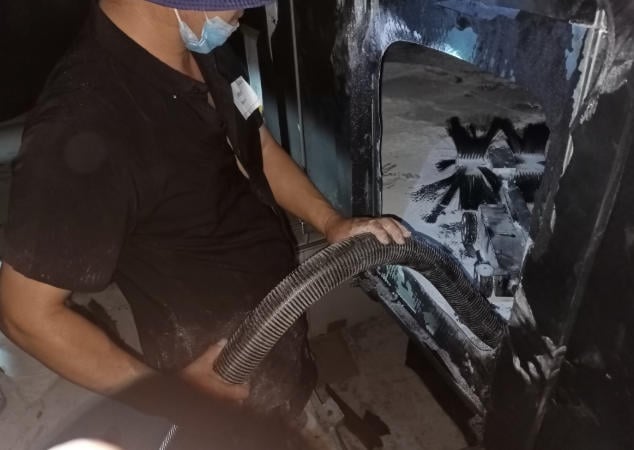
If you need to clean 150–350 mm small-diameter or flat ducts, the KT-956-D Duct Cleaning Robot should be prioritized. If you need to clean 250–800 mm central air conditioning main ducts, the KT-976 Duct Cleaning Robot should be prioritized. Both machines use mechanical brush cleaning combined with vacuuming and are equipped with video observation systems. However, they differ in robot applicable space, camera configuration, travel capability, and equipment positioning. For ducts in the 250–350 mm overlapping range, selection should be based on actual clear width, clear height, access openings, and internal obstacles.
1. KT-956-D vs KT-976 Product Parameter Comparison
When purchasing a duct cleaning robot, it is recommended to first clarify the applicable duct dimensions, then compare the camera system, travel capability, and cleaning method. The main parameters and product positioning of the KT-956-D and KT-976 are as follows:
|
Parameter Item |
KT-956-D |
KT-976 |
|
Product Type |
Small-diameter duct cleaning robot |
Central air conditioning main duct cleaning robot |
|
Applicable Duct Size |
150–350 mm |
250–800 mm |
|
Power Supply Voltage |
220V/50Hz |
220V |
|
Equipment Power |
2600W |
2800W |
|
Camera |
3-megapixel dual cameras |
1080P front and rear dual cameras |
|
Display System |
10.1-inch display |
10.1-inch display |
|
Brushing Method |
Mechanical rotating brush |
Mechanical brushing |
|
Brush Head Speed |
Approx. 148 rpm |
Approx. 400 rpm (subject to corresponding configuration documentation) |
|
Travel Speed |
Approx. 3.3 m/min |
Approx. 0.3 m/s |
|
Maximum Climbing Capability |
Approx. 30° |
Approx. 45° |
|
Obstacle Clearance Capability |
Approx. 70 mm |
To be confirmed based on specific version and site structure |
|
Cleaning Method |
Brushing combined with vacuuming |
Simultaneous brushing and vacuuming |
Note: For the KT-956-D, the specific model and configuration should be verified at the time of purchase. The KT-976 has different structural versions, and weight, dimensions, and some configurations may vary. Version-related parameters in the table above should be subject to the final quotation and technical agreement. The applicable dimensions marked on the equipment do not mean all duct structures can be passed through. Actual selection also requires verification of internal clear dimensions and obstacles.
2. KT-956-D Duct Cleaning Robot: Small-Diameter and Flat Duct Cleaning
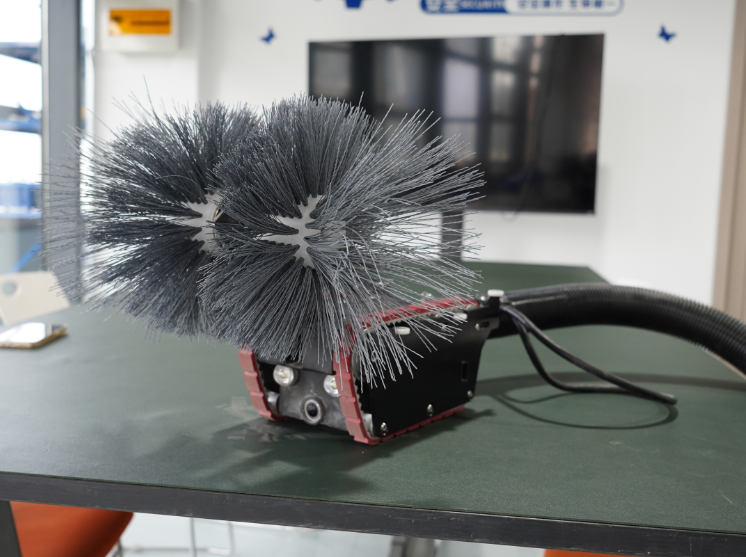
The KT-956-D is a crawler-type robot designed for small-diameter duct cleaning. Its applicable duct size is 150–350 mm, and the duct width must be approximately 190 mm or more. The product is mainly used for ventilation duct cleaning in certain metro, high-speed railway, and other space-constrained applications.
2.1 Crawler-Type Robot Structure
The equipment uses a crawler-type travel structure and is remotely controlled to move inside the duct. For narrow ducts, the robot's dimensions and crawler travel capability are key factors affecting applicability.
2.2 Dual-Camera Video Observation
The equipment is equipped with two 3-megapixel cameras, a lighting system, and a 10.1-inch display. Operators can observe the robot's internal work画面 from outside the duct, assisting in determining robot position and the cleaning process.
2.3 Mechanical Rotating Brushing
The KT-956-D uses a mechanical rotating brush to clean dust attached to the inner duct walls. The brush head speed is approximately 148 rpm, and a vacuum system collects dust generated during cleaning.
2.4 Main Technical Parameters
|
Parameter |
KT-956-D |
|
Applicable Duct Size |
150–350 mm |
|
Duct Width Requirement |
≥190 mm |
|
Power Supply |
220V/50Hz |
|
Power |
2600W |
|
Vacuum Capacity |
20 L |
|
Robot Weight |
Approx. 6.2 kg |
|
Control Cabinet Weight |
Approx. 44.8 kg |
|
Travel Speed |
Approx. 3.3 m/min |
|
Brush Head Speed |
Approx. 148 rpm |
|
Camera |
3 megapixels × 2 |
|
Maximum Climbing Capability |
Approx. 30° |
|
Obstacle Clearance Capability |
Approx. 70 mm |
|
Display |
10.1-inch |
2.5 Typical Applications
Small-diameter ducts in metro ventilation systems
Flat ducts in high-speed railway and rail transit systems
Other small ventilation ducts meeting equipment dimensions and passage conditions
The key selection points for the KT-956-D are the duct's minimum clear height, actual width, access opening dimensions, and internal obstacles. For particularly flat ducts with limited height, it is recommended to provide cross-sectional dimensions and site photos first to confirm whether the robot can enter and pass through.
3. KT-976 Duct Cleaning Robot: Central Air Conditioning Main Duct Cleaning
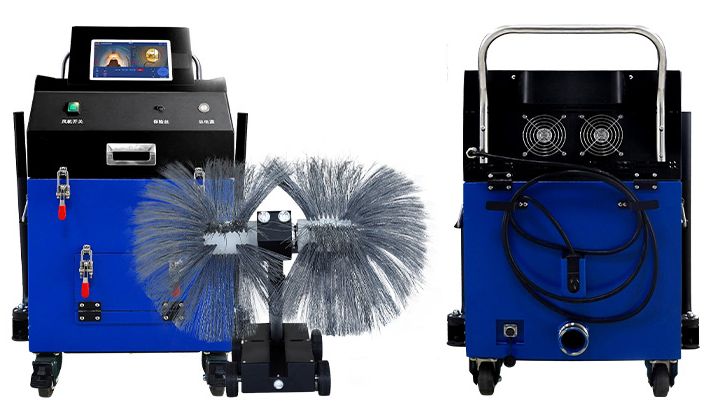
The KT-976 is primarily used for central air conditioning main duct cleaning, with an applicable duct size of 250–800 mm. The equipment uses a combination of robotic mechanical brushing and vacuuming and can be used for rectangular ducts and other suitable ducts that meet robot passage conditions.
3.1 Wider Application Range
The KT-976 is applicable to duct sizes of 250–800 mm and is mainly designed for central air conditioning main ducts and medium-to-large ventilation ducts. Compared with small-diameter duct equipment, its product positioning is more oriented toward robotic cleaning in larger spaces.
3.2 Front and Rear Dual Cameras
The equipment is equipped with 1080P front and rear dual cameras. Operators can observe the robot's forward direction and rear working conditions through the display, helping them understand the internal duct environment.
3.3 Simultaneous Mechanical Brushing and Vacuuming
The KT-976 uses a mechanical brush to clean the inner duct walls while a vacuum system collects dust. During cleaning, the equipment's working status can be observed, and robot travel and cleaning operations can be adjusted based on actual duct conditions.
3.4 Main Technical Parameters
|
Parameter |
KT-976 |
|
Applicable Duct Size |
250–800 mm |
|
Power Supply |
220V |
|
Power |
2800W |
|
Brush Head Speed |
Approx. 400 rpm (verify corresponding configuration) |
|
Robot Travel Speed |
Approx. 0.3 m/s |
|
Maximum Climbing Capability |
Approx. 45° |
|
Camera |
1080P front and rear dual cameras |
|
Display |
10.1-inch |
|
Cleaning Method |
Simultaneous mechanical brushing and vacuuming |
|
Working Distance |
15 m, subject to equipment configuration |
Note: The KT-976 has different structural versions, and some versions differ in body structure, weight, and accessories. The selected version should be confirmed at the time of purchase. It is not recommended to mix weight and dimensions from different versions as unified parameters.
3.5 Typical Applications
Central air conditioning main ducts in commercial buildings
Ventilation systems in office buildings and public buildings
Central air conditioning ducts in hotels, shopping malls, hospitals, and similar locations
Other medium-to-large ducts whose dimensions and structures meet equipment passage conditions
4. What Are the Differences in Cleaning Methods Between the Two Machines?
Both the KT-956-D and KT-976 use robots that enter the duct for mechanical brushing and work with a vacuum system to collect dust. The main difference is not that one can clean and the other cannot, but that the robots are designed for different duct spaces and corresponding structures and configurations.
KT-956-D: Emphasizes miniaturization and adaptability to narrow spaces, suitable for small-diameter and flat ducts that meet dimension requirements.
KT-976: Focuses more on central air conditioning main ducts and larger ducts, suitable for pipes the robot can enter and travel through normally.
The video systems on both machines are mainly used to observe the work process and record footage. They should not be directly understood as automated cleaning quality inspection or professional duct inspection systems.
5. How to Determine the Model for the 250–350 mm Overlapping Range?
The KT-956-D's applicable range is 150–350 mm, and the KT-976's applicable range is 250–800 mm. Therefore, 250–350 mm is the overlapping range between the two machines.
If only duct diameter or nominal size is considered, differences in actual internal space can easily be overlooked. It is recommended to confirm in the following order:
Step 1: Measure the duct's internal clear width and clear height.
For rectangular ducts, provide width and height separately. For flat ducts, especially confirm the minimum clear height.
Step 2: Measure the access opening.
Confirm whether the equipment can enter through the access opening, including entry direction and equipment installation space.
Step 3: Confirm internal structure.
Provide information on bends, transitions, dampers, reinforcing ribs, and other obstacles.
Step 4: Clarify cleaning areas.
If the project includes both small-diameter branch ducts and larger main ducts, count the dimensions separately. Do not purchase equipment based on only one area.
Step 5: Verify the equipment version.
Confirm robot dimensions, brush head configuration, camera system, vacuum system, and supporting accessories to avoid mixing parameters from different versions.
6. Which Customers Are Suited to the KT-956-D and KT-976?
|
Customer and Project Requirement |
Recommended Model to Evaluate |
Reason for Selection |
|
Metro ventilation system maintenance units |
KT-956-D |
Better suited to small-diameter ducts meeting dimension requirements |
|
High-speed railway and rail transit construction service providers |
KT-956-D |
Flat duct cleaning requirements can be prioritized |
|
Central air conditioning cleaning service companies |
KT-976 |
Suitable for medium-to-large main duct cleaning requirements |
|
Facility maintenance departments of shopping malls, hospitals, and hotels |
KT-976 |
Can be used for central air conditioning main ducts meeting passage conditions |
|
Cleaning companies undertaking both large and small duct projects |
Evaluate both separately |
Configure equipment based on project duct dimensions and structures |
If the purchaser mainly undertakes a single type of duct cleaning business, the corresponding equipment can be selected based on the main project dimensions. If comprehensive projects are frequently undertaken, it is recommended to first analyze common duct specifications, then decide whether to configure both models.
7. What Should Be Confirmed with the Manufacturer Before Purchasing the KT-956-D or KT-976?
To avoid situations where the equipment cannot enter, cannot turn, or cannot operate normally after arrival, it is recommended to provide the manufacturer with the following before purchase:
Duct internal width, height, or diameter
Duct cross-section drawings or site photos
Access opening width and height
Number of bends, bend angles, and duct transition conditions
Internal supports, dampers, and obstacles
Length of each cleaning section
Requirements for video recording, vacuuming, and supporting accessories
For ducts of special dimensions, technical communication and adaptability assessment can be conducted first, then the specific model and configuration can be determined.
8. Frequently Asked Purchasing Questions
Q1: Which has better cleaning performance, the KT-956-D or KT-976?
It is not possible to simply judge which has better cleaning performance. The two machines are applicable to different spaces, and cleaning performance is also related to duct material, dust type, contamination level, brush configuration, and construction operation. The first priority is to select equipment that can enter and operate normally.
Q2: Is the KT-956-D suitable for 150 mm ducts?
The KT-956-D is applicable to duct sizes of 150–350 mm and requires duct width of approximately 190 mm or more. For specific 150 mm-level cross-sections, actual width, height, and entry dimensions should be provided for confirmation. A single nominal dimension cannot be used for judgment.
Q3: Can the KT-976 clean 800 mm ducts?
The KT-976's applicable range is marked as 250–800 mm, but actual operation still depends on duct cross-section, entry, bends, and internal structure. Site conditions should be confirmed before purchase.
Q4: Do both the KT-956-D and KT-976 have cameras?
Yes. The KT-956-D uses 3-megapixel dual cameras, and the KT-976 uses 1080P front and rear dual cameras. Specific camera and display system configurations are subject to the corresponding version.
Q5: Is the KT-976 suitable for small-diameter ducts?
The KT-976's applicable size starts from 250 mm. However, within the 250–350 mm range, actual clear width, clear height, entry, and internal structure still need to be confirmed. For narrow, flat small-diameter ducts, the KT-956-D should also be carefully evaluated.
Q6: Can both machines be used for metro and central air conditioning projects?
They can be evaluated separately based on specific duct structures. The KT-956-D focuses more on small-diameter and flat ducts, while the KT-976 focuses more on central air conditioning main ducts and larger ducts. The model should not be determined solely by project name.
Q7: How can I obtain an accurate quotation?
Quotations depend on equipment model, specific version, supporting accessories, and purchase quantity. It is recommended to provide the application scenario, duct dimensions, and configuration requirements, then confirm the quotation and delivery plan with the manufacturer.
Conclusion: Select Equipment Based on Duct Dimensions and Project Requirements
The KT-956-D and KT-976 are designed for different duct cleaning requirements. The KT-956-D is suitable for 150–350 mm small-diameter and flat ducts, while the KT-976 is suitable for 250–800 mm central air conditioning main ducts and medium-to-large ducts. For projects where the applicable ranges of the two machines overlap, key confirmation should focus on actual clear width, clear height, access openings, and internal obstacles to avoid selection based solely on nominal dimensions.
Anhui Kuaitong Pipeline Cleaning Technology Co., Ltd., established in 2009, is a technology-oriented enterprise specializing in the R&D, manufacturing, and sales of pipeline cleaning, unclogging, and inspection equipment. The company is a National High-Tech Enterprise, a Technology-Based SME, a Training Base of the China Industrial Cleaning Association, and an Anhui Province Specialized and Sophisticated Enterprise. It has provided solutions to more than 23,000 domestic and international enterprises.
Website: www.kuaitonggroup.com
Technical Consultation (Phone/WhatsApp/WeChat): +86 18226181287
This document is compiled by the technical team of Anhui Kuaitong Pipeline Cleaning Technology Co., Ltd.
Table of Contents
- 1. KT-956-D vs KT-976 Product Parameter Comparison
- 2. KT-956-D Duct Cleaning Robot: Small-Diameter and Flat Duct Cleaning
- 3. KT-976 Duct Cleaning Robot: Central Air Conditioning Main Duct Cleaning
- 4. What Are the Differences in Cleaning Methods Between the Two Machines?
- 5. How to Determine the Model for the 250–350 mm Overlapping Range?
- 6. Which Customers Are Suited to the KT-956-D and KT-976?
- 7. What Should Be Confirmed with the Manufacturer Before Purchasing the KT-956-D or KT-976?
- 8. Frequently Asked Purchasing Questions
- Conclusion: Select Equipment Based on Duct Dimensions and Project Requirements