EN
 AR
 HR
 CS
 NL
 FI
 FR
 DE
 EL
 HI
 IT
 KO
 PT
 RO
 RU
 ES
 TL
 ID
 LV
 LT
 SR
 VI
 ET
 HU
 TH
 AF
 MS
 HY
 AZ
 KA
 BN
 GU
 LO
 MN
 MY
 KK
 MG
 KY

KT-977 QV HD Wireless Pipeline Inspection Periscope: A Rapid Pipeline Inspection Device with 32× Optical Zoom and 80 m Laser Distance Measurement
1. Product Solution: Observe the Pipeline Interior from the Manhole and Rapidly Complete Preliminary Inspection and Anomaly Recording
If a customer needs to inspect pipelines within the DN150–2000 mm range, hopes to reduce the frequent deployment of pipeline robots and personnel entry into confined spaces, and requires a portable pipeline inspection device capable of long-distance observation and on-site image recording, the KT-977 QV HD Wireless Pipeline Inspection Periscope can be considered.
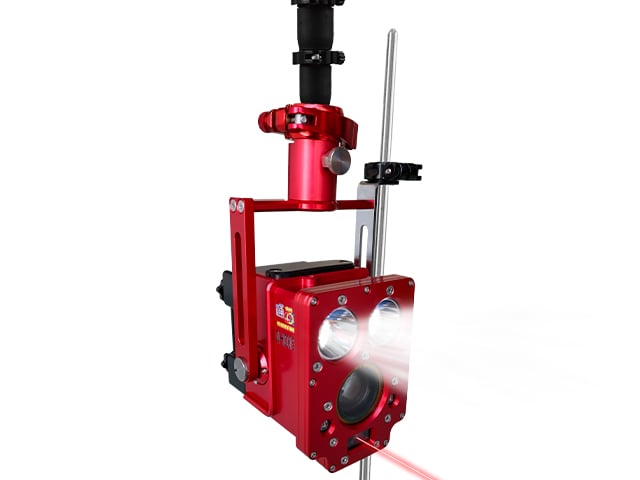
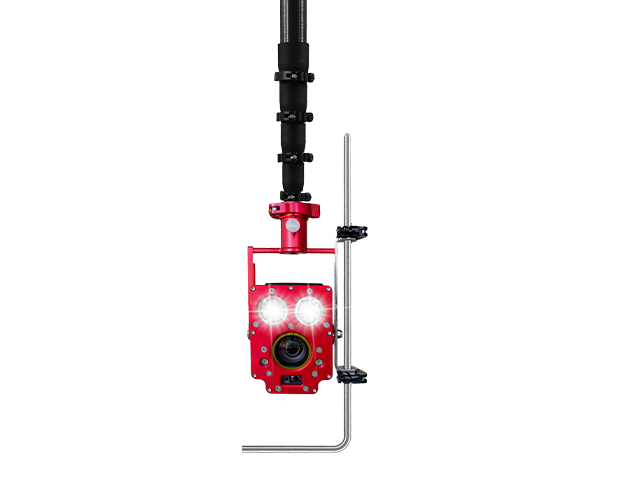
The KT-977 uses a combined structure consisting of an HD camera unit, a carbon fiber telescopic pole, and a wireless tablet control terminal. Inspectors position the equipment at a manhole or suitable inspection entry point, feed the camera unit into the pipeline via the telescopic pole, and observe the pipeline interior using 32× optical zoom, starlight-level low-light imaging, an electric pan-tilt, and 80 m laser distance measurement.
The equipment supports real-time video, video recording, photo capture, defect annotation, and inspection report export. It is suitable for municipal drainage network routine patrol, preliminary screening of rainwater-sewage cross-connections, box culvert inspection, and internal observation of tanks and industrial vessels.
The KT-977 is positioned as rapid visual preliminary inspection equipment, not a replacement for in-pipe traveling CCTV inspection robots. If the customer's main task is to quickly view internal pipeline conditions, screen obvious anomalies, and save image records, a QV periscope is more suitable. If detailed re-inspection of difficult defects is required, CCTV and other inspection equipment should be further configured.
2. KT-977 Product Structure and Core Configuration
The KT-977 QV HD Wireless Pipeline Inspection Periscope mainly consists of three parts:
HD camera unit: Responsible for internal pipeline imaging, zoom, lighting, pan-tilt control, and laser distance measurement.
Carbon fiber telescopic pole: Used to feed the camera unit into manholes or pipeline entries. Standard extended length is 5 m, customizable up to 15 m.
Handheld tablet control terminal: Used for wireless image viewing, equipment control, image recording, and inspection data editing.
The complete system uses a lightweight design. The camera unit weighs approximately 2.3 kg. The carbon fiber telescopic pole comes standard with a 4-section adjustable structure, with a retracted length of approximately 1.3 m, facilitating transport and on-site setup.
For municipal patrol, pipeline network census, and engineering inspection personnel who need to frequently move between inspection points, this combined structure can reduce the burden of equipment transport and setup.
3. Six Core Technical Features of the KT-977
3.1 4-Megapixel Starlight-Level Camera with 32× Optical Zoom
The KT-977 uses a 1/2.8-inch CMOS ICR starlight low-light image sensor with 4 megapixels and video output resolution of 1920×1080.
The camera system supports:
32× optical zoom
16× digital zoom
Auto focus and manual focus
Minimum focusing distance: 10–1200 mm
Maximum observation distance: 80 m
Optical zoom and digital zoom serve different purposes. Optical zoom adjusts the lens focal length to obtain a magnified image, while digital zoom enlarges an existing image. For long-distance observation, optical zoom is an important parameter for judging imaging capability.
The KT-977 uses 32× optical zoom, suitable for observing targets such as joints, obvious cracks, branch pipes, and foreign objects deep inside pipelines. Actual image clarity is still affected by target size, lighting, pipe bends, obstructions, and internal water level.
3.2 80 m Laser Distance Measurement for Assisting Defect Distance Recording
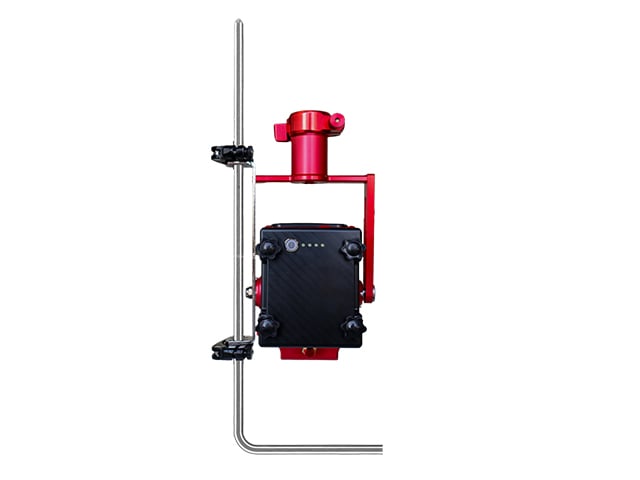
The equipment is equipped with an 80 m range laser distance measurement function, with a nominal accuracy of ±2 cm, and a red-dot positioning laser.
During inspection, after a suspected defect is found, the corresponding distance can be obtained via laser distance measurement, and the measurement result is displayed on the same screen as the image.
This function is suitable for recording anomaly locations, arranging re-inspection, and organizing on-site inspection data. Note that laser distance measurement provides distance information between the equipment and the target and cannot directly replace pipeline coordinate measurement or engineering positioning results.
3.3 Electric Pan-Tilt with 360° Pitch, One-Key Reset, and Auto Leveling
The KT-977 uses an electric pan-tilt control structure, supporting 360° up/down pitch, one-key reset, and auto leveling.
Inspectors can control the lens direction on the tablet and adjust the lens angle according to observation needs, sequentially viewing the pipe bottom, pipe top, and side walls.
The pan-tilt works with multiple lighting groups:
Far light: 2×20 W
Near light: 2×3 W
Auxiliary lighting: 2×1 W
Far and near lights can be switched, and brightness is adjustable, allowing lighting to be adjusted based on observation distance and in-pipe environment.
3.4 IP68 Protection and Electric Heating Defogging
The KT-977 camera unit has an IP68 protection rating, can operate in water depths up to 10 m, and has an operating temperature of -20°C to 55°C.
The lens is equipped with an electric heating defogging function. After one-key activation, it automatically stops after approximately 3 minutes, reducing the impact of continuous lens heating.
This configuration is mainly used to improve lens surface fogging in humid environments and temperature changes. Note that the protection rating of the main unit cannot be directly equated to the tablet, telescopic pole, and the entire system being suitable for immersion. Actual operation should follow the manual and equipment configuration requirements.
3.5 Carbon Fiber Telescopic Pole: Standard 5 m, Customizable Up to 15 m
The telescopic pole uses high-strength carbon fiber material and comes standard with a 4-section adjustable structure.
|
Item |
Parameter |
|
Material |
High-strength carbon fiber |
|
Standard extended length |
5 m |
|
Retracted length |
1.3 m |
|
Sections |
4-section adjustable |
|
Maximum customized length |
15 m |
|
Connection method |
Dedicated aluminum alloy connector |
|
Locking method |
Clamp handle and nut double locking |
|
Support rod |
80–680 mm adjustable |
|
Telescopic pole weight |
4.3 kg |
The standard 5 m telescopic pole is suitable for conventional manholes and general entry scenarios. If the customer needs to inspect deeper manholes, larger box culvert entries, or other special spaces, whether a longer telescopic pole needs to be customized can be evaluated based on actual dimensions.
Note that telescopic pole length does not equal actual observable distance. After the equipment enters the pipeline, the observation distance also depends on lens line of sight, pipeline structure, and internal environment.
3.6 Wireless Tablet Control and Self-Developed Inspection Software
The KT-977 uses an 11-inch tablet control terminal with a resolution of 1920×1200, 6 GB RAM, and 128 GB storage.
Through dual-band Wi-Fi wireless transmission, inspectors can view images and operate the equipment from a suitable position.
The tablet supports:
Real-time video display
Display of date, time, inclination, internal air pressure, battery level, and operator GPS position
Pan-tilt, optical zoom, and digital zoom control
Auto and manual focus
Far/near light switching and brightness adjustment
Laser distance measurement
Video recording, photo capture, and image saving
Lens defogging and pan-tilt reset
Project and video management
Defect type and grade editing
Opening title and custom text addition
Inspection report export and template configuration
For customers requiring regular patrol inspection, data archiving, and project deliverable submission, software functions can reduce repetitive on-site data organization work.
4. Which Customers and Projects Is the KT-977 Suitable For?
4.1 Municipal Drainage Network Maintenance Units
Suitable for routine patrol, drainage anomaly troubleshooting, and preliminary inspection of key pipe sections.
For example, when abnormal water levels, poor pipeline drainage, or suspected obvious damage are found in a manhole, the KT-977 can be used to observe the pipeline interior, save images, and record anomaly distance before deciding whether to perform dredging or CCTV re-inspection.
4.2 Pipeline Inspection Engineering Companies
For inspection projects covering a large number of manholes and pipe sections, the QV periscope can be used as rapid preliminary inspection equipment.
First use the periscope to screen obvious anomalies, then arrange robot inspection for difficult points and key pipe sections, forming an equipment combination with different inspection depths.
4.3 Rainwater-Sewage Cross-Connection Investigation Project Teams
The equipment can be used to observe branch pipe connections, suspected illegal connections, and other visible anomalies inside pipelines.
For pipeline connection relationships that cannot be confirmed solely from images, further confirmation is required by combining upstream and downstream inspection, pipeline network records, and other applicable investigation methods.
4.4 Industrial Enterprises and Tank Inspection Units
The KT-977 can also be used for internal space inspection of box culverts, storage tanks, tank trucks, and other spaces suitable for telescopic pole deployment.
The camera unit and electric pan-tilt can be used to observe visible internal parts and record inner walls, welds, and other visible anomalies.
Different vessels vary greatly in entry dimensions, internal structure, and operating environment. Before procurement, on-site dimensions and usage conditions should be provided to confirm telescopic pole length and equipment layout.
5. What Should Be Considered When Selecting the KT-977 Compared with Ordinary Pipeline Periscopes?
When purchasing a pipeline periscope, do not focus only on the product name and magnification factor. What truly affects on-site performance is mainly the imaging system, zoom method, distance measurement capability, lighting, control method, and data management functions.
|
Selection Item |
Content to Consider |
KT-977 Configuration |
|
Image sensor |
Imaging capability in low-light environments |
1/2.8-inch CMOS ICR starlight-level |
|
Image pixels |
Image detail and output quality |
4 megapixels |
|
Optical zoom |
Long-distance observation capability |
32× |
|
Digital zoom |
Auxiliary image magnification |
16× |
|
Observation distance |
Nominal observation range |
Up to 80 m |
|
Laser distance measurement |
Anomaly location distance recording |
80 m, accuracy ±2 cm |
|
Pan-tilt |
Observation capability in different directions |
Electric up/down pitch 360° |
|
Protection rating |
Camera unit protection capability |
IP68 |
|
Telescopic pole |
Manhole depth and entry adaptability |
Standard 5 m, customizable up to 15 m |
|
Control terminal |
On-site wireless operation and display |
11-inch tablet |
|
Inspection software |
Image, defect, and report management |
Supports defect editing and report export |
If the project focuses on long-distance observation, priority should be given to optical zoom, lens imaging, and lighting configuration. If anomaly locations need to be recorded, distance measurement should be considered. If inspection points need to be moved frequently, priority should be given to the weight, storage dimensions, and setup convenience of the main unit and telescopic pole.
6. What Is the Difference Between the KT-977 and a CCTV Pipeline Inspection Robot?
Customers often ask before purchasing: If we already have a CCTV pipeline inspection robot, do we still need a QV periscope?
The two types of equipment work in different ways.
|
Comparison Item |
KT-977 QV HD Wireless Pipeline Inspection Periscope |
CCTV Pipeline Inspection Robot |
|
Working method |
Observation from manhole or entry |
Robot travels inside the pipeline |
|
Main task |
Rapid preliminary observation |
Detailed in-pipe inspection |
|
Equipment setup |
Camera unit and telescopic pole combination |
Robot, cable, and control equipment |
|
Applicable scenarios |
Routine patrol, census preliminary screening, anomaly preliminary judgment |
Key pipe section re-inspection, detailed image inspection |
|
Inspection depth |
Affected by line of sight, water level, and obstructions |
Can go deep along pipe sections meeting passage conditions |
|
Equipment positioning |
Rapid inspection |
In-depth inspection |
If the customer's work focuses on rapid screening of a large number of points, the QV periscope has good applicability. If internal pipeline details need to be observed, robot-passable pipe sections need to be inspected, and more complete in-pipe images are required, CCTV inspection equipment should be selected.
The two can be used in combination rather than requiring an either-or choice.
7. KT-977 Technical Parameter Table
|
Parameter Item |
Parameter Value |
|
Product Model |
KT-977 |
|
Product Name |
QV HD Wireless Pipeline Inspection Periscope |
|
Applicable Pipe Diameter |
DN150–2000 mm |
|
Main Application |
Rapid camera inspection of pipelines, industrial vessels, and concealed spaces |
|
Main Unit Weight |
2.3 kg |
|
Main Unit Dimensions |
700×220×150 mm (including bumper bar) |
|
Protection Rating |
IP68 |
|
Operating Temperature |
-20°C to 55°C |
|
Image Sensor |
1/2.8-inch CMOS ICR starlight low-light camera |
|
Pixels |
4 megapixels |
|
Output Resolution |
1920×1080 |
|
Optical Zoom |
32× |
|
Digital Zoom |
16× |
|
Focus Method |
Auto and manual focus |
|
Minimum Focusing Distance |
10–1200 mm (wide angle to telephoto) |
|
Observation Distance |
Up to 80 m |
|
Laser Distance Measurement |
80 m range |
|
Distance Measurement Accuracy |
±2 cm |
|
Pan-Tilt |
Electric up/down pitch 360°, one-key reset, auto leveling |
|
Far Light |
2×20 W |
|
Near Light |
2×3 W |
|
Auxiliary Lighting |
2×1 W |
|
Defogging Method |
Electric heating, one-key activation, auto stop after approx. 3 minutes |
|
Telescopic Pole Material |
High-strength carbon fiber |
|
Standard Telescopic Pole Length |
Extended 5 m, retracted 1.3 m |
|
Customized Telescopic Pole Length |
Up to 15 m |
|
Telescopic Pole Sections |
4-section adjustable |
|
Telescopic Pole Weight |
4.3 kg |
|
Support Rod |
80–680 mm adjustable |
|
Wireless Communication |
Dual-band Wi-Fi |
|
Tablet Size |
11 inches |
|
Tablet Resolution |
1920×1200 |
|
Tablet RAM and Storage |
6 GB / 128 GB |
|
Camera Battery |
5000 mAh, 12.6 V |
|
Standard Battery Quantity |
3 pieces |
|
Single Battery Life |
Approx. 4–5 hours |
|
Charging Time |
Approx. 4 hours |
|
Software Functions |
Video, recording, photo capture, defect editing, project management, report export |
|
Optional Accessories |
Gas sensor, wireless repeater |
Note: The above are standard configuration parameters from product documentation. Specific delivery is subject to the configuration agreed in the contract. On-site inspection performance is affected by pipeline water level, bend severity, obstructions, lighting, and wireless transmission environment.
8. Selection Recommendations Before Purchasing the KT-977
To avoid equipment mismatch with actual operating conditions after delivery, the following information should be clarified before procurement:
First, provide the pipe diameter range.
Specify common pipe diameters, minimum pipe diameter, and maximum pipe diameter to confirm whether they fall within the DN150–2000 mm applicable range.
Second, provide manhole depth or entry height.
The standard telescopic pole is 5 m. If on-site manholes are deep or entries are special, customization requirements within 15 m can be evaluated in advance.
Third, specify the main observation distance.
If long-distance observation is frequently required, state whether the pipeline is straight, whether bends exist, and whether water level obstructs the view, so that it can be assessed whether 32× optical zoom and the 80 m nominal observation distance meet task requirements.
Fourth, describe the on-site wireless environment.
Deep manholes, underground spaces, and complex building structures may affect wireless signals. Whether a wireless repeater is required should be evaluated based on actual operating distance.
Fifth, clarify data delivery requirements.
If the project requires formal inspection reports, defect classification, report templates, image formats, and data archiving requirements should be confirmed in advance.
9. Frequently Asked Questions
Q1: What pipe diameter is the KT-977 suitable for?
The KT-977 QV HD Wireless Pipeline Inspection Periscope is suitable for pipe diameters of DN150–2000 mm. Specific application should also be judged based on pipeline form, entry dimensions, and on-site observation conditions.
Q2: How far can the KT-977 observe at maximum?
The maximum observation distance is 80 m. Actual identifiable distance is related to whether the pipeline is straight, internal water level, obstructions, lighting, and target size.
Q3: Is the KT-977's 32× zoom optical zoom?
Yes. The equipment uses 32× optical zoom and also supports 16× digital zoom. Optical zoom adjusts the lens focal length, while digital zoom enlarges the image.
Q4: Can the KT-977 record defect locations?
The equipment is equipped with an 80 m laser distance measurement function with nominal accuracy of ±2 cm, and measurement results can be displayed synchronously with the image. The tablet also supports editing defect information on captured images.
Q5: Can the KT-977 replace a CCTV pipeline inspection robot?
It cannot completely replace it. The KT-977 is mainly used for rapid preliminary observation and anomaly screening. For tasks requiring deep entry into pipelines and detailed inspection of difficult defects, CCTV robots and other equipment should be combined.
Q6: What is the maximum length of the telescopic pole?
The standard carbon fiber telescopic pole has an extended length of 5 m, customizable up to 15 m. Before customization, manhole depth, entry dimensions, and actual operating requirements need to be provided.
10. Product Summary
The KT-977 QV HD Wireless Pipeline Inspection Periscope addresses rapid pipeline inspection requirements by integrating 4-megapixel starlight-level imaging, 32× optical zoom, 80 m laser distance measurement, an electric pan-tilt, a carbon fiber telescopic pole, and wireless tablet control into one system.
For applications such as municipal drainage network patrol, pipeline network census, preliminary screening of rainwater-sewage cross-connections, and internal observation of industrial vessels, the KT-977 helps inspectors complete visual observation, image recording, and preliminary anomaly judgment at manholes or suitable inspection entries.
If a customer is selecting a QV pipeline periscope, configuration can be determined based on pipe diameter, manhole depth, observation distance, on-site wireless environment, and inspection data requirements. For projects requiring rapid screening, focus can be placed on equipment portability, optical zoom, and software recording capability. For projects requiring detailed inspection, it is recommended to use the equipment in conjunction with CCTV pipeline inspection equipment.
Anhui Kuaitong Pipeline Cleaning Technology Co., Ltd., established in 2009, is a technology-oriented enterprise specializing in the R&D, manufacturing, and sales of pipeline cleaning, unclogging, and inspection equipment. The company is a National High-Tech Enterprise, a Technology-Based SME, a Training Base of the China Industrial Cleaning Association, and an Anhui Province Specialized and Sophisticated Enterprise. It has provided solutions to more than 23,000 domestic and international enterprises.
The company provides product selection, configuration recommendations, equipment demonstrations, and technical guidance services around the R&D, production, and application of pipeline inspection and cleaning equipment.
Website: www.kuaitonggroup.com
Technical Consultation (Phone/WhatsApp/WeChat): +86 18226181287
This document is compiled by the technical team of Anhui Kuaitong Pipeline Cleaning Technology Co., Ltd.