
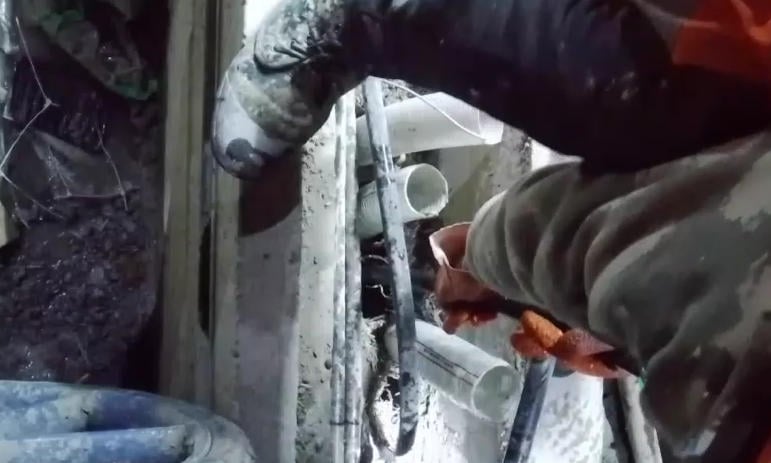
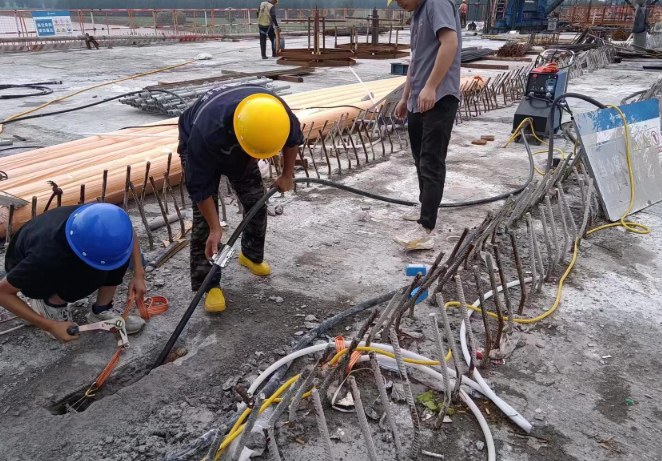
When a tunnel crossing conduit is blocked by concrete, the first step is to confirm the conduit inner diameter, blockage location, blockage length, and concrete hardening degree. For hardened concrete blocks that standard cable pullers cannot pass through, a flexible shaft with an alloy steel cutting tool can be used for mechanical drilling—progressively breaking down the blockage from the pipe opening, removing debris, and restoring the internal passage of the crossing conduit.
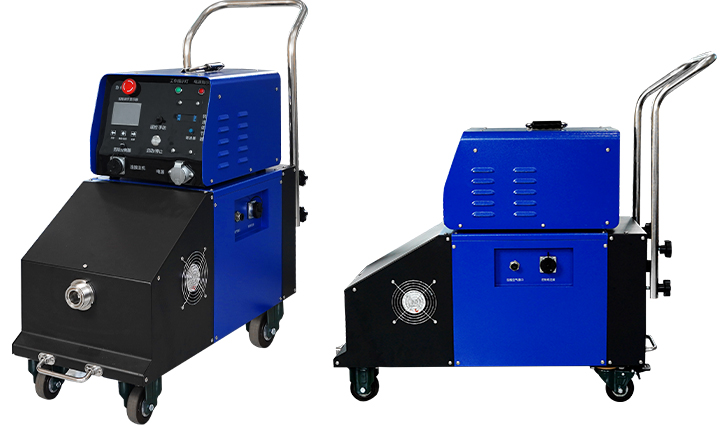
If the tunnel crossing conduit has already been embedded, the cost of re-excavation, demolition, or conduit replacement is high. The KT-309 Concrete Blockage Pipe Unclogging Machine can be evaluated based on site conditions. This equipment is primarily designed for concrete and hard blockages inside embedded pipes, crossing conduits, conduit pipes, drainage pipes, and similar engineering pipes.
1. What Are Tunnel Crossing Conduits Used For?
Tunnel crossing conduits are typically embedded pipes in tunnel mechanical, electrical, communication, or signaling engineering. They are mainly used for subsequent installation of:
Power cables
Communication lines
Signal lines
Control lines
Other pipelines requiring passage through tunnel structures
These conduits are generally installed before concrete construction. After the main structure is completed, cables are pulled and lines are installed.
Therefore, whether the crossing conduit is unobstructed directly affects subsequent construction. If concrete enters the conduit during pouring, problems such as cable pullers being unable to pass or cables being unable to be laid may occur later.
2. Why Do Tunnel Crossing Conduits Become Blocked by Concrete?
1. Pipe openings not properly sealed
After crossing conduits are embedded, if the pipe openings are not tightly sealed, concrete slurry, mortar, or construction debris may enter the conduit. When these materials gradually lose water and solidify inside the pipe, localized blockages form.
2. Gaps at joint locations
If crossing conduits are connected in sections and joints are not properly sealed, cement slurry may enter through the connection points. This type of blockage sometimes occurs in the middle section of the conduit and is not easily detected directly after construction.
3. Damage during pipe construction
If conduits are compressed, struck, or damaged during rebar installation, concrete pouring, or other cross-construction activities, concrete may enter through the damaged areas. Additionally, conduit deformation may prevent subsequent cable pulling tools from passing through.
4. No timely conduit inspection after pouring
If embedded conduits are not inspected promptly after installation, blockage problems may remain undetected until the cable laying stage. At this point, the tunnel main structure is typically completed, significantly increasing the difficulty of conduit replacement
3. How to Assess Blockage Severity After a Crossing Conduit Is Blocked by Concrete?
Before selecting unclogging equipment, a basic inspection is recommended.
1. Check cable puller advancement
If the cable puller can enter a certain distance but suddenly encounters hard resistance at a certain position, cement slurry, concrete blocks, or other hard foreign objects may be present inside the conduit.
2. Determine whether resistance is consistent
If loose debris is encountered, resistance during tool advancement may vary. If resistance is stable, hard, and cannot be overcome after multiple attempts, further assessment for hardened concrete is needed.
3. Record blockage distance
The distance from the pipe opening to the resistance point should be recorded as accurately as possible. When the blockage is closer, shaft entry and cutting tool operation are relatively easier. If the blockage is deeper, shaft length and working space must be confirmed.
4. Check whether the conduit is bent or deformed
If the crossing conduit has bends, flattening, or localized deformation, the cable puller's inability to pass may not be entirely due to concrete blockage. In this case, the conduit structural issue must first be assessed before deciding whether mechanical drilling is suitable.
4. Why Can't Standard Cable Pulling Tools Handle Hardened Concrete?
Standard cable pullers are primarily for pulling cables
Cable pullers are suitable for checking conduit patency and can also be used for pulling cables or lines, but they are not concrete breaking tools. If dense concrete blocks have formed inside the conduit, forced advancement may cause the tool to jam or become damaged.
High-pressure water is suitable for blockages with flow space
High-pressure water can be used to clean some mud, loose deposits, or not-yet-fully-cured materials. However, if the crossing conduit is completely sealed by hardened concrete, water cannot effectively enter the blockage interior, and simply increasing water pressure cannot guarantee successful unclogging.
Direct structural demolition increases construction workload
If the problem is solved by chiseling tunnel concrete, re-grooving, or re-laying pipes, completed engineering structures and construction schedules may be affected. Therefore, for crossing conduits that are still intact and accessible from the pipe opening, internal mechanical unclogging can be evaluated first.
5. How Is Mechanical Unclogging Performed for Concrete-Blocked Tunnel Crossing Conduits?
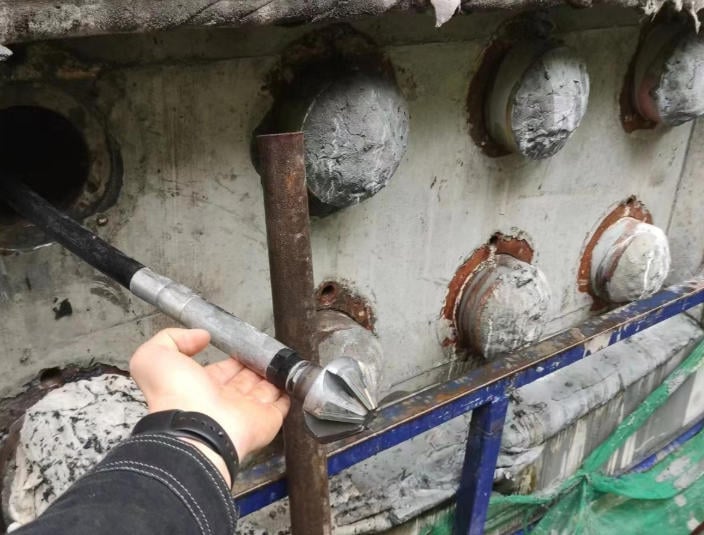
The core of mechanical unclogging is not relying on water flow to wash away concrete, but using a cutting tool to directly drill and break the blockage.
Basic principle:
Power unit → Flexible shaft → Alloy steel cutting tool → Contacts concrete → Mechanical drilling → Progressive breakdown → Debris removal
Step 1: Confirm conduit and blockage information
Before construction, confirm:
Conduit inner diameter
Conduit length
Conduit material
Conduit routing
Presence of bends
Blockage location
Blockage length
Concrete hardening degree
Whether cables are already installed inside
Step 2: Select appropriate shaft and cutting tool
The cutting tool must be able to enter the crossing conduit and have the capability to handle the corresponding hard blockage. Shaft specifications and length should be determined based on conduit diameter, blockage distance, and conduit bends. Equipment selection should not be based solely on motor power—the front-end tool must be confirmed as truly suitable for the site conduit.
Step 3: Gradually feed the cutting tool from the pipe opening
Feed the flexible shaft from the pipe opening so that the front-end alloy steel cutting tool contacts the concrete blockage. The advancement process should be controlled—avoid continuously forcing when the tool is jammed.
Step 4: Drill an initial hole, then gradually expand
For completely blocked crossing conduits, an initial hole can typically be established inside the concrete blockage first. After the initial passage is formed, it can be gradually expanded as needed until cable pulling or subsequent construction requirements are met. This approach is easier to control than attempting to remove the entire cross-section of concrete in one pass.
Step 5: Remove broken debris
After concrete is broken, cement debris and fragments form inside the conduit. Operators should select an appropriate debris removal method based on site conditions to prevent fragments from continuing to accumulate deep inside the conduit. If the conduit permits water introduction, an appropriate amount of water flow can be evaluated to assist debris removal—but pressure should not be blindly increased without confirming conduit condition.
Step 6: Verify conduit clearance
After unclogging is completed, a conduit clearance inspection should be performed again to confirm whether a continuous passage has been formed and whether subsequent cable laying requirements can be met.
6. What Types of Crossing Conduit Blockages Is the KT-309 Suitable For?
The KT-309 Concrete Blockage Pipe Unclogging Machine is primarily designed for heavy-duty hard blockage problems in engineering construction.
Its applications include:
Tunnel crossing conduits
Embedded pipes
Building conduit pipes
Bridge prestressed ducts
High-speed railway pipes
Municipal drainage pipes
Elevator shaft pipes
Other engineering pipes with concrete or cement debris blockages
For tunnel crossing conduits, the equipment primarily addresses:
Fully hardened concrete
Standard cable pullers cannot pass
High-pressure water cannot effectively handle
Conduits cannot be easily replaced
Internal unclogging from original pipe opening is required
7. Main Technical Features of the KT-309
1. 7500W High-Power Motor
The KT-309 uses a 7500W motor to transmit power through a flexible shaft to the front-end alloy steel cutting tool, handling hardened concrete and other hard blockages.
2. 0–2800 rpm Adjustable Speed
The equipment supports speed adjustment from 0 to 2800 rpm. Different conduit diameters, blockage strengths, and operation stages may require different speeds. In practice, start at a lower speed and adjust based on cutting tool status and blockage feedback.
3. Applicable Conduit Diameter: Φ6.35–800 mm
Applicable diameter range is Φ6.35–800 mm. Note that applicable diameter does not mean all conduits can be directly worked on. Actual considerations also include:
Conduit material
Blockage location
Blockage length
Conduit bend severity
Shaft length
Cutting tool size
On-site working space
4. Flexible Shaft and Alloy Steel Cutting Tool Combination
The flexible shaft transmits power into the conduit and adapts to a certain degree of bending. The alloy steel cutting tool directly contacts the concrete blockage, performing drilling and breaking through rotation.
5. Intelligent Torque Control
The equipment features an intelligent torque control system that adjusts power output based on shaft specifications and operating conditions, reducing the risk of shaft kinking, deformation, and damage.
6. Split-Type Power Unit and Control Cabinet Design
The power unit and control cabinet use a split-type structure, facilitating equipment placement in space-constrained construction environments such as tunnels.
7. Manual and Remote Operation
The equipment supports manual and remote operation. In practice, the appropriate method should be selected based on construction space, operating distance, and on-site safety requirements.
8. How to Select the Right Unclogging Equipment for Tunnel Crossing Conduits?
1. Small-diameter crossing conduits
Small-diameter conduits have higher requirements for cutting tool size, shaft diameter, and advancement method. Selection should not focus only on power unit wattage—the front-end tool must be confirmed as able to enter the conduit and operate normally inside.
2. Large-diameter crossing conduits
Large-diameter conduits provide more working space, but the blockage volume may also be larger. Concrete hardness, blockage length, and cutting tool specifications should be combined to determine whether the equipment has sufficient handling capability.
3. Long-distance blockages
If the blockage is far from the pipe opening, shaft length and power transmission should be confirmed. Conduit bends and whether operators can continuously and stably control the shaft should also be considered.
4. Bent crossing conduits
If the crossing conduit has bends, shaft flexibility and conduit bend radius should be confirmed first. For conduits with many bends, small diameters, or significant deformation, on-site assessment should be performed first to avoid blindly advancing the cutting tool.
5. Conduits with existing cables
If cables, communication lines, or other lines already exist inside the crossing conduit, alloy steel cutting tools cannot be directly used for drilling. The internal condition must first be confirmed, and relevant technical personnel should determine whether construction conditions permit.
9. Tunnel Crossing Conduit Concrete Blockage Treatment Procedure
In actual construction, the following steps can be followed:
Confirm conduit information – Determine diameter, length, material, routing, and purpose.
Inspect pipe opening condition – Confirm the opening has no severe deformation, damage, or other issues affecting equipment entry.
Preliminary blockage location detection – Use appropriate pipe clearing tools and record the distance at which resistance is encountered.
Determine blockage material – Distinguish between loose debris, cement slurry, partially hardened mortar, and fully hardened concrete.
Select shaft and cutting tool – Match based on diameter, blockage strength, blockage distance, and bends.
Perform mechanical drilling – Allow the alloy steel cutting tool to progressively contact and break the concrete blockage.
Expand internal passage – Gradually expand the formed hole based on subsequent cable pulling requirements.
Remove debris – Clean out broken cement debris to avoid secondary blockage.
Verify conduit clearance – Confirm the conduit has restored an effective passage through cable pulling tests or other suitable methods.
10. Precautions When Using the KT-309 for Crossing Conduits
1. Do not force advancement when the cutting tool is jammed
If the cutting tool encounters significant jamming, stop the machine first to inspect and confirm the blockage condition and shaft operation.
2. Do not focus only on speed and power
Equipment parameters are only part of selection. Cutting tool, shaft, diameter, blockage length, and conduit bends are equally important.
3. First confirm whether cables exist inside the conduit
If cables have already been installed, the internal condition must be confirmed first—blind drilling is not permitted.
4. Confirm conduit integrity before treatment
If the conduit is already flattened, broken, or severely deformed, breaking concrete alone may not solve the problem.
5. Properly arrange debris removal
Mechanical breaking is only part of the process—debris removal is equally important. Appropriate debris removal methods should be selected based on conduit condition and site conditions.
6. Implement tunnel site safety management
Tunnels may have insufficient lighting, narrow spaces, cross-construction, and temporary power issues. Before construction, equipment securing, personnel assignment, shutdown protection, and on-site safety management should be properly arranged.
11. Frequently Asked Questions (FAQ)
1. Does a tunnel crossing conduit blocked by cement always need to be replaced?
Not necessarily. If the original conduit is intact and accessible from the pipe opening for internal treatment, mechanical unclogging can be evaluated first.
2. Can hardened concrete in a crossing conduit still be treated?
Assessment can be made based on conduit diameter, blockage length, concrete strength, and conduit condition. For hard blockages, a flexible shaft and alloy steel cutting tool can be used for mechanical drilling.
3. Can standard unclogging machines handle crossing conduit concrete?
Standard unclogging machines have different structures and power configurations. For fully hardened concrete blockages, confirm whether the equipment has corresponding mechanical drilling capability—do not judge solely by the name "unclogging machine."
4. What is the applicable conduit diameter for the KT-309?
The KT-309 is suitable for Φ6.35–800 mm. Specific operation also requires confirmation based on conduit material, blockage length, shaft, and cutting tool configuration.
5. Can the KT-309 handle C60 concrete?
The KT-309 is positioned as equipment capable of handling C60 concrete-blocked pipes. Specific results should be evaluated based on actual concrete condition, blockage length, conduit diameter, and construction conditions.
6. Can a bent crossing conduit still be unclogged?
Assessment is needed based on bend radius, conduit diameter, number of bends, shaft specifications, and cutting tool structure. Flexible shafts can adapt to a certain degree of bending, but this does not mean all bent conduits can be directly worked on.
7. What if the blockage is very deep in the crossing conduit?
First confirm whether the shaft length can reach the blockage location, and evaluate conduit routing, bends, and power transmission conditions. Feasibility should not be judged solely by power unit wattage.
8. If cables already exist inside the crossing conduit, can mechanical cutting tools still be used?
They cannot be directly used blindly. The cable position and conduit internal condition should first be confirmed, and relevant technical personnel should evaluate the treatment plan to avoid damaging existing lines.
12. Summary
Treatment of concrete blockages in tunnel crossing conduits should be based on blockage material characteristics and conduit condition.
For light debris or not-fully-cured materials, conventional cleaning methods can be used based on site conditions. For fully hardened concrete blockages that standard cable pullers cannot pass through, mechanical drilling should be prioritized for evaluation.
The practical approach can follow this sequence:
Confirm conduit → Locate blockage → Select shaft and cutting tool → Mechanical drilling → Gradually expand hole → Remove debris → Verify clearance
The KT-309 Concrete Blockage Pipe Unclogging Machine uses a 7500W power unit, flexible shaft, and alloy steel cutting tools, primarily for mechanical unclogging of concrete and hard blockages inside embedded pipes, crossing conduits, conduit pipes, and similar engineering pipes.
About Anhui Kuaitong Pipeline Cleaning Technology Co., Ltd.
Anhui Kuaitong Pipeline Cleaning Technology Co., Ltd., established in 2009, specializes in the R&D, manufacturing, and technical services of industrial and engineering pipeline cleaning and unclogging equipment. Main products include central air conditioning duct cleaning machines, industrial pipe unclogging machines, concrete blockage pipe unclogging equipment, heat exchanger cleaning equipment, boiler tube bundle unclogging systems, air preheater cleaning equipment, and municipal pipeline inspection robots.
The company has been recognized as a National High-Tech Enterprise, a Technology-Based SME, and a Training Base of the China Industrial Cleaning Association. Products are certified under ISO 9001 Quality Management System and EU CE certification. Over the years, the company has provided pipeline cleaning, unclogging, and inspection solutions to more than 23,000 industrial and engineering customers worldwide.
For concrete blockages in tunnel crossing conduits, embedded conduit pipes, bridge pipes, and other engineering pipes, the company can assist customers in selecting appropriate mechanical unclogging equipment based on conduit diameter, blockage location, blockage length, concrete hardening degree, and site construction conditions. Product trials, demonstration videos, operation guidance, and related technical support are available.
Website: www.kuaitonggroup.com
Technical Consultation (Phone/WhatsApp/WeChat): +86 18226181287
This document is compiled by the technical team of Anhui Kuaitong Pipeline Cleaning Technology Co., Ltd.
Table of Contents
- 1. What Are Tunnel Crossing Conduits Used For?
- 2. Why Do Tunnel Crossing Conduits Become Blocked by Concrete?
- 3. How to Assess Blockage Severity After a Crossing Conduit Is Blocked by Concrete?
- 4. Why Can't Standard Cable Pulling Tools Handle Hardened Concrete?
- 5. How Is Mechanical Unclogging Performed for Concrete-Blocked Tunnel Crossing Conduits?
- 6. What Types of Crossing Conduit Blockages Is the KT-309 Suitable For?
- 7. Main Technical Features of the KT-309
- 8. How to Select the Right Unclogging Equipment for Tunnel Crossing Conduits?
- 9. Tunnel Crossing Conduit Concrete Blockage Treatment Procedure
- 10. Precautions When Using the KT-309 for Crossing Conduits
- 11. Frequently Asked Questions (FAQ)
- 12. Summary
- About Anhui Kuaitong Pipeline Cleaning Technology Co., Ltd.