
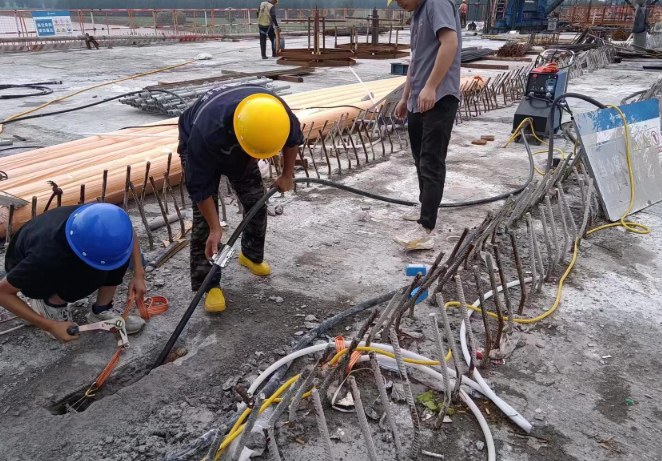
When concrete enters conduit pipes or embedded pipes during construction, restoring flow is often difficult using conventional tools. For hardened concrete blockages, the pipe condition should first be confirmed, then an appropriate mechanical unclogging method selected based on pipe diameter, blockage length, concrete strength, and pipe routing.
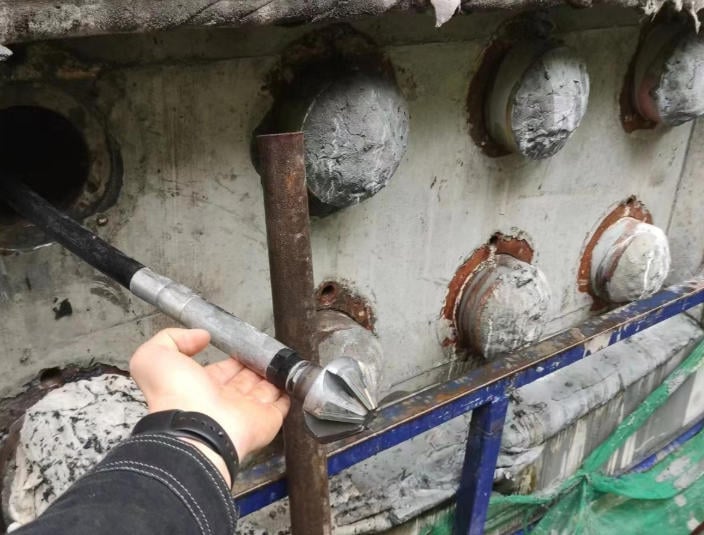
For completely blocked pipes, traditional cable pullers are usually ineffective. In such cases, a flexible shaft with alloy steel cutting tools can be inserted from the pipe opening to gradually drill and break down the cured concrete.
1. How Does Concrete Enter Conduit Pipes?
Conduit pipes are typically embedded before the main structural concrete pour.
If pipe ends are not properly sealed or joints are not tightly closed, cement slurry may enter the pipe during concrete pouring.
Additionally, pipes may be crushed, struck, or have joints dislodged during construction, creating pathways for slurry ingress.
Therefore, embedded pipe blockage is often not simply "debris in the pipe" but solid blockage formed by cement slurry that has hardened over time.
2. Why Is Concrete in Conduit Pipes Difficult to Remove?
When concrete first enters the pipe, it has some fluidity and is relatively easier to handle.
However, as time passes, the cement slurry gradually hardens, eventually forming a solid blockage.
At this stage, the following conditions typically exist:
Complete pipe blockage
Cable pullers cannot pass through
Standard steel wire cannot penetrate
Water cannot reach the blockage
Blockage is located at a distance
Pipe has bends
Pipe is already embedded in walls or concrete structures
Therefore, completely blocked embedded pipes cannot be treated the same way as ordinary debris blockages.
3. How to Unclog Concrete-Blocked Conduit Pipes?
If the pipe is confirmed to be intact and accessible from the pipe opening, mechanical breakdown can be considered.
The basic principle is:
Power unit drives flexible shaft → Shaft enters embedded pipe → Alloy steel cutting tool contacts concrete → Rotational drilling breaks down concrete → Debris is evacuated
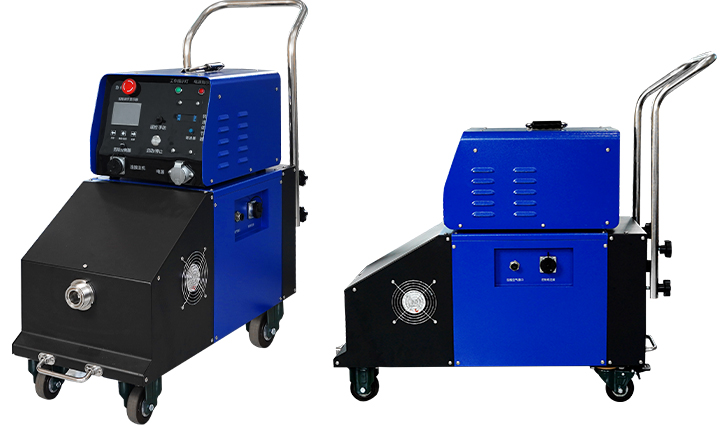
The KT-309 is specifically designed for this type of heavy-duty hard blockage. Its 7500W power system drives a flexible shaft and alloy steel cutting tools to drill and break down cured concrete and cement deposits inside pipes.
4. Which Concrete-Blocked Pipes Is the KT-309 Suitable For?
The KT-309 is designed for hard blockages in engineering site pipes, including:
Conduit pipes
Embedded pipes
Drainage pipes
Railway crossing pipes
Prestressed pipes
Tunnel pipes
Bridge pipes
High-speed railway pipes
Elevator shaft pipes
It is capable of handling pipes blocked with C60-grade concrete.
For practical selection, the actual blockage length, pipe diameter, pipe material, and blockage location must also be evaluated—not just the "C60" specification.
5. KT-309 Key Technical Specifications for Concrete Blockage
|
Parameter |
Specification |
|
Product Model |
KT-309 Intelligent Series |
|
Operating Voltage |
380V |
|
Motor Power |
7500W |
|
Speed Range |
0–2800 rpm (adjustable) |
|
Applicable Pipe Diameter |
Φ6.35–800 mm |
|
Control Methods |
Manual + Remote |
|
Operating Modes |
Water Flushing + Air Flushing |
|
Structural Design |
Split-Type (Power Unit + Control Cabinet) |
|
Power Unit Weight |
92.5 kg |
|
Control Cabinet Weight |
17 kg |
|
Quick-Connect Hose |
20 m |
6. Why Use a Flexible Shaft?
Embedded pipes are not always perfectly straight. Conduit pipes in many construction and engineering projects have bends, which limits the use of rigid drill rods.
A flexible shaft can transmit power from the pipe opening to the interior while accommodating bends.
The KT-309 standard configuration includes two 8 m flexible shafts. In practice, appropriate shaft specifications should be selected based on pipe diameter, blockage location, and pipe configuration.
7. Why Does the KT-309 Require Intelligent Torque Control?
When working with concrete, the cutting tool does not encounter constant resistance. As the tool encounters concrete of varying hardness or localized jamming, the torque on the flexible shaft changes.
The KT-309 features an intelligent torque control system that adjusts power output based on shaft specifications.
The primary purpose is to reduce the risk of shaft kinking, deformation, breakage, and joint damage, while maintaining sufficient breaking power for the blockage.
8. What Is the Difference Between Water Flushing and Air Flushing?
After the cutting tool breaks down the concrete, debris evacuation must be addressed.
Water Flushing
If water can be introduced into the pipe, water flushing assists with debris evacuation. The KT-309 comes with a 20 m quick-connect hose—broken cement debris can be flushed out with water flow.
Air Flushing
If the site does not permit large volumes of water, compressed air can be used to assist with debris evacuation based on actual conditions.
Both water and air flushing modes are available. Note that air flushing should not be used to blindly increase pressure in a sealed, blocked pipe; it should be used to evacuate already broken and loosened debris after safety conditions are confirmed.
9. What Is the Benefit of Split-Type Design for Construction Work?
The KT-309 features separate power unit and control cabinet.
During operation, the two components can be positioned independently based on available site space.
This configuration offers practical convenience in construction sites, tunnels, bridges, and other spatially constrained environments, while also reducing the impact of vibration and heat from the power unit on control components.
10. Which Conditions Are Suitable for the KT-309?
The KT-309 should be evaluated for the following site conditions:
① Pipe is completely blocked
Standard cable pullers cannot pass through.
② Blockage has hardened
Cement or concrete blocks have formed inside.
③ Pipe cannot be replaced
Pipe is already embedded in the building structure—replacement would be costly.
④ Pipe has significant length or bends
Requires flexible transmission to reach the blockage.
⑤ Pipe diameter varies
The KT-309 covers Φ6.35–800 mm and can be configured with appropriate tools based on actual diameter.
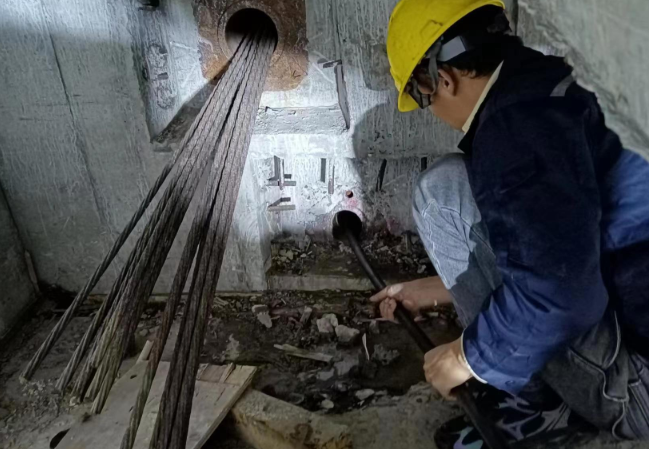
11. Concrete Blockage Unclogging Procedure for Conduit Pipes
Step 1: Pipe verification
Confirm pipe purpose, material, diameter, and approximate routing.
Step 2: Locate blockage
Use cable feeding, detection, or other methods to determine the blockage point.
Step 3: Assess blockage type
Determine whether it is mortar, cement slurry, or hardened concrete.
Step 4: Select cutting tool
Choose appropriate tool based on pipe diameter, blockage strength, and blockage length.
Step 5: Connect flexible shaft
Select appropriate shaft length and specification based on site conditions.
Step 6: Mechanical breakdown
Enter the blockage area at low speed, then adjust operating parameters based on actual conditions. The KT-309 supports 0–2800 rpm speed adjustment for different conditions.
Step 7: Evacuate debris
Select water flushing or air flushing based on site conditions.
Step 8: Verify flow
After confirming the pipe is clear, proceed with cable pulling or subsequent construction.
12. Frequently Asked Questions (FAQ)
Q: Can a conduit pipe completely blocked with concrete still be unclogged?
A: Feasibility depends on the specific conditions. Key factors include pipe integrity, blockage length, concrete hardness, and whether the pipe has significant deformation.
Q: Why can't standard cable pullers handle concrete blockages?
A: Standard cable pullers are designed for cable pulling and minor obstructions. They lack the cutting capability to break cured concrete.
Q: Is the KT-309 only for concrete?
A: No. By changing shafts, cutting tools, and cleaning accessories, it can also be used for scale removal, rust removal, and internal pipe wall cleaning.
Q: Can the KT-309 handle small-diameter pipes?
A: The applicable diameter range is Φ6.35–800 mm. Feasibility depends on pipe material, bend radius, blockage length, and tool selection.
Q: What control modes does the KT-309 offer?
A: Both manual and remote operation are supported.
Q: Is water always required for concrete blockage unclogging?
A: Not necessarily. The KT-309 supports both water flushing and air flushing modes, allowing selection based on whether water introduction is permitted and site debris evacuation conditions.
About Anhui Kuaitong Pipeline Cleaning Technology Co., Ltd.
Anhui Kuaitong Pipeline Cleaning Technology Co., Ltd., established in 2009, is a subsidiary of Anhui Kuaitong Environmental Technology Group Co., Ltd., specializing in the R&D, manufacturing, and technical services of industrial and engineering pipeline cleaning and unclogging equipment. Our main products include industrial pipe unclogging machines, concrete blockage unclogging equipment, heat exchanger cleaning equipment, boiler tube bundle unclogging systems, and air preheater cleaning equipment.
The company has been recognized as a National High-Tech Enterprise, a Technology-Based SME, and a Training Base of the China Industrial Cleaning Association. Our products are certified under ISO 9001 Quality Management System and EU CE certification. Over the years, we have provided pipeline cleaning, unclogging, and inspection solutions to numerous industrial and engineering customers worldwide.
The company develops equipment based on different pipe diameters, blockage types, and site conditions, providing unclogging equipment and technical support for construction, bridge, tunnel, high-speed railway, municipal, power, and industrial applications.
For concrete blockages in conduit pipes, embedded pipes, drainage pipes, and other piping, equipment selection can be based on pipe diameter, blockage length, concrete strength, pipe material, and site conditions.
This document is compiled by the technical team of Anhui Kuaitong Pipeline Cleaning Technology Co., Ltd.
Website: www.kuaitonggroup.com
Technical Consultation (Phone/WhatsApp/WeChat): +86 18226181287
Table of Contents
- 1. How Does Concrete Enter Conduit Pipes?
- 2. Why Is Concrete in Conduit Pipes Difficult to Remove?
- 3. How to Unclog Concrete-Blocked Conduit Pipes?
- 4. Which Concrete-Blocked Pipes Is the KT-309 Suitable For?
- 5. KT-309 Key Technical Specifications for Concrete Blockage
- 6. Why Use a Flexible Shaft?
- 7. Why Does the KT-309 Require Intelligent Torque Control?
- 8. What Is the Difference Between Water Flushing and Air Flushing?
- 9. What Is the Benefit of Split-Type Design for Construction Work?
- 10. Which Conditions Are Suitable for the KT-309?
- 11. Concrete Blockage Unclogging Procedure for Conduit Pipes
- 12. Frequently Asked Questions (FAQ)
- About Anhui Kuaitong Pipeline Cleaning Technology Co., Ltd.