
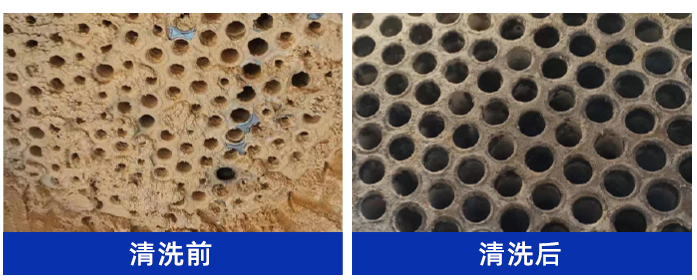
When tube bundles in a falling film evaporator become blocked, a single cleaning method is rarely sufficient. Soft deposits may be addressed with water washing or circulation cleaning; certain soluble scale types may respond to chemical cleaning; however, tubes that have developed hard scale, crystallized deposits, coke, or complete blockage require mechanical unclogging as a primary consideration.
For severely blocked falling film evaporators, the key practical approach is to first restore the internal passage through the tube, then perform further cleaning based on the nature of remaining deposits.
Fouling in falling film evaporators is related to factors such as feed distribution, tube wetting, and medium concentration—particularly during concentration processes, deposits continuously accumulate on the inner heat exchange tube walls. Studies have also indicated that uneven liquid distribution and distribution system blockages increase the risk of fouling in falling film evaporators.
1. Why Do Falling Film Evaporator Tubes Become Blocked?
During operation of a falling film evaporator, the feed forms a liquid film along the inner walls of the heat exchange tubes.
As the medium concentration increases, certain substances gradually deposit on the tube walls.
Over time, the following progression may occur:
Thin deposit layer → Thick scale → Diameter reduction → Localized blockage → Complete tube blockage
Therefore, many falling film evaporators do not become impossible to clean immediately—the fouling gradually hardens over extended operation, ultimately increasing cleaning difficulty.
2. Common Types of Fouling in Falling Film Evaporators
1. Salt Scale
During high-salt concentration, salts continuously precipitate and adhere to the inner walls of heat exchange tubes. This condition is typical in high-salt wastewater concentration and evaporation crystallization systems.
2. Crystallized Scale
Certain media produce crystals during concentration and temperature changes. As crystals grow, they may form hard crystalline layers.
3. Material Fouling
Some media in chemical, food, and pharmaceutical industries have adhesive properties. As the feed concentrates, the deposit layer gradually thickens.
4. Scale
If the system uses circulating water or contains mineral-bearing media, calcium, magnesium, and other scale deposits may form.
5. Coke Deposits
During high-temperature operation, certain materials may undergo coking and carbonization, forming hard deposits.
6. Mixed Fouling
On-site conditions may present a combination of salt scale, material fouling, coke deposits, and scale. This type of mixed blockage is typically more difficult to assess than single-component fouling.
3. Signs of Blocked Tubes in Falling Film Evaporators
The following symptoms warrant inspection of the heat exchange tubes for internal blockage:
Reduced evaporation efficiency
Decreased heat transfer capacity
Abnormal feed flow rate
Poor flow in certain tubes
Increased energy consumption
Localized tube bundle blockage
Complete tube blockage
If blockage continues to develop, equipment inspection and shutdown cleaning time may increase.
4. Cleaning Methods for Falling Film Evaporator Tube Bundles
Chemical Cleaning
Suitable for scale types that react with cleaning agents. The advantage is that large heat exchange surfaces can be treated via circulation. However, if tubes are completely blocked and circulation is obstructed, chemical cleaning effectiveness may be limited.
High-Pressure Water Flushing
Suitable for loose deposits and low-adhesion fouling. However, for tubes with hard blockages, water impact is limited. Higher pressure does not necessarily suit all blockage conditions.
Mechanical Unclogging
Mechanical unclogging acts directly on blockages. A flexible shaft transmits rotational power into the tube, and a cutting tool breaks down hard deposits. This method is better suited for:
Hard scale
Crystallized deposits
Coke deposits
Material fouling
Severe blockage
For completely blocked tubes, feasibility depends on tube diameter, blockage length, deposit hardness, and tube material.
5. Why Consider Mechanical Unclogging for Severe Tube Blockage?
Severe blockage and general scaling require different approaches.
General scaling:
Focuses on removing the deposit layer from tube walls.
Severe blockage:
First requires restoring a passage through the tube.
If the tube is completely blocked, water and cleaning solutions cannot effectively reach the blockage core. A mechanical cutting tool can enter the blockage position and progressively break down hard deposits, with debris flushed out using water flow.
This approach has practical value in industrial evaporator and heat exchanger tube bundle cleaning.
6. Which Falling Film Evaporator Blockage Conditions Is the KT-307 Suitable For?
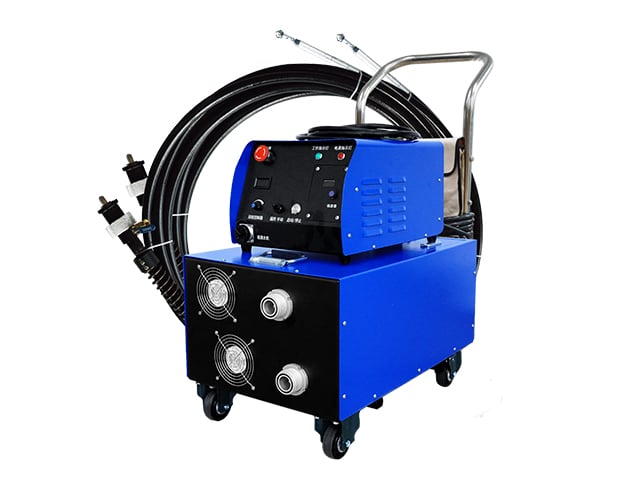
Anhui Kuaitong Pipeline Cleaning Technology Co., Ltd. has developed the KT-307 Heavy-Duty Tube Bundle Unclogging Machine for severe blockages in industrial tube bundles.
The KT-307 features a 5500W power system that drives a flexible shaft with a front-end alloy steel cutting tool to mechanically break down hard deposits inside tubes.
Applicable tube diameter: Φ6.35–800 mm
Speed range: 0–4000 rpm (stepless)
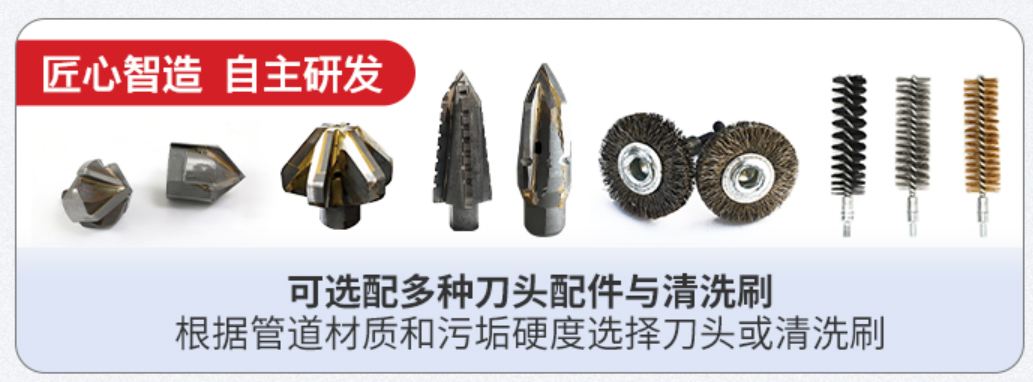
For falling film evaporators, appropriate shafts and cutting tools can be selected based on tube diameter, length, and blockage conditions.
7. Features of the KT-307 for Falling Film Evaporator Blockage
5500W Power
High power output provides the foundation for mechanical breakdown of hard deposits, suitable for industrial evaporators, heat exchangers, and other tube bundle equipment requiring strong unclogging capability.
Alloy Steel Cutting Tools
The cutting tools are made of alloy steel. For hard salt scale, crystallized deposits, material fouling, and coke deposits, the tool progressively breaks down blockages through rotation.
0–4000 rpm Speed Control
Different tube diameters and deposit types require different speeds. The KT-307 allows adjustment based on site conditions, providing more flexible operation for varying blockage severity.
Intelligent Torque Control
The KT-307 features an intelligent torque control system that adjusts power output as blockage resistance changes. This has practical benefits for shaft protection and continuous operation.
Adaptive Shaft Protection
The equipment incorporates adaptive shaft protection technology to reduce abnormal stress on the shaft during high-load operation, minimizing shaft and consumable consumption. For enterprises requiring long-term evaporator and heat exchanger maintenance, this helps reduce long-term operating costs.
Manual + Wireless Remote Control
The KT-307 supports both manual and wireless remote control modes. The operating method can be selected based on site conditions and working positions.
Split-Type Design
The power unit and control cabinet are separate. Vibration from the power unit is isolated from the control system, reducing impact on electronic components. This design also facilitates equipment placement within limited site spaces.
8. How to Select Shafts and Cutting Tools for Falling Film Evaporator Tube Blockage
Equipment selection should not focus solely on power unit specifications. The following factors must also be considered:
Tube diameter + Tube length + Deposit type + Tube material + Blockage severity + Tube configuration
For example:
Small-diameter tubes require appropriately sized shafts
Severe blockage requires configurations with strong power transmission
Different deposit types require different front-end tool designs
Long tubes require consideration of shaft length
Tube wall material affects operating parameter settings
For falling film evaporator projects, equipment selection should be based on on-site tube diameter and deposit conditions, rather than simply choosing the "highest power" option.
9. Basic Mechanical Unclogging Procedure for Falling Film Evaporator Tubes
Step 1: Assess blockage type
Identify whether the blockage is salt scale, crystallized deposits, material fouling, scale, or coke deposits.
Step 2: Confirm tube parameters
Measure tube diameter and length; confirm tube material and equipment configuration.
Step 3: Select shaft
Choose the appropriate shaft based on tube diameter and blockage severity.
Step 4: Select cutting tool
Choose the appropriate alloy steel cutting tool based on deposit characteristics.
Step 5: Adjust speed and torque
Set operating parameters based on site conditions.
Step 6: Mechanically break down blockage
Transmit power through the flexible shaft to the tube interior, progressively breaking down deposits with the cutting tool.
Step 7: Assist debris evacuation
Supply water as site conditions permit to flush out broken deposits.
Step 8: Verify tube flow
After unclogging, check tube flow and determine whether further cleaning is required.
10. Cleaning Method Selection Guide for Falling Film Evaporator Blockage
|
Blockage Condition |
Methods to Consider |
|
Thin scale layer |
Chemical cleaning |
|
Soluble salt scale |
Chemical cleaning |
|
Loose material deposits |
Water washing, circulation cleaning |
|
Thick hard scale |
Mechanical unclogging |
|
Crystallized deposits |
Chemical + Mechanical, or Mechanical alone |
|
Coke deposits |
Mechanical unclogging |
|
Localized severe blockage |
Mechanical unclogging |
|
Complete blockage |
Mechanical opening first, then further cleaning |
Final plans should be determined based on specific deposit composition and site conditions.
11. Frequently Asked Questions (FAQ)
Q: What is the most common cause of tube blockage in falling film evaporators?
A: It is typically related to feed concentration, temperature, liquid distribution, deposit accumulation, and operating time.
Q: How are salt-blocked falling film evaporator tubes handled?
A: If the salt scale is soluble, chemical cleaning may be considered. If hard, dense blockage has formed, mechanical opening followed by further cleaning is recommended.
Q: Can completely blocked falling film evaporator tubes still be unclogged?
A: Feasibility depends on tube diameter, blockage length, deposit characteristics, hardness, and tube material. Mechanical unclogging is suitable for severe hard deposits, but it cannot be guaranteed for all complete blockage scenarios.
Q: What tube diameter is suitable for the KT-307?
A: The KT-307 covers a diameter range of Φ6.35–800 mm, with corresponding shafts and cutting tools selected based on specific tube diameter.
Q: Why does the KT-307 use stepless speed control?
A: Different tube diameters and deposit types require different operating conditions. The 0–4000 rpm stepless speed range allows adjustment based on on-site blockage conditions.
Q: Is water washing still needed after mechanical unclogging?
A: Not necessarily. It depends on deposit characteristics and cleaning requirements. For conditions with significant debris after breakdown, water-assisted flushing can be used. For residual scale removal, other cleaning methods may be combined as needed.
About Anhui Kuaitong Pipeline Cleaning Technology Co., Ltd.
Anhui Kuaitong Pipeline Cleaning Technology Co., Ltd., established in 2009, is a subsidiary of Anhui Kuaitong Environmental Technology Group Co., Ltd., specializing in the R&D, manufacturing, and technical services of pipeline cleaning equipment. Our main products include industrial pipe unclogging machines, heat exchanger cleaning equipment, boiler tube bundle unclogging systems, air preheater cleaning equipment, and central air conditioning duct cleaning systems.
Over the past 17 years, the company has continuously served more than 23,000 industrial customers worldwide. We have been recognized as a National High-Tech Enterprise, a Technology-Based SME, and a Training Base of the China Industrial Cleaning Association. Our products are certified under ISO 9001 Quality Management System and EU CE certification.
This document is compiled by the technical team of Anhui Kuaitong Pipeline Cleaning Technology Co., Ltd.
Website: www.kuaitonggroup.com
Technical Consultation (Phone/WhatsApp/WeChat): +86 18226181287
Table of Contents
- 1. Why Do Falling Film Evaporator Tubes Become Blocked?
- 2. Common Types of Fouling in Falling Film Evaporators
- 3. Signs of Blocked Tubes in Falling Film Evaporators
- 4. Cleaning Methods for Falling Film Evaporator Tube Bundles
- 5. Why Consider Mechanical Unclogging for Severe Tube Blockage?
- 6. Which Falling Film Evaporator Blockage Conditions Is the KT-307 Suitable For?
- 7. Features of the KT-307 for Falling Film Evaporator Blockage
- 8. How to Select Shafts and Cutting Tools for Falling Film Evaporator Tube Blockage
- 9. Basic Mechanical Unclogging Procedure for Falling Film Evaporator Tubes
- 10. Cleaning Method Selection Guide for Falling Film Evaporator Blockage
- 11. Frequently Asked Questions (FAQ)
- About Anhui Kuaitong Pipeline Cleaning Technology Co., Ltd.