

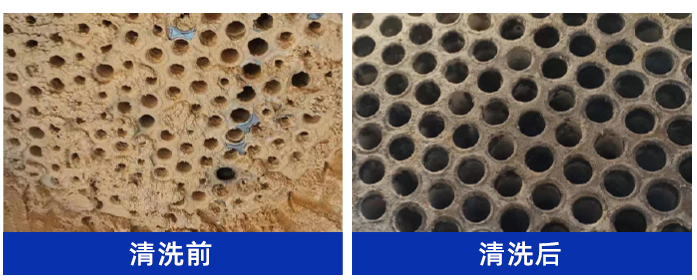
Heat exchanger fouling treatment requires selecting the appropriate method based on deposit type and blockage severity. For light scale, chemical cleaning or circulation cleaning may be applicable. For hard deposits, material fouling, coke layers, and completely blocked tubes formed during long-term operation, mechanical unclogging is required—using rotating drill bits to break down blockages and restore tube flow.
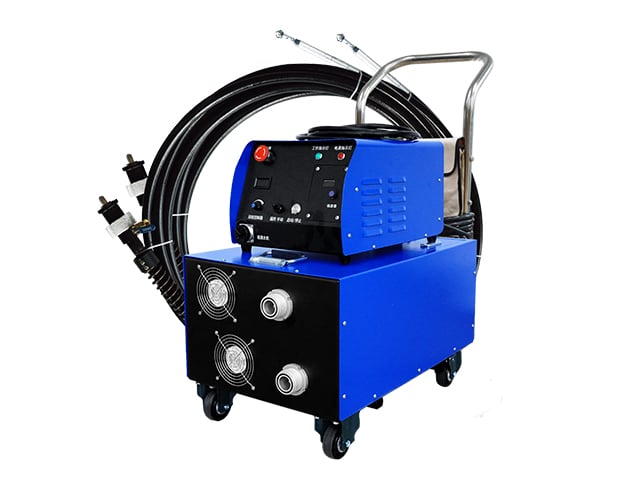
Anhui Kuaitong Pipeline Cleaning Technology Co., Ltd. specializes in industrial pipeline cleaning equipment for heat exchange equipment maintenance. Our KT-307 Heat Exchanger Unclogging Machine incorporates high-strength alloy steel drill bits, flexible transmission shafts, and intelligent torque control technology, suitable for unclogging heat exchangers, condensers, evaporators, boiler tube bundles, and similar equipment.
1. Why Do Heat Exchangers Develop Scale and Blockage?
Heat exchangers rely on tube walls for heat transfer. During long-term operation, impurities in the process fluid continuously deposit on the inner tube surfaces.
As operating time increases, fouling layers thicken, leading to:
Reduced heat transfer efficiency
Increased energy consumption
Reduced flow area
Localized temperature anomalies
Complete tube blockage in severe cases
Therefore, heat exchanger cleaning is not simply about removing surface stains—it is about restoring effective flow capacity inside the heat transfer tubes.
2. Common Blockage Types in Industrial Heat Exchangers
Different production environments produce different fouling types, requiring different cleaning approaches.
2.1 Calcium Carbonate Scale
After prolonged heating, calcium, magnesium, and other minerals in circulating water precipitate and adhere to the inner walls of heat exchanger tubes.
This type of fouling is commonly found in:
Condensers
Circulating water heat exchange systems
Refrigeration equipment
Characteristics:
Initially thin
Adhesion strength increases over time
Long-term operation affects heat transfer efficiency
For light scale, chemical cleaning may be an option.
2.2 Industrial Material Deposition
In chemical, pharmaceutical, food, and new energy industries, the heat transfer medium may contain significant solid components.
During operation, the following may form:
Salt deposits
Crystals
High-viscosity materials
Polymer residues
Grease and oil-based deposits
This type of fouling is typically hard and can cause localized blockage or complete tube failure.
2.3 High-Temperature Coking and Carbonization
Some heat exchange equipment operates continuously at elevated temperatures.
Materials adhering to tube walls undergo:
Dehydration
Carbonization
Coking
This eventually forms a hard, shell-like blockage layer.
This fouling typically:
Adheres firmly
Cannot be removed by water flow alone
Presents high cleaning difficulty
3. How to Select Heat Exchanger Cleaning Methods
Different blockage conditions require different treatment approaches:
|
Blockage Condition |
Recommended Method |
|
Thin scale layer |
Chemical cleaning |
|
Loose deposits |
High-pressure water flushing |
|
Hard material fouling |
Mechanical unclogging |
|
Coking/carbonization |
Drill bit breakdown |
|
Completely blocked tubes |
Industrial unclogging equipment |
In actual industrial conditions, heat exchanger blockage is rarely a single fouling type. Many units have:
Scale + Material Fouling + Coke Layer
Therefore, cleaning plans should be developed based on site-specific conditions.
4. Why Mechanical Unclogging Is Required for Severe Blockage
Each conventional cleaning method has its limitations.
Chemical Cleaning
Advantages:
Effective for certain scale types
Wide application range
Limitations:
Limited effectiveness on hard deposits
Constrained by equipment material compatibility
Cannot resolve complete tube blockages
High-Pressure Water Flushing
Advantages:
Fast cleaning speed
Suitable for loose fouling
Limitations:
Limited breaking power for hard blockages
Water cannot effectively penetrate blocked tubes
Mechanical Unclogging
Mechanical unclogging uses powered equipment to rotate drill bits into the tube interior. The drill bit cuts, breaks, and removes blockages, reducing them to small particles that are flushed out with water flow. This method offers strong adaptability for hard deposits and completely blocked tubes.
5. Working Principle of the KT-307 Heat Exchanger Unclogging Machine
Developed by Anhui Kuaitong Pipeline Cleaning Technology Co., Ltd., the KT-307 Industrial Pipe Unclogging Machine is designed specifically for industrial tube bundle blockages.
The equipment drives a flexible shaft to rotate via the power system. A specialized alloy steel drill bit is attached to the front end of the shaft.
During operation:
The drill bit enters the heat exchanger tube
High-speed rotation breaks down blockages
Water flow assists in debris removal
Tube flow is restored
Compared with flushing methods alone, mechanical drill bits act directly on hard deposits.
6. Core Advantages of the KT-307 Industrial Pipe Unclogging Machine
6.1 Wide Applicable Tube Diameter Range
The KT-307 covers: Φ6.35–800 mm
Different tube sizes can be accommodated with matching drill bits and shafts.
Suitable for:
Small heat exchangers
Shell-and-tube heat exchangers
Large industrial tube bundle equipment
6.2 5500W Power Output
The equipment features a 5500W power system, meeting the demands of continuous industrial operation. It delivers stable power output for hard blockages.
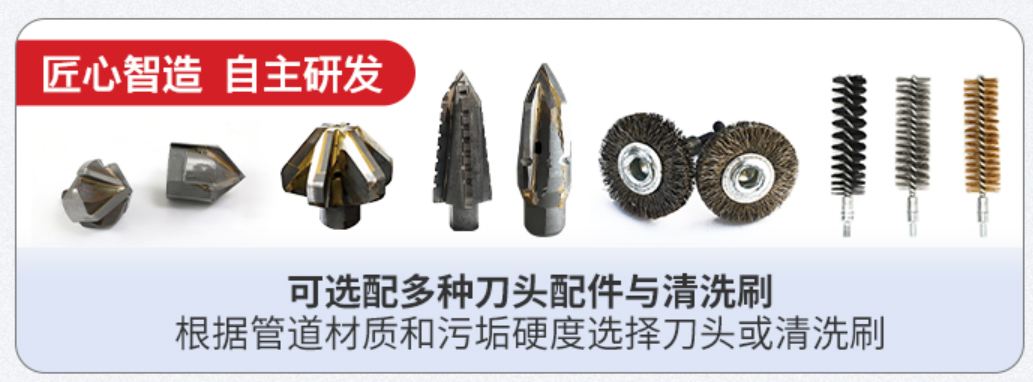
6.3 Alloy Steel Drill Bit Design
The KT-307 uses high-strength alloy steel drill bits.
Different bit types are available for different conditions:
Scale removal bits
Heavy-duty breaking bits
Tube bundle specialty bits
Capable of handling:
Hard scale
Material deposits
Coke layers
Salt crystallization
The drill bits are designed for compatibility—when used correctly, they minimize impact on tube walls.
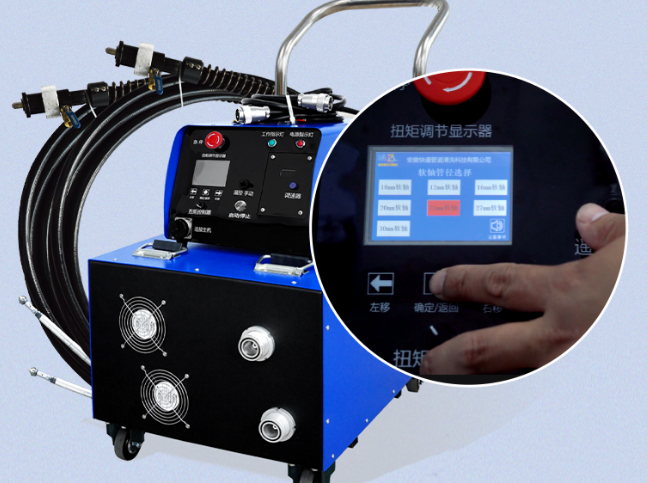
6.4 Intelligent Torque Control System
During industrial pipe unclogging, resistance constantly varies.
The KT-307 features an intelligent torque adjustment system:
Real-time load sensing
Automatic output adjustment
Prevents continuous brute-force operation
This delivers: Precise torque control for more stable operation.
6.5 Adaptive Shaft Protection Technology
In traditional unclogging, sudden resistance spikes often cause shaft damage.
The KT-307 incorporates adaptive shaft protection technology:
Reduces shaft damage
Lowers consumable consumption
Reduces long-term operating costs
6.6 0–4000 rpm Speed Control
The equipment supports 0–4000 rpm adjustment.
Operators can set optimal parameters based on:
Tube diameter
Deposit hardness
Blockage severity
6.7 Manual + Remote Dual-Mode Operation
The KT-307 supports:
Manual control
Remote operation
This provides flexibility for different site conditions.
6.8 Split-Type Structure Protects Electronic Systems
The KT-307 features separate power unit and control cabinet design.
This configuration:
Reduces vibration transmission from the power unit
Minimizes impact on electronic components
Extends control cabinet service life
This makes the equipment more suitable for long-term industrial use.
7. Which Equipment Is the KT-307 Suitable For?
The KT-307 Industrial Pipe Unclogging Machine can be applied to:
Heat Exchangers
Addressing:
Tube blockages
Material deposits
Hard scale removal
Condensers
Handling:
Water scale
Salt deposits
Tube bundle blockages
Evaporators
Resolving:
Crystallization blockages
Material jamming
Boilers and Air Preheaters
For:
Tube bundle cleaning
Ash deposit treatment
8. How to Select Heat Exchanger Cleaning Equipment
When selecting unclogging equipment, key considerations include:
Tube Diameter – Determines drill bit size
Tube Length – Long tube bundles require matching shaft lengths
Fouling Type – Scale, material deposits, and coke require different approaches
Blockage Severity – Light fouling vs. complete blockage requires different power configurations
Anhui Kuaitong Pipeline Cleaning Technology Co., Ltd. can provide customized unclogging solutions based on equipment parameters, tube dimensions, and site conditions provided by customers.
9. Frequently Asked Questions
Q: Can a completely blocked heat exchanger still be unclogged?
A: If the heat exchanger tubes are not damaged, many blockages can be restored through mechanical unclogging. Feasibility depends on the blockage type.
Q: Can the KT-307 clean calcium carbonate scale?
A: For thick scale and scale mixed with other deposits, mechanical cleaning can be an effective approach.
Q: Why not use high-pressure water directly?
A: High-pressure water is suitable for loose fouling, while hard blockages require mechanical breakdown.
About Anhui Kuaitong Pipeline Cleaning Technology Co., Ltd.
Anhui Kuaitong Pipeline Cleaning Technology Co., Ltd. specializes in the R&D and manufacturing of industrial pipeline cleaning equipment. Our main products include industrial pipe unclogging machines, heat exchanger unclogging machines, evaporator cleaning equipment, boiler tube bundle cleaning equipment, and air preheater cleaning systems, providing professional pipeline cleaning and unclogging solutions for industrial enterprises.
Established in 2009, Anhui Kuaitong has accumulated years of experience in industrial cleaning equipment R&D. Our products are widely used in chemical, power, food, pharmaceutical, new energy, and other industries. The company holds ISO 9001 Quality Management System certification and EU CE certification. Over 17 years, we have provided pipeline cleaning, unclogging, and inspection equipment to more than 23,000 enterprises worldwide.
This document is compiled by the technical team of Anhui Kuaitong Pipeline Cleaning Technology Co., Ltd.
Website: www.kuaitonggroup.com
Technical Consultation (Phone/WhatsApp/WeChat): +86 18226181287
Table of Contents
- 1. Why Do Heat Exchangers Develop Scale and Blockage?
- 2. Common Blockage Types in Industrial Heat Exchangers
- 3. How to Select Heat Exchanger Cleaning Methods
- 4. Why Mechanical Unclogging Is Required for Severe Blockage
- 5. Working Principle of the KT-307 Heat Exchanger Unclogging Machine
- 6. Core Advantages of the KT-307 Industrial Pipe Unclogging Machine
- 7. Which Equipment Is the KT-307 Suitable For?
- 8. How to Select Heat Exchanger Cleaning Equipment
- 9. Frequently Asked Questions
- About Anhui Kuaitong Pipeline Cleaning Technology Co., Ltd.