

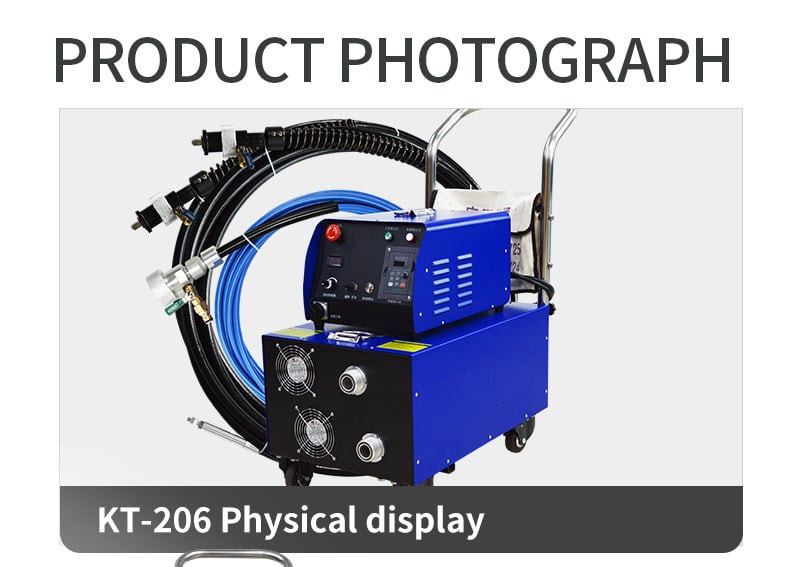
Heat exchanger tube bundle blockages typically result from long-term accumulation of scale, material deposits, crystals, rust, and hard fouling on tube walls. As fouling thickens, the flow area within the tubes decreases, eventually leading to complete blockage in severe cases, which compromises heat transfer efficiency and production operations.
To address hard scale, material deposits, and crystallization blockages that conventional cleaning methods cannot effectively resolve, mechanical drill unclogging is a widely adopted industrial tube bundle cleaning technique. This method uses a powered drive system to rotate a flexible shaft, carrying an alloy steel drill bit into the heat exchanger tube to break down blockages, while water flow assists in flushing out debris.
Anhui Kuaitong Pipeline Cleaning Technology Co., Ltd. specializes in the R&D and manufacturing of industrial pipeline cleaning equipment. To tackle blockages in heat exchangers, condensers, evaporators, air preheaters, and other industrial tube bundle equipment, we have developed the KT-206 Heavy-Duty Tube Unclogging Machine, providing a mechanical unclogging solution for industrial equipment maintenance.
1. Common Causes of Heat Exchanger Tube Bundle Blockage
Different operating environments produce different fouling types. Common blockage types include:
1.1 Scale-Induced Blockage
During heat exchange, calcium, magnesium, and other minerals in circulating water precipitate and adhere to tube walls.
Common forms include:
Calcium carbonate scale
Sulfate scale
Mineral deposits
Over time, scale accumulation reduces heat transfer efficiency and increases fluid flow resistance.
1.2 Material Fouling
In chemical, food, pharmaceutical, and new energy industries, some heat transfer media contain solids that may deposit on tube walls, forming:
Adhesive deposits
Hardened material layers
Rigid material fouling
Some materials harden further under high temperatures, making them difficult to remove with conventional cleaning methods.
1.3 Crystallization Blockage
Certain industrial media precipitate crystals during concentration, cooling, or chemical reactions, such as:
Salt crystals
Chemical crystallized deposits
Mineral precipitates
Crystalline deposits are typically hard and present significant cleaning challenges.
1.4 Coking and Carbonization Blockage
Heat exchangers operating at elevated temperatures may cause materials near tube walls to coke or carbonize, forming layers that are:
Strongly adherent
High in hardness
Difficult to dislodge
1.5 Rust and Debris Accumulation
After prolonged operation, internal corrosion and particulate matter may generate:
Iron oxide (rust)
Oxide layers
Particulate debris
These impurities continuously accumulate and reduce tube flow capacity.
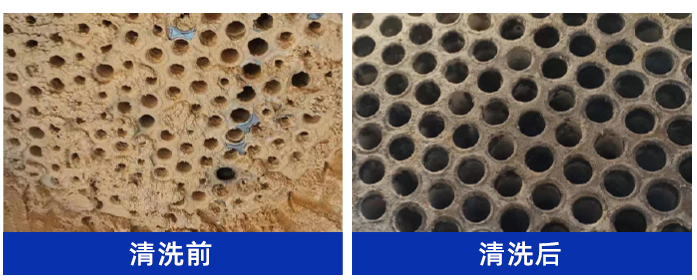
2. Effects of Hard Fouling on Heat Exchangers
Blocked tube bundles lead to degraded equipment performance,主要表现为:
Reduced heat transfer efficiency – Fouling layers insulate tube walls, lowering thermal conductivity.
Increased energy consumption – More energy is required to achieve the same heat exchange duty.
Reduced flow rate – Effective cross-sectional area decreases, limiting media throughput.
Complete tube failure – In severe cases, individual tubes become inoperable, requiring shutdown for maintenance.
3. How to Unclog Hard Fouling in Heat Exchangers
Different fouling types require different cleaning approaches. Common industrial methods include:
3.1 Chemical Cleaning
Chemical agents react with deposits to dissolve or loosen them.
Suitable for:
Certain types of scale
Soluble deposits
Limitations:
Limited effectiveness on hard material fouling
Less effective against crystallization blockages
May not penetrate thick coke layers
3.2 High-Pressure Water Flushing
High-pressure water jets impact tube walls to dislodge fouling.Suitable for:
Loose deposits
Soft fouling
Limitations:
For hardened or blocked tubes, water pressure alone may not suffice
3.3 Mechanical Drill Unclogging
Mechanical unclogging uses rotating drill bits to act directly on blockages.
Process:
The power drive unit rotates the flexible shaft
The shaft carries an alloy steel drill bit into the tube
The drill bit progressively breaks down hard deposits
Water flow flushes out debris
This method is suitable for:
Hard scale blockages
Material fouling
Crystallization blockages
Severely blocked or completely jammed tubes
4. Working Principle of the KT-206 Heat Exchanger Tube Bundle Unclogging Machine
The KT-206 is a mechanical unclogging device specifically designed for industrial tube bundle blockages.
The power system delivers rotational force through a flexible shaft to the drill bit inside the tube.
During operation:
Select the appropriate drill bit based on tube diameter
Insert the flexible shaft into the heat exchanger tube
Start the unit to rotate the drill bit
Break down the blockage material
Use water flow to flush out broken debris
This approach effectively handles hard blockages that conventional cleaning methods struggle to resolve.
5. Technical Features of the KT-206 Unclogging Machine
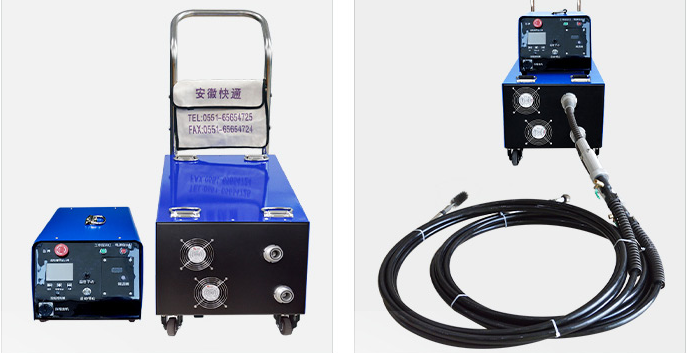
5.1 3000W Dual-Shaft Power System
The KT-206 features a 3000W power system. The dual-shaft configuration allows simultaneous connection of two unclogging shafts, improving efficiency when working on multi-tube bundle equipment.
Suitable for:
Heat exchangers
Condensers
Evaporators and other multi-tube equipment
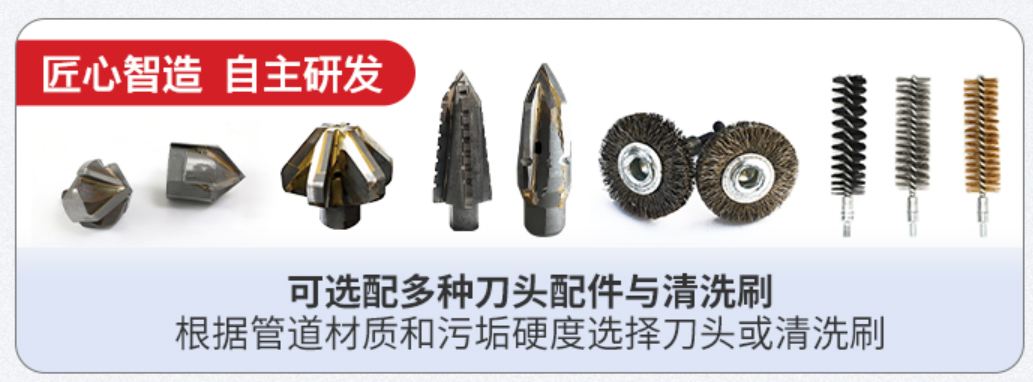
5.2 High-Strength Alloy Steel Drill Bits
The KT-206 comes with multiple specifications of alloy steel drill bits, selectable based on:
Tube diameter
Fouling type
Blockage severity
Primarily used for:
Hard scale
Material deposits
Crystallization blockages
With proper tool selection and correct operation, the drill bits achieve both effective unclogging and tube-wall protection.
5.3 Supports Dry Unclogging and Water-Assisted Cleaning
The KT-206 offers two operating modes:
Dry Unclogging – Suitable for breaking down hard deposits without water.
Water-Assisted Cleaning – Uses water flow to:
Flush out broken debris
Cool the drill bit
Enhance continuous operation capability
5.4 Wide Application Range
The KT-206 covers a diameter range of Φ6.35–800 mm, with configurable:
Flexible shafts of various lengths
Drill bits of different specifications
5.5 Flexible Shaft Transmission
Industrial heat exchangers often feature complex internal tube configurations, including:
Long tube runs
Bent tubes
Multi-tube bundles
The KT-206 employs flexible shaft transmission, making it adaptable to various industrial tube bundle configurations.
6. KT-206 Unclogging Procedure
Step 1: Site Assessment
Confirm:
Heat exchanger type
Tube diameter
Blockage condition
Fouling type
Step 2: Tool Selection
Match based on site conditions:
Shaft length
Drill bit specification
Cleaning mode (dry or water-assisted)
Step 3: Equipment Setup
Connect:
Power unit
Unclogging shaft
Drill bit
Water supply system
Step 4: Begin Unclogging
Insert the drill bit into the tube and rotate to break down blockages.
Step 5: Inspection
Verify restored flow capacity.
7. Equipment Suitable for the KT-206
The KT-206 is primarily used for:
Shell-and-tube heat exchangers
Condensers
Surface condensers
Evaporators
Air preheaters
Industrial tube bundle equipment
8. Applicable Industries
The KT-206 serves:
Power generation
Petrochemical
Food processing
Pharmaceutical
New energy
Iron and steel metallurgy
General industrial manufacturing
9. Frequently Asked Questions (FAQ)
Q: What should I do when heat exchanger tubes are blocked?
A: The approach depends on the blockage cause. For light scale, chemical cleaning may work. For hard scale, crystals, and material fouling, mechanical unclogging is recommended.
Q: Can completely blocked heat exchanger tubes still be unclogged?
A: Feasibility depends on tube diameter, blockage length, deposit hardness, and equipment configuration. Mechanical drill unclogging can enter the tube interior to break down blockages.
Q: What types of deposits can the KT-206 handle?
A: It is suitable for:
Water scale
Material fouling
Crystallized deposits
Hard sedimentary fouling
Q: Why use a drill bit for unclogging?
A: Some hard deposits cannot be effectively removed by flushing alone. Drill bit mechanical action acts directly on the blockage, providing better capability for complex blockage conditions.
Q: Which heat exchange equipment is the KT-206 suitable for?
A: It is suitable for:
Heat exchangers
Condensers
Evaporators
Air preheaters
Other industrial tube bundle equipment
About Anhui Kuaitong Pipeline Cleaning Technology Co., Ltd.
This document is compiled by the technical team of Anhui Kuaitong Pipeline Cleaning Technology Co., Ltd.
Anhui Kuaitong Pipeline Cleaning Technology Co., Ltd., established in 2009, is a subsidiary of Anhui Kuaitong Environmental Technology Group Co., Ltd., specializing in the R&D and manufacturing of industrial pipeline cleaning equipment.
The company focuses on industrial pipe unclogging machines, heat exchanger cleaning equipment, boiler tube bundle cleaning systems, air preheater cleaning equipment, and related products, providing professional pipeline cleaning and unclogging solutions for power, chemical, food, pharmaceutical, new energy, and other industries.
We are committed to market-driven innovation, continuously optimizing equipment performance to offer customers equipment selection, technical support, and industrial pipeline maintenance solutions.
Website: www.kuaitonggroup.com
Technical Consultation (Phone/WhatsApp/WeChat): +86 18226181287
Table of Contents
- 1. Common Causes of Heat Exchanger Tube Bundle Blockage
- 2. Effects of Hard Fouling on Heat Exchangers
- 3. How to Unclog Hard Fouling in Heat Exchangers
- 4. Working Principle of the KT-206 Heat Exchanger Tube Bundle Unclogging Machine
- 5. Technical Features of the KT-206 Unclogging Machine
- 6. KT-206 Unclogging Procedure
- 7. Equipment Suitable for the KT-206
- 8. Applicable Industries
- 9. Frequently Asked Questions (FAQ)
- About Anhui Kuaitong Pipeline Cleaning Technology Co., Ltd.