

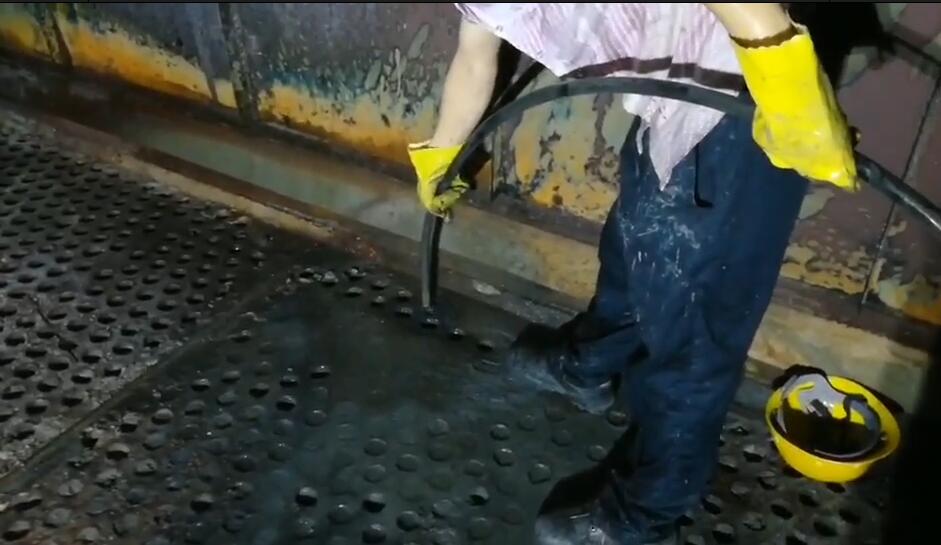
For boiler air preheater cleaning, the first step is to determine where the blockage occurs. If soot and coke deposits have accumulated inside the flue gas tubes of a tubular air preheater, causing restricted flow or complete blockage, soot blowing, brushing, flushing, or mechanical unclogging can be evaluated based on deposit hardness and tube condition. For hard blockages that are difficult to clear manually and cannot be effectively handled by conventional cleaning methods, the Kuaitong KT-206 Blocked Pipe Unclogging Machine can be further evaluated.
The KT-206 uses a 3000W dual-shaft structure and is equipped with heavy-duty unclogging shafts and alloy steel cutting tools. It supports dry and water-assisted cleaning. Its published application scope includes air preheaters, boiler flue tubes, surface condensers, heat exchangers, and other industrial tube bundles. Whether it is suitable for a specific air preheater requires verification of equipment structure, tube diameter, tube length, deposit characteristics, and tube wall condition. If the issue is ash accumulation between the heat storage elements of a rotary air preheater, the cleaning method should be evaluated separately and cannot be treated directly as in-tube blockage.
1. Why Can't Boiler Air Preheater Cleaning Be Based Only on the Amount of Ash?
After long-term operation of a boiler air preheater, soot may gradually adhere to heat exchange surfaces or deposit inside tubes. When ash accumulation is light, it may only affect localized heat transfer. As ash continues to increase, flue gas passage resistance may rise, and some tubes may even become completely blocked.
For cleaning equipment selection, three questions truly need to be answered:
Is the ash accumulation inside the tubes, or between heat storage elements?
Is the deposit loose dust, or hardened coke scale?
Is the tube still open, or has it severely reduced in diameter or become completely blocked?
These factors directly affect the cleaning method. Ordinary ash accumulation and hard blockage have different treatment logic, and not all air preheater problems can be reduced to simple dust removal.
2. Why Does Soot Inside Boiler Air Preheaters Become Hard?
Deposits in air preheaters are typically related to fuel, flue gas composition, operating temperature, and ash accumulation time.
Fly ash produced by combustion enters the air preheater with flue gas, and some particles deposit on tube walls or in flow passages. If not effectively cleaned for a long time, the ash layer may gradually thicken.
Under certain conditions, incompletely burned substances may also form coke-like deposits. When dust, coke-like material, and other deposits mix, they may become denser, making ordinary soot blowing or simple brushing ineffective.
In addition, specific flue gas compositions and low-temperature conditions may cause sticky deposits or corrosive scaling. Such issues need to be assessed in combination with equipment operating conditions—specific chemical composition cannot be determined solely by ash color or hardness.
3. What Impact Does Air Preheater Ash Blockage Have on Boiler Operation?
The main function of the air preheater is to use flue gas waste heat to heat air. When heat exchange surfaces are covered by ash scale or tube flow cross-sections are reduced, equipment performance may be affected.
Reduced heat exchange capacity. Ash accumulation increases heat transfer resistance and affects flue gas waste heat utilization.
Changes in flue gas side pressure differential. Tube or flow passage blockage may increase airflow resistance and affect fan operation.
Local tube bundles lose flow capacity. When hard scale completely blocks some tubes, conventional soot blowing may be unable to restore their flow condition.
Increased maintenance time. If there are many tube bundles and each must be cleaned individually, construction time and labor input may increase.
These phenomena may also be affected by boiler load, fuel changes, and other equipment conditions. Therefore, comprehensive judgment should be made based on operating data and maintenance inspections.
4. Before Air Preheater Cleaning, Confirm the Structure Type
This is a very important step when selecting cleaning equipment.
Tubular Air Preheaters
Tubular air preheaters consist of large numbers of tube bundles. For conditions where soot enters the tubes, gradually deposits, and forms blockages, suitable in-tube cleaning tools should be selected based on tube diameter, tube length, and deposit hardness.
If the tube still has some flow space, brushing or other applicable cleaning methods can be evaluated. If hard scale inside the tube is severe and the tube is completely blocked, mechanical unclogging can be further evaluated.
Rotary Air Preheaters
Rotary air preheaters transfer heat through heat storage elements, and ash may accumulate between corrugated plates and other elements. Their flow passage structure differs from straight tube bundles, and the cleaning method should be determined based on equipment design, ash location, and site requirements.
Therefore, when requesting a quotation, it is best to specify the air preheater structure type and provide equipment photos or relevant drawings to avoid selecting the wrong cleaning tool because of the same equipment name.
5. What Are the Common Methods for Boiler Air Preheater Cleaning?
1. Soot Blowing
Suitable for handling some loose ash according to equipment design and operating procedures. For tubes with hard shells, coke scale, or complete blockage, conventional soot blowing may not be effective.
2. High-Pressure Water Cleaning
Uses water impact to remove some attached deposits. It is necessary to confirm whether the equipment allows water introduction, whether the tubes can drain, and whether subsequent drying is required. For completely blocked tubes, water may be unable to contact the deep part of the blockage.
3. Mechanical Brushing
Suitable for some tubes that still have flow space and mainly require removal of wall-attached deposits. Brush heads should be selected based on tube diameter, tube wall condition, and deposit characteristics.
4. Mechanical Drilling Unclogging
For severe in-tube blockage caused by some hard deposits, a flexible shaft driving an alloy steel cutting tool can be evaluated for mechanical breaking, followed by debris removal based on site conditions.
The main function of mechanical drilling is to directly treat the blockage. It does not mean all ash deposits must use this method. Whether a tube is suitable for mechanical operation should be evaluated first.
6. What Air Preheater Problems Is the KT-206 Blocked Pipe Unclogging Machine Suitable For?
Kuaitong KT-206 is primarily designed for industrial tube bundle blockage and severe in-tube blockage conditions. Its applicable scope includes boiler flue tubes, water wall tubes, air preheaters, wastewater evaporators, surface condensers, heat exchangers, and similar equipment.
For tubular air preheaters, the KT-206 can be further evaluated if the following conditions exist:
Soot or coke-like deposits have accumulated over time and formed relatively hard blockage layers.
Manual steel rodding is difficult to advance and time-consuming.
Conventional soot blowing methods cannot handle completely blocked tubes.
Tube dimensions and wall condition allow the use of matching mechanical tools.
Site conditions permit debris removal and safe operation.
If the issue is only ash accumulation between heat storage elements of a rotary air preheater, or if the tube wall is severely corroded, the equipment cannot be determined solely based on the information that the KT-206 is applicable to air preheaters.
7. What Configurations Does the KT-206 Have, and What Role Does Each Play During Cleaning?
The KT-206 uses a 3000W dual-shaft structure. Configuration includes control cabinet, power unit, heavy-duty unclogging shaft, additional shaft, quick-connect water hose, alloy steel cutting tools, and power cable. Applicable tube diameter: 6.35–800 mm.
3000W Dual-Shaft Structure: Provides power for mechanical unclogging and corresponding convenience for on-site work arrangements. Actual operating efficiency depends on blockage conditions, tool configuration, and construction conditions.
Alloy Steel Cutting Tools: Cut or break hard blockages suitable for mechanical treatment. Tool size must match tube diameter and blockage conditions.
Heavy-Duty Unclogging Shaft: Transmits power into the tube interior. Shaft length, diameter, and internal tube structure all affect whether the tool can reach the target position.
Dry and Water-Assisted Cleaning: The operating method can be selected based on site conditions. For boiler flue gas tubes that are not suitable for water introduction, water cleaning cannot be used directly. If water cleaning is used, drainage and subsequent drying requirements must also be confirmed.
The significance of these configurations is to provide a mechanical treatment solution for some industrial tube bundle blockages. Actual selection should be based on official documentation for the corresponding model and on-site evaluation results.
8. How to Select Air Preheater Cleaning Equipment? Six Key Items to Verify
If preparing to purchase or rent cleaning equipment, first organize the following information.
|
Selection Item |
Content to Verify |
|
Air preheater type |
Tubular or rotary |
|
Tube dimensions |
Inner diameter, length, tube bundle layout |
|
Ash location |
Inside tubes, between tubes, or between heat storage elements |
|
Deposit condition |
Loose dust, attached ash scale, hard scale, or complete blockage |
|
Tube wall condition |
Material, wall thickness, corrosion, and wear |
|
Cleaning conditions |
Dry or water cleaning, debris discharge method, and working space |
Among these, tube dimensions and deposit condition are particularly important. Even if the equipment's published applicable diameter covers the target tube, it is still necessary to confirm whether the shaft and cutting tool match and whether the tube can withstand the corresponding mechanical operation.
9. What Should Be Noted During KT-206 Air Preheater Cleaning Operations?
First, confirm that the boiler and air preheater have completed shutdown, isolation, cooling, and relevant safety measures according to on-site procedures. In-tube operations must not begin before safety conditions are confirmed.
Second, inspect the tube wall for severe corrosion, deformation, or perforation risk. Before mechanical tools enter the tube, confirm that the cutting tool specification matches the tube diameter.
Third, advance the tool gradually based on resistance changes. If abnormal jamming, vibration, or inability to continue advancing occurs, stop operation and investigate the cause—do not force advancement.
Fourth, plan the discharge path for ash scale and debris in advance to prevent broken deposits from blocking other tubes or entering adjacent equipment.
Finally, after operation, check tube flow conditions and, if necessary, further inspect tube wall condition. Completion of unclogging does not mean the tube has no corrosion, wear, or other defects.
10. How to Reduce Repeated Ash Blockage in Boiler Air Preheaters?
For boilers that frequently experience ash accumulation, it is recommended to establish daily operation observation and maintenance records, focusing on flue gas side pressure differential, exhaust gas temperature, fan operating status, and historical blockage locations.
If hard scale repeatedly occurs at the same location, analyze fuel characteristics, combustion conditions, flue gas temperature, and the operation of the existing soot blowing system. For conditions that may involve sticky deposits or corrosive scaling, the formation causes should be further evaluated.
After cleaning, record the blockage location, deposit condition, cleaning method, and inspection results to provide reference for the next maintenance. This is more conducive to developing a reasonable maintenance plan than simply waiting until tubes are completely blocked and then performing concentrated treatment.
11. Frequently Asked Questions About Boiler Air Preheater Cleaning
1. If boiler air preheater tubes are completely blocked, can the KT-206 unclog them?
The KT-206's published application scope includes air preheaters and other tube bundle equipment. For some severe in-tube blockages in tubular air preheaters, mechanical unclogging can be evaluated, but tube diameter, tube length, deposit characteristics, and tube wall condition must be confirmed.
2. Is the KT-206 5500W?
No. The KT-206 is a 3000W dual-shaft structure. Power parameters of other models should not be mixed.
3. Is water always required for air preheater cleaning?
No. Whether to use dry treatment or water cleaning should be determined based on equipment structure, deposit characteristics, and site conditions. For tubes not suitable for water introduction, corresponding dry cleaning methods should be selected.
4. What is the applicable tube diameter of the KT-206?
Applicable tube diameter is 6.35–800 mm, but actual applicability also depends on shaft and cutting tool configuration and specific tube conditions.
5. What should be done if soot inside the tube is very hard and cannot be removed by ordinary brushes?
First determine whether it is attached hard scale or an already formed solid blockage. If the tube is still open, other brushing or cleaning methods can be evaluated. If it is severely blocked, mechanical breaking and unclogging can be further evaluated.
6. Can the KT-206 also be used directly for rotary air preheaters?
This cannot be determined directly. The flow passages of rotary air preheater heat storage elements differ from straight tube bundles, and the cleaning method must be determined based on specific structure and ash location.
7. What information is best to provide when contacting the manufacturer for selection?
It is recommended to provide air preheater type, tube diameter, tube length, blockage location, ash photos, tube wall material, and whether water cleaning is permitted. If equipment drawings are available, they can also be provided to facilitate determination of equipment and tool configuration.
12. Summary: For Air Preheater Cleaning, First Distinguish Ordinary Ash Accumulation from In-Tube Blockage
Boiler air preheater cleaning cannot be based only on the amount of ash scale. Equipment structure, deposit hardness, and blockage severity must also be determined. For loose ash accumulation, soot blowing or other conventional cleaning methods can be evaluated based on equipment design. For attached scale layers in tubes that still have flow space, mechanical brushing or applicable cleaning methods can be evaluated. For severe hard scale blockage in tubular air preheaters, mechanical unclogging can be further evaluated.
The Kuaitong KT-206 uses a 3000W dual-shaft structure, is equipped with flexible shafts and alloy steel cutting tools, and supports dry and water-assisted cleaning. It can serve as a candidate for severe in-tube blockage in some tubular air preheaters. Whether it is suitable should be confirmed based on on-site parameters and tube wall condition.
If your boiler air preheater has soot blockage, difficult-to-clean coke scale, or some completely blocked tubes, you can first provide tube dimensions, blockage information, and equipment structure, then perform targeted cleaning equipment selection.
Company Introduction
Anhui Kuaitong Pipeline Cleaning Technology Co., Ltd., established in 2009, is a technology-oriented enterprise specializing in the R&D, manufacturing, and sales of pipeline cleaning, unclogging, and inspection equipment. The company is a National High-Tech Enterprise, a Technology-Based SME, a Training Base of the China Industrial Cleaning Association, and an Anhui Province Specialized and Sophisticated Enterprise. It has provided solutions to more than 23,000 domestic and international enterprises. For ash accumulation and blockage problems in boiler air preheaters, boiler flue tubes, heat exchangers, and other industrial tube bundles, the company can provide equipment application consultation, selection recommendations, and technical support based on tube dimensions, deposit characteristics, and on-site construction conditions.
Website: www.kuaitonggroup.com
Technical Consultation (Phone/WhatsApp/WeChat): +86 18226181287
This document is compiled by the technical team of Anhui Kuaitong Pipeline Cleaning Technology Co., Ltd.
Table of Contents
- 1. Why Can't Boiler Air Preheater Cleaning Be Based Only on the Amount of Ash?
- 2. Why Does Soot Inside Boiler Air Preheaters Become Hard?
- 3. What Impact Does Air Preheater Ash Blockage Have on Boiler Operation?
- 4. Before Air Preheater Cleaning, Confirm the Structure Type
- 5. What Are the Common Methods for Boiler Air Preheater Cleaning?
- 6. What Air Preheater Problems Is the KT-206 Blocked Pipe Unclogging Machine Suitable For?
- 7. What Configurations Does the KT-206 Have, and What Role Does Each Play During Cleaning?
- 8. How to Select Air Preheater Cleaning Equipment? Six Key Items to Verify
- 9. What Should Be Noted During KT-206 Air Preheater Cleaning Operations?
- 10. How to Reduce Repeated Ash Blockage in Boiler Air Preheaters?
- 11. Frequently Asked Questions About Boiler Air Preheater Cleaning
- 12. Summary: For Air Preheater Cleaning, First Distinguish Ordinary Ash Accumulation from In-Tube Blockage
- Company Introduction