
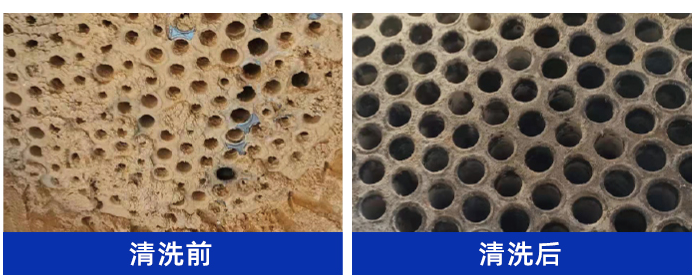
When calcium scale, hard crystalline deposits, or severe blockage occur inside heat exchanger tubes, cleaning equipment should be selected based on deposit characteristics and tube condition. For scale layers suitable for chemical treatment, chemical cleaning can be evaluated. For deposits that can be effectively flushed by water flow, high-pressure water cleaning can be evaluated. For some hard blockages, severe diameter reduction, or completely blocked tubes, a combination of mechanical drilling, breaking, brushing, and assisted debris discharge can be evaluated.
The KT-206 Intelligent Model Blocked Tube Bundle Pipe Unclogging Machine, developed by Anhui Kuaitong Pipeline Cleaning Technology Co., Ltd., is primarily designed for some severe blockage conditions in boilers, heat exchangers, condensers, evaporators, surface condensers, and other industrial tube bundles. The equipment uses a 3000W dual-shaft power structure, supports 0–2800 rpm speed adjustment, and features intelligent torque control. Flexible shafts and cutting tools can be configured based on specific tube diameter, tube material, and blockage characteristics. Its value lies in providing a mechanical treatment option for hard blockages that are difficult to handle with conventional flushing—not in replacing all chemical cleaning or high-pressure water cleaning processes.
1. When Should Mechanical Unclogging Be Considered for Heat Exchangers?
The presence of scaling in a heat exchanger does not mean a mechanical unclogging machine must be used. Before selecting equipment, it is recommended to first determine whether the problem is ordinary attachment, severe diameter reduction, or complete tube blockage.
The following conditions should be prioritized for evaluating mechanical unclogging:
Relatively hard calcium-magnesium scale or crystalline deposits inside tubes, where conventional flushing results are unsatisfactory.
Significantly reduced flow capacity in some heat exchange tubes, with hard blockages inside.
Tubes completely blocked, making it difficult for water flow or chemical liquid to enter the blockage core.
Heat exchangers, condensers, evaporators, and other tube bundles requiring tube-by-tube cleaning.
A desire to combine mechanical breaking, brushing, and assisted debris discharge to handle hard scale and residues.
If deposits can be safely dissolved by suitable chemical agents, chemical cleaning may still be an appropriate option. If the equipment structure is suitable for high-pressure water cleaning, there is no need to change the existing process solely to use mechanical equipment.
The key to selection is determining whether the current priority is deposit dissolution, surface stripping, or first opening a completely sealed tube.
2. What Is the Difference Between Calcium Scale and Crystalline Salt Scale in Heat Exchangers?
"Calcium deposits" is a commonly used on-site industrial description and does not accurately represent a specific chemical composition. Heat exchanger tubes may contain calcium-magnesium scale, crystalline salt scale, rust deposits, coke-like deposits, or hard blockages formed by a mixture of multiple fouling types.
Different deposits require different treatment methods:
|
On-Site Condition |
Recommended Treatment Approach to Evaluate First |
|
Scale layer with known composition that can be dissolved by suitable chemical agents |
Chemical cleaning |
|
Open passage, deposits that can be effectively flushed by water flow |
High-pressure water or appropriate flushing |
|
Relatively hard wall-attached deposits, with tool access |
Mechanical brushing or suitable descaling tools |
|
Severe diameter reduction, hard blockage, or some completely blocked tubes |
Evaluate mechanical drilling, breaking, and unclogging |
|
Mixed deposits of unknown composition |
Testing or small-scale trial first, then determine combined process |
Deposit composition cannot be determined solely by color, nor can a deposit be assumed suitable for cutting tool drilling simply because it is hard. For special salt scale, silicate deposits, or corrosion products, evaluation should be based on actual composition and tube material.
3. What Is the Working Principle of the KT-206?
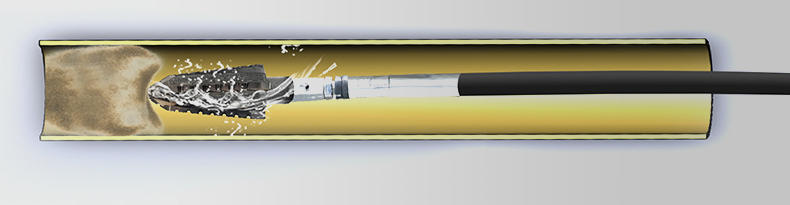
The KT-206 is an industrial tube bundle mechanical unclogging machine. Its basic working principle is that the power unit provides power, and a matched flexible shaft or related transmission tool drives the front-end cutting tool to rotate, progressively drilling, breaking, or stripping hard blockages inside the tube.
A typical operation can be divided into three stages:
Step 1: Mechanically treat the blockage. Select the flexible shaft and cutting tool based on tube diameter, blockage location, and deposit hardness. Feed the tool into the tube and progressively treat the blocked area.
Step 2: Clean residual deposits on the tube wall. After the blockage is broken and the passage is restored, evaluate whether a suitable descaling cutting tool or cleaning brush is needed for further treatment based on tube material and residual conditions.
Step 3: Discharge loosened deposits. Where site conditions permit, water flushing or air flushing can assist in discharging debris, preventing broken residues from continuing to accumulate.
The main significance of this method is that the tool acts directly on some hard blockages, making it particularly suitable for evaluating severe blockage conditions where cleaning media cannot effectively reach.
However, mechanical treatment does not automatically mean the tube wall is completely clean. After unclogging, the treatment effect still needs to be confirmed based on tube inspection and project acceptance requirements.
4. What Are the Functional Features of the KT-206?
4.1 3000W Dual-Shaft Power Structure
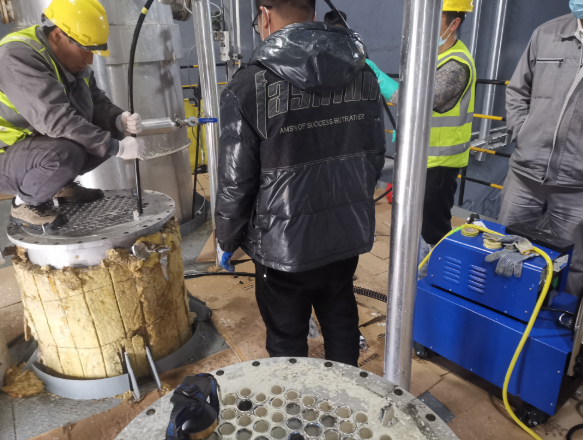
The KT-206 uses a 3000W dual-shaft structure and can perform in-tube mechanical unclogging, descaling, and cleaning through matched flexible shafts and cutting tools. Actual working capability is affected by blockage characteristics, tool specifications, tube length, and site conditions.
4.2 Adjustable Speed
The speed range is 0–2800 rpm. Operators can adjust operating parameters based on tool specifications, tube material, and blockage conditions, rather than always using a fixed speed.
4.3 Intelligent Torque Control
The equipment supports intelligent torque adjustment and can set an appropriate torque range based on flexible shaft specifications and working load, helping reduce the risk of abnormal stress when the tool jams. It cannot replace standardized operation—when abnormal resistance occurs, operation should still be stopped for inspection.
4.4 Multiple Flexible Shaft and Cutting Tool Specifications
Flexible shaft specifications include 6 mm, 8 mm, 10 mm, 12 mm, 16 mm, 18 mm, 22 mm, and 27 mm. Attachments such as heavy-duty unclogging shafts, bendable shafts, stainless steel drill rods, alloy descaling cutting tools, and cleaning brushes can be selected based on the task.
Different attachments have different purposes: heavy-duty unclogging tools focus on treating blockages, brush heads focus on cleaning attached residues, and bendable shafts are used to adapt to some bent pipelines. Final configuration should be determined based on the actual tube.
4.5 Dual Modes: Water Flushing and Air Flushing
The equipment supports both water flushing and air flushing modes, selectable based on tube purpose, residue characteristics, and site conditions. Not all tubes can be directly supplied with water, and not all conditions are suitable for air flushing. The debris discharge method must be confirmed in advance.
4.6 Intelligent Parameter Management
Functions such as parameter saving, voice prompts, and one-key recall help reduce repeated debugging under similar working conditions. Actual operation still requires personnel to judge and confirm based on site conditions.
5. How to Understand the KT-206 Technical Parameters and Configuration?
Main parameters of the KT-206 Intelligent Model are as follows:
|
Parameter Item |
Product Parameter |
|
Product Model |
KT-206 Intelligent Model |
|
Product Type |
Blocked Tube Bundle Pipe Unclogging Machine |
|
Motor Power |
3000W |
|
Speed Range |
0–2800 rpm |
|
Applicable Tube Diameter Range |
6.35–800 mm |
|
Working Modes |
Water flushing, air flushing |
|
Operation Methods |
Manual, remote control |
|
Equipment Structure |
Split-type power unit and control cabinet |
|
Power Unit Weight |
Approx. 80 kg |
|
Control Cabinet Weight |
Approx. 15 kg |
|
Power Unit Dimensions |
Approx. 660 × 420 × 400 mm |
|
Control Cabinet Dimensions |
Approx. 450 × 320 × 260 mm |
|
Compatible Flexible Shaft Specifications |
6/8/10/12/16/18/22/27 mm |
Configuration includes a 20 m quick-connect water hose, 8 m flexible shaft, alloy steel cutting tools, etc. The specific standard flexible shaft specifications, quantity, cutting tool types, and optional accessories shall be subject to the actual sales version and contract list.
Special note: The applicable tube diameter range does not mean a single configuration can cover all working conditions. Tube inner diameter, tube length, bend radius, material, blockage location, and tool accessibility all affect final selection.
6. What Information Should Be Confirmed Before Purchasing for Heat Exchanger Cleaning Projects?
To avoid equipment-site mismatch, it is recommended to provide the following information before procurement:
1. Heat exchanger type
Specify whether the equipment is a shell-and-tube heat exchanger, condenser, surface condenser, evaporator, or other tube bundle equipment, and provide equipment nameplate, structure drawings, or site photos where possible.
2. Tube diameter and length
Provide the actual inner diameter of heat exchange tubes, single tube length, and bend configuration. If multiple tube diameters exist in the bundle, specify each separately.
3. Tube material and wall thickness
Confirm carbon steel, stainless steel, copper, titanium, or other materials, and indicate whether corrosion, thinning, or deformation exists. For thin-walled tubes or special material tubes, hard cutting tools should not be used directly without evaluation.
4. Deposit characteristics and blockage severity
Specify whether the deposit is calcium-magnesium scale, crystalline salt scale, rust deposit, or mixed sediment; also specify whether the tube has light scaling, severe diameter reduction, localized blockage, or complete blockage.
5. On-site cleaning conditions
Confirm whether the equipment has been shut down, isolated, and drained; whether water introduction is permitted; how debris will be discharged; and whether chemical media residues or other safety risks exist on site.
The more accurate this information, the better the judgment of whether the KT-206 is suitable, which flexible shaft and cutting tool should be selected, and whether other cleaning methods need to be combined.
7. Which Industrial Equipment Is the KT-206 Suitable For?
Application scope includes:
Heat exchanger tube bundles: Some hard scale, crystalline deposits, and severe blockage.
Condensers, surface condensers: Treatment of some heat exchange tube deposits and blockages.
Industrial evaporators: Crystalline materials, hard deposits, and in-tube blockage.
Boiler heat exchange tubes: Some rust deposits, hard deposits, and blockages.
Tubular air preheaters: Some soot, coke-like deposits, and hard blockages.
Other industrial tube bundles: In-tube cleaning projects requiring evaluation based on tube material, tube diameter, and deposit characteristics.
These are equipment application evaluation directions and do not mean all similar equipment can be directly treated. For plate heat exchangers, shell-side fouling, external tube wall deposits, or structures where tools cannot enter, separate plans must be developed.
8. Can Mechanical Unclogging Replace Chemical Cleaning and High-Pressure Water Cleaning?
They cannot simply replace each other.
The advantage of chemical cleaning lies in treating scale layers that can be dissolved by suitable chemical agents, but tube corrosion, chemical compatibility, waste liquid treatment, and residual liquid removal must be considered.
High-pressure water cleaning is suitable for deposits that water flow can reach and effectively flush, but treatment effectiveness is affected by blockage severity, nozzle type, and tube configuration.
Mechanical unclogging focuses more on directly treating some hard blockages and is suitable for evaluating severe diameter reduction and complete blockage conditions, but tool specifications, operating parameters, and tube wall damage risk must be strictly controlled.
Therefore, a reasonable plan may be mechanical unclogging alone, or mechanical treatment followed by brushing, flushing, or other verified processes. The decision should be based on site conditions, rather than treating any single piece of equipment as a universal answer for all heat exchanger cleaning tasks.
9. Frequently Asked Questions About KT-206 Heat Exchanger Cleaning Selection
1. Can the KT-206 remove calcium deposits from heat exchangers?
For some hard calcium scale, crystalline deposits, and severe blockages, the KT-206 mechanical treatment plan can be evaluated based on tube material, tube diameter, deposit hardness, and cutting tool configuration. If the deposit is suitable for chemical dissolution, chemical cleaning can also be evaluated. The process should not be determined solely by the words "calcium deposits."
2. Can the KT-206 handle completely blocked heat exchanger tubes?
The KT-206 product positioning includes mechanical unclogging of some blocked tube bundles, but it cannot guarantee that all blocked tubes can be treated. The blockage characteristics, tube material, tube diameter, blockage length, and tool compatibility must first be confirmed. Special conditions require further evaluation.
3. What is the applicable tube diameter of the KT-206?
The applicable tube diameter range is 6.35–800 mm. The actual treatable range depends on the flexible shaft, cutting tool, and other accessory configuration. This value should not be understood as the same set of tools being used for all tube diameters.
4. Is brushing still required after mechanical unclogging?
It depends on the deposit condition. If the main objective is to restore the passage, debris discharge should still be checked after unclogging. If considerable attached scale remains on the tube wall, suitable descaling cutting tools or cleaning brushes can be evaluated for further treatment. Tool selection must be based on tube wall protection requirements.
5. Can the KT-206 be used for titanium or copper tube heat exchangers?
It cannot be determined solely by the equipment's general tube diameter range. For titanium tubes, copper tubes, and other special material tubes, wall thickness, hardness, corrosion condition, and tool action method must be confirmed. If necessary, testing or professional confirmation of the cleaning process should be performed first.
6. Can the KT-206 be used for both water flushing and dry cleaning?
It supports water flushing and air flushing modes and can be configured with different flexible shafts and accessories. The specific method depends on the selected configuration, tube purpose, deposit characteristics, and on-site safety conditions, and must be confirmed before operation.
7. Before purchasing the KT-206, how can I determine whether it is suitable for my heat exchanger?
It is recommended to provide equipment type, tube inner diameter and length, tube material, deposit photos, blockage severity, and on-site cleaning conditions. Kuaitong technical personnel can preliminarily evaluate tool configuration and applicability based on this information and, if necessary, arrange further demonstration or trial machine communication.
10. KT-206 Technical Consultation and Selection Services
The key to treating hard scale and blocked tube bundles in heat exchangers is to first confirm the deposit and tube conditions, then select the appropriate cleaning method and tools. For some hard blockages that are difficult to handle with conventional flushing, the KT-206 Intelligent Model Blocked Tube Bundle Pipe Unclogging Machine can be further evaluated.
During technical consultation, it is recommended to prepare tube diameter, tube length, material, blockage condition, and site photos so that flexible shafts, cutting tools, and operating modes can be communicated more accurately.
Anhui Kuaitong Pipeline Cleaning Technology Co., Ltd., established in 2009, is a technology-oriented enterprise specializing in the R&D, manufacturing, and sales of pipeline cleaning, unclogging, and inspection equipment. Its products include central air conditioning duct cleaning equipment, central air conditioning water system cleaning equipment, boiler pipe cleaning machines, heat exchanger unclogging machines, air preheater unclogging machines, and municipal pipeline inspection robots. The company is a National High-Tech Enterprise, a Technology-Based SME, a Training Base of the China Industrial Cleaning Association, and an Anhui Province Specialized and Sophisticated Enterprise. It has provided solutions to more than 23,000 domestic and international enterprises.
Website: www.kuaitonggroup.com
Technical Consultation (Phone/WhatsApp/WeChat): +86 18226181287
This document is compiled by the technical team of Anhui Kuaitong Pipeline Cleaning Technology Co., Ltd.
Table of Contents
- 1. When Should Mechanical Unclogging Be Considered for Heat Exchangers?
- 2. What Is the Difference Between Calcium Scale and Crystalline Salt Scale in Heat Exchangers?
- 3. What Is the Working Principle of the KT-206?
- 4. What Are the Functional Features of the KT-206?
- 5. How to Understand the KT-206 Technical Parameters and Configuration?
- 6. What Information Should Be Confirmed Before Purchasing for Heat Exchanger Cleaning Projects?
- 7. Which Industrial Equipment Is the KT-206 Suitable For?
- 8. Can Mechanical Unclogging Replace Chemical Cleaning and High-Pressure Water Cleaning?
- 9. Frequently Asked Questions About KT-206 Heat Exchanger Cleaning Selection
- 10. KT-206 Technical Consultation and Selection Services