
In many metro ventilation duct cleaning projects, the most challenging part is not the large main ducts, but the small to medium-sized ducts located in areas that personnel cannot access.
These ducts typically have limited space, preventing direct entry by cleaning crews. Additionally, the dust accumulation inside the ducts needs to be monitored in real time during the cleaning process. For professional cleaning companies, relying solely on traditional manual tools often results in limitations due to working space, cleaning distance, and the inability to view the duct interior.
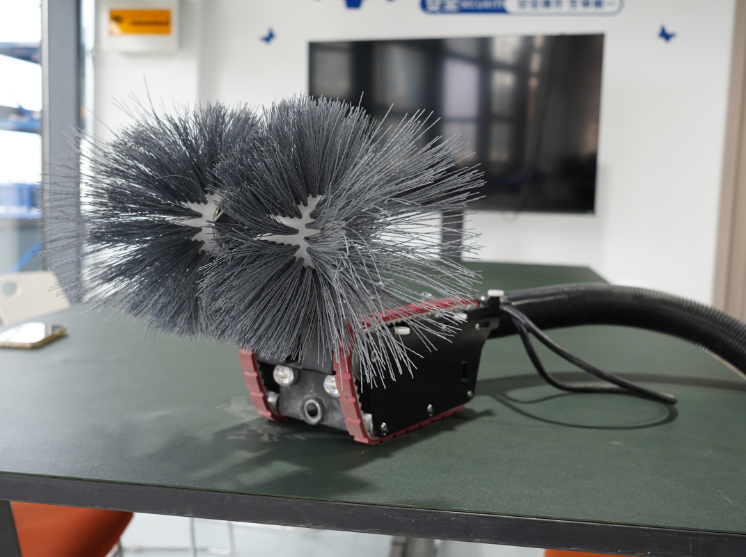
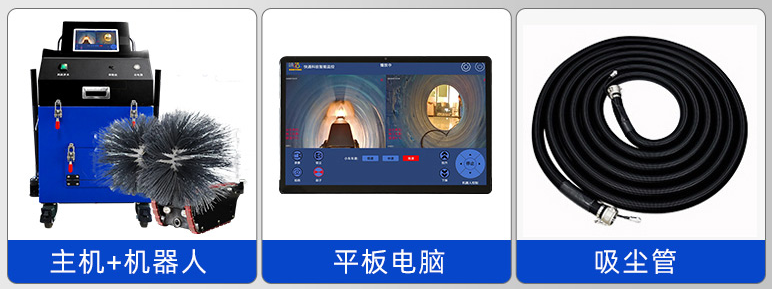
To address these metro and small-to-medium duct cleaning scenarios, Anhui Kuaitong Pipeline Cleaning Technology Co., Ltd. has developed the KT-956-D Crawler-Type Metro Duct Cleaning Robot. The equipment integrates crawler locomotion, mechanical brushing, high-definition camera, LED lighting, vacuuming, remote control, and data storage—primarily for cleaning small to medium ducts that personnel cannot easily access
1. Which Duct Cleaning Projects Is the KT-956 Suitable For?
When selecting duct cleaning equipment, the duct characteristics of the project should first be assessed.
If the site presents the following conditions:
Confined duct space
Personnel cannot enter ducts
Ducts located in metro equipment areas
Dust accumulation inside ducts
Need to monitor the cleaning process
Robot required to enter ducts
Mechanical brushing required
Simultaneous vacuuming required
Remote control required
Then the KT-956 is a suitable choice. It is specifically positioned for metro duct cleaning and designed for small-to-medium duct interior work.
2. How Does the KT-956 Clean Metro Ducts?
The KT-956 uses a combination of crawler locomotion and mechanical rotary cleaning.
After the robot enters the duct, it moves forward using its crawler mechanism. The cleaning brush rotates and contacts the duct walls to mechanically remove dust.
Simultaneously, the high-definition camera on the robot captures real-time images of the duct interior, allowing operators to monitor the robot's working status via the display.
During cleaning, the vacuum system can be used to handle dust generated by the brushing process.
The operational process is:
Robot enters duct → Crawler movement → Brush rotation → Dust removal from walls → HD camera monitoring → Vacuum dust collection
3. Why Use a Crawler-Type Robot?
Compared with traditional flexible shaft brushing, a robot can directly enter and move within ducts of suitable dimensions.
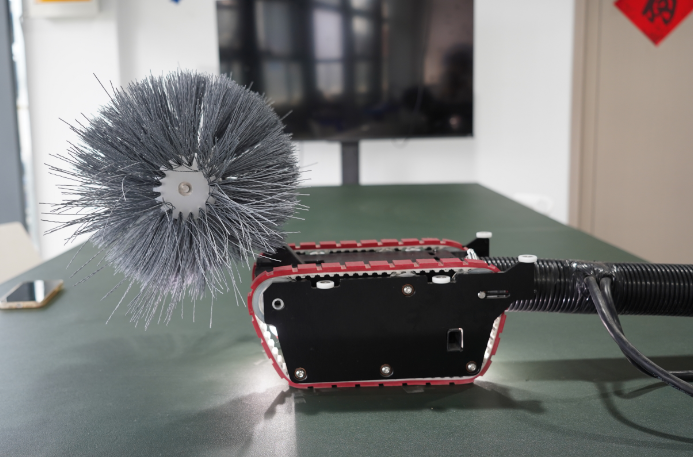
The KT-956 robot weighs 6.2 kg. Depending on lifting arm position, robot dimensions are:
430 × 180 × 140 mm (with arm at lowest position)
400 × 180 × 260 mm (with arm at highest position)
The compact robot structure allows entry into correspondingly sized ducts, with autonomous movement via crawler tracks.
The equipment also features 70 mm obstacle clearance and 30° climbing capability, adapting to ducts with height variations and slopes
4. What Is the Function of the High-Definition Camera?
For duct cleaning equipment, the robot entering the duct is only the first step.
Operators also need to know:
Where is the robot?
What is the duct condition ahead?
Is the brush head working properly?
Has the current area been cleaned?
The KT-956 is equipped with 3MP × 2 cameras and 2W LED × 4 lights.
After the robot enters the duct, operators can observe the interior in real time through a 10.1-inch high-definition LCD display.
The equipment also features 4GB + 128GB storage capacity for project documentation as needed.
5. 148 rpm Brush Speed – Designed for Mechanical Brushing
The KT-956 uses a rotating cleaning brush for mechanical duct wall cleaning.
Brush speed: 148 rpm.
After the robot enters the duct, the cleaning brush contacts the duct walls and gradually removes dust through rotational friction.
Unlike methods that rely solely on airflow, mechanical brushing acts directly on wall-attached deposits.
In practice, the appropriate cleaning method should be selected based on duct material, dust accumulation level, and site conditions.
6. How Does the Vacuum System Support Robot Cleaning?
During duct cleaning, after the brush removes dust from the walls, the dust must be collected.
The KT-956 is equipped with a 20 L vacuum cleaner.
Mechanical cleaning combined with vacuuming allows simultaneous dust collection during brushing.
For metro, equipment rooms, and other indoor ventilation system maintenance projects, this integrated brushing and dust collection reduces dust dispersion during cleaning.
7. Which Working Positions Are Suitable for Remote Operation?
Metro ducts are often located in areas that personnel cannot easily access.
The KT-956 robot enters the duct while operators control it from outside.
Robot travel speed: 3.3 m/min.
Cleaning length: 15–20 m (actual length depends on the flexible shaft configuration).
For projects requiring continuous cleaning over a certain distance, appropriate accessories can be configured based on actual duct length.
8. Which Duct Types Are Suitable for the KT-956?
The KT-956 is primarily suitable for:
1. Metro Ventilation Ducts
The equipment is specifically positioned for metro duct cleaning, suitable for duct cleaning within applicable dimensions.
2. Metro Station Halls and Equipment Area Ducts
Some equipment area ducts have limited space and are difficult to access manually—robot-based cleaning is a suitable approach.
3. Small-to-Medium Ventilation Ducts
Applicable cleaning size: 150–350 mm with width ≥ 190 mm.
4. Ducts Inaccessible to Personnel
For narrow ducts that personnel cannot enter, the robot can be used to perform cleaning operations.
9. KT-956 Product Specifications
|
Parameter |
Specification |
|
Product Name |
Metro Duct Cleaning Robot |
|
Model |
KT-956-D |
|
Operating Voltage |
220V / 50Hz |
|
Total Power |
2600W |
|
Vacuum Capacity |
20 L |
|
Control Cabinet Weight |
44.8 kg |
|
Robot Travel Speed |
3.3 m/min |
|
Robot Weight |
6.2 kg |
|
Brush Speed |
148 rpm |
|
Camera |
3MP × 2 |
|
Obstacle Clearance |
70 mm |
|
Climbing Capability |
30° |
|
Display |
10.1-inch HD LCD |
|
Storage Capacity |
4GB + 128GB |
|
Lighting |
2W LED × 4 |
|
Cleaning Length |
15–20 m (depends on shaft length) |
|
Applicable Cleaning Size |
150–350 mm, width ≥ 190 mm |
|
Robot Dimensions (arm at lowest) |
L × W × H: 430 × 180 × 140 mm |
|
Robot Dimensions (arm at highest) |
L × W × H: 400 × 180 × 260 mm |
|
Control Cabinet Dimensions (without handle) |
L × W × H: 560 × 490 × 750 mm |
|
Control Cabinet Dimensions (with handle) |
L × W × H: 560 × 530 × 840 mm |
Specifications based on product documentation.
10. What Information Should Be Confirmed Before Purchasing the KT-956?
If you are a metro ventilation system maintenance unit, central air conditioning cleaning company, property maintenance company, or professional duct cleaning service provider, the following information should be confirmed before selecting the KT-956:
① Duct type
Confirm whether they are metro ducts, equipment area ducts, or other ventilation ducts.
② Duct dimensions
Confirm whether duct dimensions fall within the 150–350 mm applicable range with width ≥ 190 mm.
③ Height variations
If the duct has height variations, the robot's clearance capability should be evaluated.
④ Slope
The KT-956 has a climbing capability of 30°.
⑤ Cleaning length
Confirm the actual cleaning distance required and determine coverage based on shaft length.
⑥ Dust accumulation
Determine whether it is light surface dust or heavy accumulated dust.
⑦ Dust handling method
If the site has strict dust control requirements, the vacuum system should be considered.
This information helps determine whether the KT-956 is suitable for the project, rather than selecting solely based on the product name "metro duct robot."
11. How to Choose Between the KT-956 and Other Duct Cleaning Equipment?
Anhui Kuaitong offers various cleaning equipment for different duct configurations and requirements.
For metro small-to-medium ducts where personnel cannot enter and real-time monitoring is required, the KT-956 is the appropriate choice.
If the project involves small-diameter fresh air ducts, branch ducts with multiple bends, the corresponding flexible shaft fresh air duct cleaning equipment should be selected based on actual dimensions.
If the project involves large main ducts, equipment suitable for large duct dimensions, length, and site conditions should be selected.
Therefore, the core of equipment selection is not "which machine is best," but which machine best matches the site's duct dimensions, working space, cleaning distance, and dust conditions.
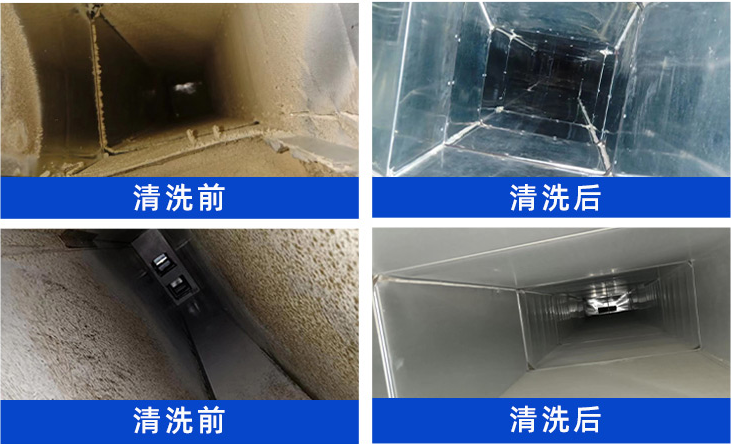
12. KT-956 Core Advantages
Based on product configuration and application scenarios, the KT-956 features:
Robot Cleaning
Crawler robot enters the duct, reducing the need for personnel to work in confined spaces.
HD Monitoring
3MP × 2 cameras provide real-time observation of the duct interior.
LED Lighting
4 × 2W LED lights improve visibility of the robot's path and duct interior.
Mechanical Brushing
148 rpm cleaning brush for mechanical removal of wall dust.
Vacuum Integration
20 L vacuum handles dust generated during mechanical cleaning.
Climbing Capability
30° climbing capability for sloped ducts.
Remote Operation
Operators control the robot from outside the duct.
Data Storage
4GB + 128GB storage capacity for project documentation as needed.
These features are designed around the practical challenges of personnel cannot enter, interior difficult to observe, dust requires mechanical removal, and dust needs to be collected.
13. Frequently Asked Questions (FAQ)
Q: What type of ducts does the KT-956 primarily clean?
A: It is primarily used for metro ducts and small-to-medium ventilation ducts within applicable dimensions.
Q: What duct size is suitable for the KT-956?
A: Applicable cleaning size: 150–350 mm with width ≥ 190 mm.
Q: Does the KT-956 require personnel to enter the duct?
A: No. The robot enters ducts of suitable dimensions for cleaning, with operators working from outside.
Q: Can the KT-956 view the duct interior in real time?
A: Yes. The equipment features 3MP × 2 cameras and 2W LED × 4 lighting, displayed on a 10.1-inch HD LCD screen.
Q: What is the robot travel speed of the KT-956?
A: The robot travel speed is 3.3 m/min.
Q: Can the KT-956 climb slopes?
A: Yes. The robot has a climbing capability of 30°.
Q: Does the KT-956 have vacuum function?
A: Yes. The equipment includes a 20 L vacuum to handle dust generated during mechanical brushing.
Q: How far can the KT-956 clean in one pass?
A: The cleaning length is 15–20 m, with actual length depending on flexible shaft configuration.
About Anhui Kuaitong Pipeline Cleaning Technology Co., Ltd.
Anhui Kuaitong Pipeline Cleaning Technology Co., Ltd., established in 2009, is a subsidiary of Anhui Kuaitong Environmental Technology Group Co., Ltd., specializing in the R&D, manufacturing, and technical services of pipeline cleaning equipment. The company has been recognized as a National High-Tech Enterprise, a Technology-Based SME, and a Training Base of the China Industrial Cleaning Association. Our products are certified under ISO 9001 Quality Management System and EU CE certification. Over the years, we have provided pipeline cleaning, unclogging, and inspection solutions to more than 23,000 enterprises worldwide.
The company's main product categories include central air conditioning cleaning equipment, boiler pipe cleaning equipment, industrial pipe unclogging machines, pipeline inspection equipment, kitchen exhaust duct cleaning equipment, and cleaning accessories/consumables.
For metro ducts, small-to-medium ventilation ducts, and ducts inaccessible to personnel, the KT-956 combines crawler robot, mechanical brushing, HD camera, lighting, vacuuming, and remote control to provide a robotic duct cleaning solution.
This document is compiled by the technical team of Anhui Kuaitong Pipeline Cleaning Technology Co., Ltd.
Website: www.kuaitonggroup.com
Technical Consultation (Phone/WhatsApp/WeChat): +86 18226181287
Table of Contents
- 1. Which Duct Cleaning Projects Is the KT-956 Suitable For?
- 2. How Does the KT-956 Clean Metro Ducts?
- 3. Why Use a Crawler-Type Robot?
- 4. What Is the Function of the High-Definition Camera?
- 5. 148 rpm Brush Speed – Designed for Mechanical Brushing
- 6. How Does the Vacuum System Support Robot Cleaning?
- 7. Which Working Positions Are Suitable for Remote Operation?
- 8. Which Duct Types Are Suitable for the KT-956?
- 9. KT-956 Product Specifications
- 10. What Information Should Be Confirmed Before Purchasing the KT-956?
- 11. How to Choose Between the KT-956 and Other Duct Cleaning Equipment?
- 12. KT-956 Core Advantages
- 13. Frequently Asked Questions (FAQ)
- About Anhui Kuaitong Pipeline Cleaning Technology Co., Ltd.