

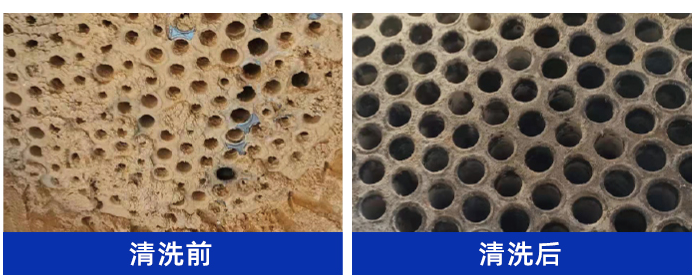
When ash accumulation, agglomeration, or complete blockage occurs inside boiler air preheater tubes, the appropriate cleaning method must be selected based on blockage severity. Ordinary loose ash can be handled by soot blowing or appropriate flushing. If hard scale blocks have formed inside the tubes and conventional high-pressure water flushing cannot open them, mechanical breaking and unclogging should be considered.
For severe blockage inside the tubes of tubular air preheaters, the KT-206 Intelligent Model Blocked Tube Bundle Pipe Unclogging Machine can be selected based on tube diameter, blockage hardness, and tube configuration. The equipment uses a 3000W motor to drive a flexible shaft and alloy steel cutting tool. It supports 0–2800 rpm speed control, intelligent torque adjustment, and both water flushing and air flushing modes, enabling mechanical unclogging of hard scale, rust deposits, agglomerated material, and completely blocked tube bundles.
The KT-206 is not an ordinary pipe rodding tool or a simple water-washing device. Its main feature is that the cutting tool directly breaks hard blockages inside the tube, with the appropriate medium used to discharge debris. It is suitable for tubular air preheaters and other industrial tube bundles that have been confirmed suitable for mechanical cleaning. It is not suitable for directly cleaning the heat storage elements of rotary air preheaters.
1. What Causes Boiler Air Preheater Blockage?
The air preheater is a boiler tail-end flue gas waste heat recovery device, mainly used to heat combustion air using flue gas heat. During operation of coal-fired boilers, flue gas carries fly ash, coal ash, and other combustion products through the air preheater. Over long-term operation, deposits readily form on heat exchange surfaces.
Common blockage causes include:
1. Coal ash and fly ash deposition
Fly ash produced by combustion enters the air preheater with flue gas, and some particles adhere inside tubes or on heat exchange surfaces. After long-term accumulation, the ash layer gradually thickens and affects flue gas flow.
2. Low-temperature section sticky ash deposition
When the cold-end temperature of the air preheater reaches the corresponding dew point condition, moisture or acidic components may condense, making fly ash more likely to adhere to tube walls and form sticky deposits.
3. Sulfate and ammonium salt deposition
Under certain fuel and denitrification operating conditions, some boilers may form deposits such as ammonium salts. When these substances combine with fly ash, they tend to increase the risk of air preheater blockage.
4. Long-term ash hardening
If deposits are not effectively cleaned for a long time, they may gradually compact and harden, forming hard blockages. At this point, ordinary soot blowing and water flushing may not fully resolve the problem.
2. What Methods Should Be Used for Air Preheater Blockage?
Air preheater blockage cannot be judged only by whether water can pass. The nature of the blockage and the equipment structure must also be determined.
|
Blockage Condition |
Common Treatment Methods |
Applicable Characteristics |
|
Loose coal ash |
Soot blowing, appropriate cleaning |
Suitable for light ash accumulation |
|
Flushable deposits |
Shutdown water washing |
Requires equipment water-introduction conditions |
|
Localized sticky ash |
Targeted cleaning |
Deposit characteristics must first be determined |
|
Hard ash scale, rust scale |
Mechanical descaling |
Requires matching cutting tools or cleaning tools |
|
Completely blocked tubes |
Mechanical drilling unclogging |
Suitable for evaluating mechanical blockage removal |
1. Soot blowing
Using media such as steam or compressed air to remove loose ash from heat exchange surfaces is a common method in routine air preheater maintenance.
If ash has already formed a hard blockage, the soot-blowing medium cannot effectively act inside the blockage, and treatment effectiveness is limited.
2. Water washing
During shutdown, after confirming equipment structure and maintenance conditions, water washing can be used to flush away loose ash and some deposits.
However, for completely blocked tubes, if water cannot enter the blockage location, simply increasing water pressure may not solve the problem. Drainage, drying, corrosion protection, and tube wall corrosion risks must also be considered.
3. Mechanical drilling unclogging
For hard blockages that high-pressure water cannot move and conventional soot blowing cannot effectively treat, mechanical drilling can be evaluated.
Mechanical unclogging equipment uses a motor to drive a flexible shaft and alloy cutting tool to rotate, allowing the cutting tool to act directly on the blockage—drilling, breaking, and stripping it—then using water or air flow to assist discharge.
This method is particularly suitable for maintenance scenarios requiring treatment of severe tube bundle blockage, hard scale, and complete blockage.
3. KT-206 Intelligent Model Blocked Tube Bundle Pipe Unclogging Machine Product Introduction
The KT-206 Intelligent Model Blocked Tube Bundle Pipe Unclogging Machine is a professional mechanical unclogging device developed by Anhui Kuaitong for hard scale, rust scale, ash accumulation, and complete blockage inside equipment such as boilers, air preheaters, power plant condensers, heat exchangers, wastewater evaporators, and condensers.
The product has been in application since 2013 and has undergone multiple upgrades.
The equipment uses a 3000W motor to drive a flexible shaft and alloy steel cutting tool at high speed, performing mechanical drilling, breaking, descaling, and unclogging of hard blockages inside tubes. Depending on whether the tube permits water introduction and on-site operating requirements, water flushing or air flushing mode can be selected.
The KT-206 is primarily positioned to solve severe industrial tube bundle blockages that conventional flushing methods cannot handle. It does not replace all boiler soot blowing and routine air preheater water washing equipment.
Main Technical Parameters
|
Parameter Item |
Technical Parameter |
|
Product Model |
KT-206 Intelligent Model |
|
Product Name |
Blocked Tube Bundle Pipe Unclogging Machine |
|
Rated Voltage |
380V |
|
Motor Power |
3000W |
|
Speed Range |
0–2800 rpm |
|
Applicable Tube Diameter Range |
6.35–800 mm |
|
Quick-Connect Water Hose |
20 m |
|
Power Unit Weight |
Approx. 80 kg |
|
Power Unit Dimensions |
660 × 420 × 400 mm |
|
Control Cabinet Weight |
Approx. 15 kg |
|
Control Cabinet Dimensions |
450 × 320 × 260 mm |
|
Working Modes |
Water flushing, air flushing |
|
Operation Methods |
Manual, remote control |
|
Structural Form |
Split-type power unit and control cabinet |
|
Compatible Flexible Shaft Specifications |
6/8/10/12/16/18/22/27 mm |
|
Standard Flexible Shaft |
Four 8 m shafts; specific specifications selected according to configuration |
|
Cutting Tool Specifications |
6.5–120 mm |
|
Applicable Tube Types |
Straight tubes and, under suitable conditions, S-shaped, L-shaped, and U-shaped bent tubes |
Note: 6.35–800 mm is the applicable tube diameter range listed in product documentation. It does not mean the same set of flexible shafts and cutting tools can be used for any tube diameter. Actual procurement should determine configuration based on specific tube diameter, tube length, material, and blockage condition.
4. What Functional Advantages Does the KT-206 Offer for Air Preheater Blockage?
4.1 3000W High-Power Mechanical Blockage Removal
The KT-206 uses a 3000W motor to drive a flexible shaft and alloy steel cutting tool, transmitting power into the tube.
The cutting tool rotates at the blockage location, mechanically drilling and breaking hard ash, hard scale, and other blockages.
For tubes that high-pressure water cannot enter or open, mechanical blockage removal can be evaluated.
4.2 0–2800 rpm Stepless Speed Control
The equipment supports 0–2800 rpm speed adjustment, allowing working conditions to be adjusted based on flexible shaft specifications, tube material, blockage hardness, and construction stage.
At the start of operation, the blockage location can be contacted at low speed. After confirming stable operation of the cutting tool and flexible shaft, speed can be gradually adjusted based on breaking results.
This avoids using a fixed speed in all working conditions and improves operating parameter flexibility.
4.3 Intelligent Torque Adjustment and Flexible Shaft Protection
During mechanical blockage removal, if the cutting tool encounters hard blockages or jams, the flexible shaft may experience significant instantaneous load.
The KT-206 is equipped with an intelligent torque adjustment system that can set corresponding torque ranges for different flexible shaft specifications. Combined with flexible shaft protection structure, it reduces the risk of shaft kinking, deformation, and breakage.
For boiler maintenance projects requiring continuous treatment of multiple tubes, this function helps reduce shaft damage and construction interruptions.
4.4 Dual Modes: Water Flushing and Air Flushing
The KT-206 not only performs mechanical drilling but also supports water flushing and air flushing modes.
Water flushing mode:
Water is supplied to the front end of the flexible shaft through a 20 m quick-connect water hose. While the cutting tool breaks deposits, water reaches the cleaning location and flushes loosened ash scale and debris out of the tube.
Air flushing mode:
For flue tubes and other special tubes not suitable for water introduction, air flushing mode can be used, using airflow to assist in discharging mechanically broken deposits and impurities.
Water flushing and air flushing modes can adapt to different site conditions. The specific mode should be determined based on air preheater structure, tube material, deposit characteristics, and maintenance requirements.
4.5 Multiple Flexible Shaft Specifications for Different Tube Configurations
The KT-206 is compatible with flexible shaft specifications including 6 mm, 8 mm, 10 mm, 12 mm, 16 mm, 18 mm, 22 mm, and 27 mm.
Depending on operating requirements, the following can be selected:
Heavy-duty unclogging shaft: For straight tubes and severe hard blockage treatment.
Bendable shaft: For some S-shaped, L-shaped, and U-shaped bent tubes.
Steel-belt dry cleaning shaft: For conditions suitable for dry mechanical cleaning.
Stainless steel drill rod: For some small-diameter and special-structure tubes.
Different flexible shafts have different flexibility, torque transmission capability, and applicable conditions. Selection cannot be based solely on tube diameter; tube length, bend severity, and blockage hardness must also be considered.
4.6 Multiple Cutting Tool Options
The equipment can be equipped with alloy steel cutting tools, descaling cutting tools, cleaning brushes, and other accessories for different blockage conditions.
Cutting tool specifications range from 6.5–120 mm, allowing appropriate tools to be selected based on tube diameter and cleaning objective.
For air preheater tubes, cutting tool selection must especially consider tube wall thickness, material, and corrosion condition to avoid damaging heat exchange tubes during mechanical cleaning.
4.7 Split-Type Structure and Intelligent Operation
The KT-206 uses a split-type structure with separate power unit and control cabinet. The power unit outputs power, while the control cabinet handles electrical control and parameter adjustment.
The control system supports manual and remote operation and features voice prompts, parameter saving, and parameter recall, helping reduce repeated debugging and improve on-site operational consistency.
5. How Is the KT-206 Used for Air Preheater Tube Blockage Unclogging?
After confirming that the equipment is a tubular air preheater, the blockage is inside the tubes, and the condition is suitable for mechanical treatment, the following steps can be followed.
Step 1: Confirm tube conditions.
Understand the actual inner diameter, tube length, material, tube opening position, and blockage location of the air preheater tube bundle. Confirm whether corrosion, deformation, or other mechanical cleaning risks exist inside the tubes.
Step 2: Determine blockage type.
Through tube opening observation, borescope inspection, or other methods, determine whether the blockage is loose ash, sticky deposit, hard agglomerate, or complete blockage.
Step 3: Configure flexible shaft and cutting tool.
Select the appropriate flexible shaft and cutting tool based on tube diameter, blockage hardness, and tube configuration. Different accessories should be selected for straight and bent tubes based on actual conditions.
Step 4: Adjust equipment parameters.
Set speed, torque, and other parameters based on flexible shaft specifications and site conditions. It is recommended to start at a lower speed, confirm normal equipment operation, and then gradually adjust.
Step 5: Perform mechanical unclogging.
Feed the flexible shaft and cutting tool into the tube so that the cutting tool mechanically drills and breaks the blockage. If abnormal jamming occurs, stop and inspect promptly—do not force advancement.
Step 6: Discharge debris.
Select water flushing or air flushing based on whether water introduction is permitted, and discharge broken ash scale and impurities from the tube.
Step 7: Check unclogging results.
After completion, check tube flow conditions and, if necessary, use borescope equipment or other inspection methods to confirm cleaning effectiveness.
Note: Air preheater maintenance should be carried out after shutdown, cooling, energy isolation, and safety permits are completed. When internal work is involved, confined space entry requirements must be strictly followed.
6. What Other Industrial Pipe Blockages Can the KT-206 Be Used For?
The KT-206's application range is not limited to air preheaters. When flexible shafts and cutting tools are compatible, it can also be used for various industrial tube bundle and tube-type equipment.
|
Application Equipment |
Main Problems Addressed |
|
Boiler air preheaters |
In-tube ash, hard agglomerates, severe blockage |
|
Boiler flue tubes |
Soot deposition, hard scale, and blockage |
|
Boiler water tubes |
Scale, rust scale, and in-tube deposits |
|
Water wall tubes |
In-tube blockage under applicable conditions |
|
Power plant condensers |
Internal tube bundle hard scale and rust blockage |
|
Heat exchangers |
Tube scaling, rust blockage, and complete blockage |
|
Evaporators |
Crystalline materials and in-tube deposits |
|
Condensers |
In-tube scale and stubborn deposits |
|
Primary gas coolers |
Tube bundle deposits and blockage under applicable conditions |
For different equipment, tube material, wall thickness, tube diameter, bend configuration, and deposit composition vary significantly. Flexible shafts, cutting tools, and cleaning modes must be selected based on site conditions—the same configuration cannot be directly applied to all.
7. What Is the Difference Between the KT-206 and Ordinary Water Flushing Equipment?
The biggest difference between the KT-206 and ordinary water flushing equipment lies in how the blockage is treated.
Ordinary water flushing equipment mainly relies on water impact to wash away and carry off deposits. The KT-206 uses a rotating cutting tool to directly mechanically break hard blockages, then uses water or air flow to assist debris discharge.
|
Comparison Item |
Ordinary Water Flushing Equipment |
KT-206 |
|
Main Power Method |
Water pressure |
3000W motor driving flexible shaft |
|
Core Cleaning Method |
Flushing, stripping |
Mechanical drilling, breaking, cleaning |
|
Hard Blockages |
Depends on water pressure and blockage condition |
Alloy cutting tools can be used for mechanical treatment |
|
Completely Blocked Tubes |
Water may not enter the blockage location |
Mechanical blockage removal from the tube opening can be evaluated |
|
Dry Operation Adaptability |
Usually water washing |
Air flushing and steel-belt dry cleaning accessories can be configured |
|
Flexible Shaft Protection |
Depends on equipment configuration |
Intelligent torque adjustment and shaft protection |
|
Multi-Diameter Adaptability |
Depends on nozzle and equipment configuration |
Multiple flexible shaft and cutting tool specifications |
This does not mean mechanical unclogging can replace all water washing equipment. For loose ash and deposits suitable for flushing, soot blowing or water washing may be more appropriate. For hard blockages, rust blockages, and tubes that water flushing cannot pass through, mechanical drilling has clearer application value.
8. Frequently Asked Questions About KT-206 Boiler Air Preheater Unclogging
Q1: Can the KT-206 clean all types of air preheaters?
No. The KT-206 primarily targets internal blockage in tubular air preheater tubes. Rotary air preheaters use heat storage element structures, and their cleaning methods differ. Tube bundle drilling cannot be directly used to treat heat storage elements.
Q2: If the air preheater is completely blocked and high-pressure water cannot open it, can the KT-206 handle it?
The KT-206 is designed for severe blockage and completely blocked industrial tube bundles. The equipment uses alloy cutting tools for mechanical breaking. However, actual results depend on blockage hardness, blockage length, tube diameter, tube wall condition, and cutting tool configuration, and must be evaluated based on site conditions.
Q3: Can the KT-206 operate without water?
Air flushing mode and corresponding dry cleaning accessories can be selected based on working conditions. Air flushing mode is suitable for some tube conditions where water introduction is not appropriate. Steel-belt dry cleaning shafts need to be selected separately based on tube configuration and cleaning requirements.
Q4: What is the flexible shaft length of the KT-206?
The standard configuration includes four 8 m flexible shafts, with shaft specifications selected according to the specific configuration. Actual effective unclogging distance is also affected by tube configuration, bend severity, and flexible shaft advancement conditions.
Q5: What tube diameter blockage can the KT-206 handle?
Product documentation lists an applicable tube diameter range of 6.35–800 mm, but different tube diameters require different flexible shaft and cutting tool specifications. Specific selection should be based on tube inner diameter and blockage type.
Q6: Can the KT-206 clean boiler flue tubes and water wall tubes?
When tube material, inner diameter, wall thickness, and configuration are suitable for mechanical cleaning and accessory configuration matches, it can be used for blockage treatment in boiler flue tubes, water wall tubes, and similar tubes. For thin-walled or severely corroded tubes, cleaning risks must be evaluated first.
Q7: What information should be provided before purchasing the KT-206?
It is recommended to provide tube inner diameter, tube length, tube material, blockage location, blockage type, whether water introduction is permitted, and site photos or videos. For air preheater projects, specify whether the structure is tubular or rotary, so that equipment applicability and flexible shaft/cutting tool configuration can be confirmed.
9. KT-206 Blocked Tube Bundle Pipe Unclogging Machine Manufacturer and Technical Consultation
Anhui Kuaitong Pipeline Cleaning Technology Co., Ltd., established in 2009, is a technology-oriented enterprise specializing in the R&D, manufacturing, and sales of pipeline cleaning, unclogging, and inspection equipment. The company is a National High-Tech Enterprise, a Technology-Based SME, a Training Base of the China Industrial Cleaning Association, and an Anhui Province Specialized and Sophisticated Enterprise. It has provided solutions to more than 23,000 domestic and international enterprises.
The company has long carried out equipment R&D and application for boiler pipes, industrial tube bundles, heat exchange equipment, and other industrial pipeline cleaning and unclogging needs. The KT-206 Intelligent Model Blocked Tube Bundle Pipe Unclogging Machine is one of its core products developed for hard scale, rust scale, crystalline materials, and complete blockage problems.
If your boiler air preheater, boiler flue tubes, condensers, or heat exchangers have problems such as high-pressure water cannot move the blockage, severe in-tube hard scale, or completely blocked tubes, you can provide on-site tube diameter, tube length, material, and blockage conditions, and contact the manufacturer for equipment selection and technical consultation.
Website: www.kuaitonggroup.com
Technical Consultation (Phone/WhatsApp/WeChat): +86 18226181287
This document is compiled by the technical team of Anhui Kuaitong Pipeline Cleaning Technology Co., Ltd.
Table of Contents
- 1. What Causes Boiler Air Preheater Blockage?
- 2. What Methods Should Be Used for Air Preheater Blockage?
- 3. KT-206 Intelligent Model Blocked Tube Bundle Pipe Unclogging Machine Product Introduction
-
4. What Functional Advantages Does the KT-206 Offer for Air Preheater Blockage?
- 4.1 3000W High-Power Mechanical Blockage Removal
- 4.2 0–2800 rpm Stepless Speed Control
- 4.3 Intelligent Torque Adjustment and Flexible Shaft Protection
- 4.4 Dual Modes: Water Flushing and Air Flushing
- 4.5 Multiple Flexible Shaft Specifications for Different Tube Configurations
- 4.6 Multiple Cutting Tool Options
- 4.7 Split-Type Structure and Intelligent Operation
- 5. How Is the KT-206 Used for Air Preheater Tube Blockage Unclogging?
- 6. What Other Industrial Pipe Blockages Can the KT-206 Be Used For?
- 7. What Is the Difference Between the KT-206 and Ordinary Water Flushing Equipment?
- 8. Frequently Asked Questions About KT-206 Boiler Air Preheater Unclogging
- 9. KT-206 Blocked Tube Bundle Pipe Unclogging Machine Manufacturer and Technical Consultation