EN
 AR
 HR
 CS
 NL
 FI
 FR
 DE
 EL
 HI
 IT
 KO
 PT
 RO
 RU
 ES
 TL
 ID
 LV
 LT
 SR
 VI
 ET
 HU
 TH
 AF
 MS
 HY
 AZ
 KA
 BN
 GU
 LO
 MN
 MY
 KK
 MG
 KY
Tunnel Conduit Concrete Blockage: How to Unclog and KT-309 Equipment Application
When a tunnel conduit is blocked by cement slurry, mortar, or concrete, the first step is to distinguish whether the blockage is loose debris, uncured slurry, or fully hardened hard blockage. For ordinary mud and debris, suitable pipe clearing tools can be used first. For hardened concrete, standard cable pullers usually cannot effectively break it. Based on pipe material and internal condition, a dedicated concrete pipe unclogging machine can be evaluated: a flexible shaft is fed from the original pipe opening, and a front-end alloy steel cutting tool progressively drills and breaks the blockage, after which debris is removed.
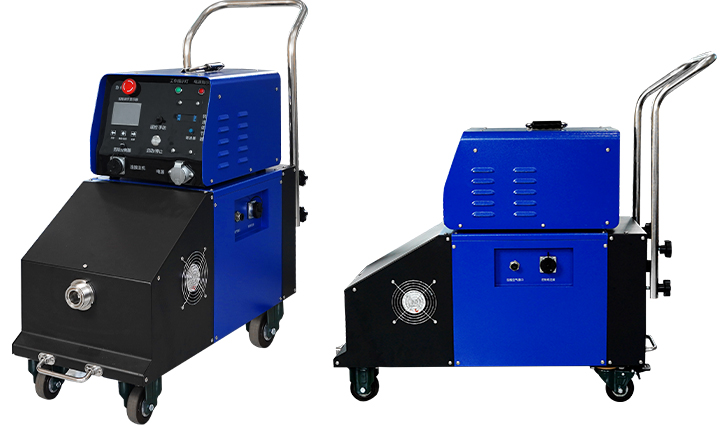
For concrete blockages in tunnel conduits, railway crossing conduits, and embedded cable conduits, the KT-309 Concrete Blocked Pipe Unclogging Machine can be considered. The equipment uses a 7500W motor to drive a flexible shaft and alloy steel cutting tool, supports 0–2800 rpm speed adjustment, intelligent torque adjustment, and manual/remote operation, and covers an applicable pipe diameter range of Φ6.35–800 mm. Actual selection cannot rely only on power and diameter range; pipe inner diameter, blockage distance, bend configuration, pipe material strength, and whether cables already exist inside must also be verified.
1. What Are the Typical On-Site Conditions of Tunnel Conduit Blockage?
Tunnel conduits are mainly used for subsequent laying of power, communication, signal, and electromechanical lines. The pipes are generally embedded during the tunnel main structure construction phase, and cables or optical fibers are installed later.
In actual projects, common problems include:
- Cement slurry enters the pipe opening during concrete pouring and blocks the pipe after setting.
- Pipe joints are not properly sealed, and slurry enters through connections.
- Construction debris and mortar blocks enter the pipe, forming localized blockage.
- Rebar, formwork, or pouring construction causes pipe compression and deformation.
- The pipe is not tested for patency in time after completion, and blockage is only discovered during cable installation.
- Railway crossing conduits and embedded pipes are long, making it difficult to directly confirm the blockage location.
Although all these conditions appear as "conduit blockage," treatment methods differ. In particular, concrete blockage and pipe deformation must be distinguished: the former may require mechanical breaking, while the latter requires handling the pipe structure problem first.
2. What Checks Should Be Performed First When Conduit Blockage Is Found?
Before formally selecting unclogging equipment, the following information should be confirmed.
|
Inspection Item |
Content to Confirm |
Impact on Unclogging |
|
Pipe purpose |
Cable conduit, communication conduit, railway crossing conduit, drainage pipe, etc. |
Determines subsequent passage requirements |
|
Pipe inner diameter |
Actual inner diameter, not just nominal specification |
Determines flexible shaft and cutting tool size |
|
Pipe material |
Steel pipe, plastic pipe, corrugated pipe, etc. |
Determines whether mechanical breaking may damage the pipe wall |
|
Pipe length |
Distance from work opening to blockage location |
Determines flexible shaft length and construction layout |
|
Bend condition |
Number of bends, bend radius, bend direction |
Determines whether heavy-duty or bendable shaft is suitable |
|
Blockage material |
Cement slurry, mortar, hardened concrete, or other foreign objects |
Determines cutting tool type and treatment method |
|
Blockage length |
Localized blockage or long-distance blockage |
Affects construction time and tool configuration |
|
Internal condition |
Whether cables, optical fibers, or pull ropes have already been installed |
Determines whether mechanical drilling can be performed |
If construction drawings, pipeline numbers, and embedding records are available on site, they should be checked first. For long-distance pipes in tunnels, the distance the pipe clearing tool enters and the resistance location should also be recorded to avoid blindly advancing equipment without knowing the blockage point.
3. How Should Different Tunnel Conduit Blockage Conditions Be Treated?
3.1 Loose Debris Blockage
If the pipe contains mud, packaging materials, or other loose debris, pipe clearing rods, suitable brushes, and other cleaning tools can be evaluated first. During operation, consider whether the debris can be brought out from the pipe opening to avoid pushing foreign objects deeper.
3.2 Not Fully Hardened Cement Slurry
If the slurry has not fully cured, flushing or other cleaning methods can be evaluated based on pipe material, pipe slope, and discharge conditions. The flushing direction and discharge path must be controlled to prevent slurry from spreading to other pipe sections.
3.3 Localized Hardened Mortar or Cement Blocks
If the blockage has hardened but the pipe still has some space, mechanical breaking can be evaluated. Pipe wall thickness, material, and cutting tool size must be confirmed first to avoid damaging the pipe wall during blockage removal.
3.4 Fully Hardened Concrete Blockage
If the pipe is completely blocked by dense concrete, standard cable pullers usually cannot pass. For conditions where the pipe structure is intact and entry from the pipe opening is possible, a dedicated flexible shaft and alloy steel cutting tool can be evaluated for mechanical drilling, followed by debris removal.
3.5 Pipe Deformation, Flattening, or Damage
If cable installation failure is caused by pipe deformation, rupture, or joint misalignment, unclogging equipment alone cannot solve the root problem. The pipe structure should be inspected first, then a repair or replacement plan determined. If rebar has not intruded into the pipe area, the KT-309 can be used for unclogging.
4. Why Are Standard Cable Pullers and Flushing Not Always Effective After Concrete Blockage?
Standard cable pullers are mainly used to check pipe patency, guide pull ropes, or assist cable installation. They are not tools for breaking high-strength concrete. When a dense cement block forms inside the pipe, forced advancement may deform or jam the cable puller and even damage the pipe.
Flushing methods also have applicable conditions. For loose mud or uncured slurry, water flow can help carry away debris. However, when concrete has fully cured and blocked the entire cross-section, water lacks a path into the blockage interior, and simply increasing water pressure cannot guarantee opening.
Therefore, hardened concrete blockage requires mechanical breaking. The basic principle is to use a motor to drive a flexible shaft to rotate, transmitting power to the front-end cutting tool so that the tool directly contacts the blockage and progressively drills and breaks it.
5. How Does the KT-309 Concrete Blocked Pipe Unclogging Machine Handle Tunnel Conduits?
The KT-309 Concrete Blocked Pipe Unclogging Machine is mainly designed for conditions in engineering construction where embedded pipes, conduits, railway crossing conduits, prestressed ducts, and drainage pipes are blocked by hard materials such as concrete and cement debris.
The equipment's working process can be summarized as:
7500W power unit → Heavy-duty unclogging shaft → Alloy steel cutting tool → Mechanical drilling of concrete → Progressive breaking → Debris removal
Its main functions in tunnel conduit blockage scenarios are as follows:
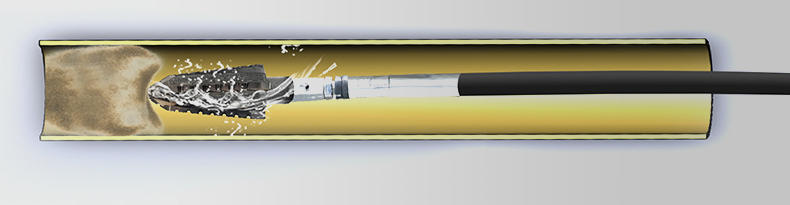
5.1 7500W Power Output
The KT-309 uses a 7500W motor to provide rotational power to the front-end cutting tool through the flexible shaft, mainly for heavy blockages such as hardened concrete and cement blocks. Equipment power must be transmitted through matching flexible shafts and cutting tools. It cannot be simply understood that higher motor power means any pipe can be directly opened.
5.2 0–2800 rpm Speed Adjustment
The equipment supports 0–2800 rpm speed adjustment. Operators can adjust speed based on pipe diameter, blockage hardness, flexible shaft specifications, and cutting tool operating status. At the start of operation, the blockage surface should be contacted at low speed, and adjustments should be made gradually after confirming stable operation.
5.3 Intelligent Torque Adjustment
The equipment can set corresponding torque working ranges based on flexible shaft specifications such as 22 mm, 27 mm, and 30 mm. When the cutting tool encounters hard concrete or jams, reasonable torque control helps reduce the risk of flexible shaft overload, kinking, deformation, and breakage.
5.4 Heavy-Duty and Bendable Shafts Available
Heavy-duty unclogging shafts focus on power transmission and are suitable for heavy straight-pipe blockages. Bendable shafts are relatively more flexible and can be used for some curved bends and certain U-shaped, S-shaped, and L-shaped pipes. Whether they can pass through actual bends must be confirmed based on bend radius, number of bends, pipe diameter, and shaft length.
5.5 Multiple Alloy Cutting Tool Configurations
The equipment can be configured with alloy steel concrete heavy-duty cutting tools, patented stepped (pyramid-type) cutting tools, and other tools based on pipe diameter, blockage form, and hardness. Different cutting tools have different outer diameters and cutting structures. During selection, ensure the tool can enter the pipe and matches the pipe material and blockage.
5.6 Water Flushing Assisted Debris Removal
The KT-309 supports water flushing mode. Water can be supplied through the front end of the flexible shaft to assist in cleaning loosened cement debris.
5.7 Manual and Remote Operation
The equipment supports manual operation at the control cabinet and remote control operation. The power unit and control cabinet use a split-type structure, allowing equipment to be arranged separately based on tunnel space and construction position.
6. How to Select Flexible Shafts and Cutting Tools for the KT-309 in Tunnel Conduits?
Equipment selection must be based on actual pipes, not solely on the name "tunnel conduit."
|
On-Site Condition |
Configuration Approach |
Selection Focus |
|
Straight pipe, hardened concrete blockage |
Prioritize heavy-duty unclogging shaft |
Power transmission, shaft length, and load |
|
Curved bends or specific bent pipes |
Evaluate bendable shaft |
Bend radius, number of bends, and actual passage capability |
|
Localized dense concrete blockage |
Select suitable alloy steel or stepped cutting tool |
Tool outer diameter, cutting structure, and pipe inner diameter |
|
Long blockage distance |
Verify shaft length and site layout |
Actual working distance, connection method, and operating space |
|
Small pipe inner diameter |
Prioritize verification of shaft and tool outer diameter |
Avoid tool inability to enter or jamming inside the pipe |
|
Need simultaneous debris removal |
Evaluate water or air flushing mode |
Pipe material, discharge conditions, and debris outlet |
The KT-309 has three flexible shaft specifications: 22 mm, 27 mm, and 30 mm. Standard shaft length is 8 m, adjustable based on working conditions. Multiple cutting tool accessories are also available. During actual procurement, configuration should be confirmed based on pipe inner diameter, blockage distance, concrete hardness, and bend conditions. The standard configuration should not be understood as suitable for all tunnel pipes.
7. Construction Steps for KT-309 Treatment of Tunnel Conduit Blockage
After confirming that the pipe is intact, no existing lines interfere inside, and mechanical unclogging conditions are met, work can be organized according to the following process.
Step 1: Confirm pipe information
Verify pipe purpose, inner diameter, material, length, routing, and bend conditions. Obtain construction drawings and embedded pipe records where possible.
Step 2: Determine blockage location
Use suitable pipe clearing tools from the pipe opening for preliminary inspection, and record the entry distance and resistance location. If necessary, combine with borescope inspection or other suitable detection methods to confirm the blockage.
Step 3: Confirm whether cables are inside
If cables, optical fibers, or other lines have already been installed in the pipe, alloy cutting tools cannot be directly fed in. The line position and status should first be confirmed, and the project technical manager should determine whether mechanical work is permitted.
Step 4: Match flexible shaft and cutting tool
Based on pipe diameter, blockage length, hardness, and bend structure, select heavy-duty or bendable shafts and match the corresponding cutting tool.
Step 5: Equipment commissioning
Set the torque range based on flexible shaft specifications, and confirm the control method, speed, and equipment operating status. Initial operation should start at low speed and low load.
Step 6: Progressive mechanical breaking
Feed the flexible shaft from the original pipe opening so that the cutting tool contacts the blockage and progressively drills. When obvious jamming, abnormal vibration, or flexible shaft twisting occurs, stop the machine and inspect promptly. Do not continue forced advancement.
Step 7: Discharge broken debris
Use a suitable cleaning method based on on-site pipe conditions. Where water is permitted, front-end water supply through the flexible shaft can be evaluated. Where water is not suitable, other debris discharge conditions should be confirmed to avoid secondary accumulation of debris inside the pipe.
Step 8: Verify patency
After unclogging is completed, use suitable pipe clearing tools or project-specified verification methods to check the effective inner diameter and confirm that subsequent cable installation requirements are met.
8. When Should Work Be Stopped Immediately During Construction?
Tunnel conduits are usually embedded inside structures, and both the pipe and surrounding facilities must be protected during mechanical unclogging. Work should be stopped and reassessed in the following situations:
- The cutting tool suddenly jams, and the flexible shaft shows obvious twisting or abnormal vibration.
- Equipment load increases abnormally, and torque reaches the set limit.
- The pipe may be flattened, ruptured, or joints misaligned.
- Cables, optical fibers, rebar, or other unknown objects are found inside the pipe.
- Flexible shaft length or cutting tool size does not match the on-site pipe.
- Broken debris cannot be effectively discharged, and signs of secondary blockage appear.
- The construction site does not have safe power supply, equipment fixation, and personnel isolation conditions.
The KT-309's intelligent torque adjustment and flexible shaft protection functions are intended to help control equipment load and cannot replace on-site safety management. Operators must still follow the equipment manual and project construction plan.
9. After Tunnel Conduit Unclogging, How to Check Whether Cables Can Be Installed?
After unclogging, the pipe should not be considered qualified simply because "the tool can enter." At minimum, the following should be confirmed:
- Whether a continuous passage is formed between both ends of the pipe.
- Whether the effective inner diameter meets project design requirements.
- Whether concrete fragments, sharp particles, or metal shavings remain inside the pipe.
- Whether the pipe has localized deformation, joint misalignment, or other structural problems.
- Whether the pull rope, lubrication, and cable bending radius required for subsequent cable installation meet project requirements.
ESB Networks' technical documentation for underground cable conduits separately lists pipe cleaning and patency verification, requiring suitable pipe brushes, sponges, and mandrels, with inspection before delivery and cable laying. This practice shows that unclogging, cleaning, and final patency verification should be managed as separate stages. Specific projects should still follow project design documents and applicable acceptance standards.
10. KT-309 Main Parameters and Configuration Reference
|
Parameter Item |
Product Documentation |
|
Product Name |
|
|
Rated Voltage |
380V |
|
Motor Power |
7500W |
|
Operating Speed |
0–2800 rpm, adjustable |
|
Applicable Pipe Diameter |
Φ6.35–800 mm |
|
Flexible Shaft Specifications |
22 mm, 27 mm, 30 mm |
|
Standard Flexible Shaft Length |
8 m/piece, two pieces standard |
|
Flexible Shaft Types |
Heavy-duty unclogging shaft, bendable shaft optional |
|
Cutting Tools |
Alloy steel concrete cutting tool, stepped cutting tool, etc. |
|
Torque Control |
Intelligent torque adjustment |
|
Operation Methods |
Manual, remote control |
|
Working Modes |
Water flushing, air flushing |
|
Power Unit Dimensions |
800×336×346 mm |
|
Power Unit Weight |
Approx. 92.5 kg |
|
Control Cabinet Dimensions |
440×310×258 mm |
|
Control Cabinet Weight |
Approx. 17 kg |
The applicable pipe diameter does not mean the same flexible shaft and cutting tool can cover all diameters. Specific configuration, flexible shaft length, cutting tool type, and construction feasibility must be confirmed based on on-site conditions.
11. Frequently Asked Questions About Tunnel Conduit Blockage
1. Can the KT-309 be used when a tunnel conduit is completely blocked by concrete?
If hardened concrete blockage is confirmed, the pipe structure is intact, entry from the original pipe opening is possible, and no cables or other lines interfere inside, the KT-309 can be evaluated for mechanical breaking. Actual results depend on pipe diameter, blockage length, hardness, and flexible shaft/cutting tool configuration.
2. What is the applicable pipe diameter of the KT-309?
The applicable pipe diameter is Φ6.35–800 mm. Actual use also requires verification of pipe inner diameter, pipe material, flexible shaft specifications, and cutting tool outer diameter. Suitability cannot be judged solely by the applicable range.
3. Can the KT-309 handle C60 concrete?
The KT-309 is equipment capable of handling pipes blocked by C60 concrete. During construction, evaluation is still required based on actual concrete condition, blockage length, pipe structure, and cutting tool configuration.
4. Can the KT-309 be used if the tunnel conduit has bends?
Bendable shafts can be evaluated, but not all bent pipes can be passed. Bend radius, number of bends, pipe diameter, flexible shaft length, and cutting tool dimensions must be confirmed.
5. If cables are already inside the pipe, can alloy steel cutting tools still be used?
It cannot be operated directly as an empty pipe condition. Alloy steel cutting tools may damage existing cables or optical fibers. The position and status of internal lines must first be confirmed, and project technical personnel must evaluate the treatment risk.
6. After the KT-309 breaks concrete, how is debris cleaned?
The equipment supports water flushing and air flushing assisted debris removal modes. For pipes where water is permitted, front-end water supply through the flexible shaft can be evaluated. For pipes not suitable for water, debris removal methods should be determined based on site conditions to avoid secondary accumulation inside.
7. Can cables be installed directly after tunnel conduit unclogging?
Patency verification should be completed first to confirm that the continuous passage, effective inner diameter, and internal cleanliness meet project requirements before cable laying. The ability of the cutting tool to pass cannot be used as the sole acceptance basis.
12. KT-309 Equipment Application and Technical Consultation
When concrete blockage occurs in tunnel conduits, railway crossing conduits, and embedded cable conduits, it is recommended to first confirm the pipe structure, blockage location, and internal condition, then decide whether to use conventional cleaning or mechanical blockage removal. For hardened concrete blockage, flexible shaft specifications, cutting tool dimensions, pipe bends, and debris discharge methods all affect actual construction results.
Anhui Kuaitong Pipeline Cleaning Technology Co., Ltd., established in 2009, is a technology-oriented enterprise specializing in the R&D, manufacturing, and sales of pipeline cleaning, unclogging, and inspection equipment. Its products include central air conditioning pipeline cleaning equipment, industrial pipe unclogging equipment, concrete pipe unclogging equipment, and municipal pipeline inspection equipment. The company is a National High-Tech Enterprise, a Technology-Based SME, a Training Base of the China Industrial Cleaning Association, and an Anhui Province Specialized and Sophisticated Enterprise. It has provided solutions to more than 23,000 domestic and international enterprises.
Website: www.kuaitonggroup.com
Technical Consultation (Phone/WhatsApp/WeChat): +86 18226181287
This document is compiled by the technical team of Anhui Kuaitong Pipeline Cleaning Technology Co., Ltd.