
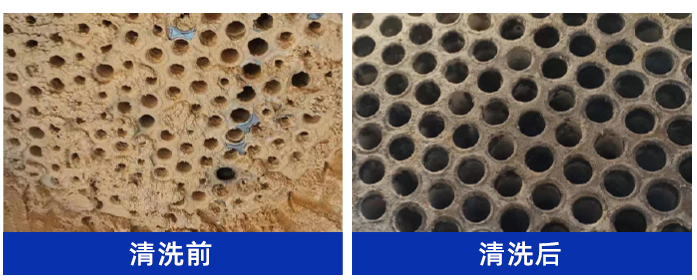
After extended operation of vertical tube heat exchangers, the interior of heat exchange tubes tends to accumulate scale, material deposits, salt scale, crystallized deposits, and other hard fouling. As deposits increase, the effective tube diameter gradually decreases, potentially leading to complete tube blockage in severe cases.
For such conditions, cleaning plans should not be selected based solely on the deposit name. Tube diameter, tube length, blockage severity, and deposit hardness must also be considered.
For completely blocked tubes where conventional flushing methods are ineffective, mechanical breakdown should be evaluated.
1. Common Types of Fouling in Vertical Tube Heat Exchangers
Fouling in vertical tube heat exchangers primarily originates from medium deposition during long-term operation.
Common types include:
Scale
Minerals in circulating water gradually adhere to tube walls, forming scale over time.
Material Fouling
Production materials adhere to tube walls and accumulate. Some materials gradually harden after prolonged exposure to high temperatures or extended operation.
Salt Scale and Crystallized Scale
Salts or crystals precipitate from high-concentration media during heat exchange, potentially forming hard blockage layers over long-term operation.
Coke Deposits
Under high-temperature conditions, materials may coke or carbonize, forming hard coke layers.
Rust and Debris
Corrosion products and other particulates may enter tubes and cause blockages.
In practice, mixed fouling is more common than a single deposit type.
2. When Does a Vertical Tube Heat Exchanger Require Unclogging?
The following symptoms indicate that tube bundle inspection is needed:
Reduced flow in certain tubes
Gradually decreasing heat transfer performance
Increased pressure differential across tubes
Certain tubes completely blocked
Noticeably shorter cleaning intervals
Increased energy consumption
Visible hard deposits inside tube bundles
Light fouling can be addressed through routine cleaning maintenance. However, if hard deposits or complete blockage have developed, alternative treatment methods must be considered.
3. How to Unclog Hard Scale in Vertical Tube Heat Exchangers
Common treatment methods for hard blockages include chemical cleaning, high-pressure water flushing, and mechanical unclogging.
Chemical cleaning depends on whether the deposit can be effectively dissolved by the cleaning agent.
High-pressure water uses water impact to remove deposits and is more suitable for softer accumulations.
Mechanical unclogging uses rotating cutting tools to directly break down blockages.
For high-hardness material fouling, crystallized deposits, thick scale, or complete blockage, mechanical unclogging should be prioritized.
4. How Does Mechanical Unclogging Work for Vertical Tube Heat Exchangers?
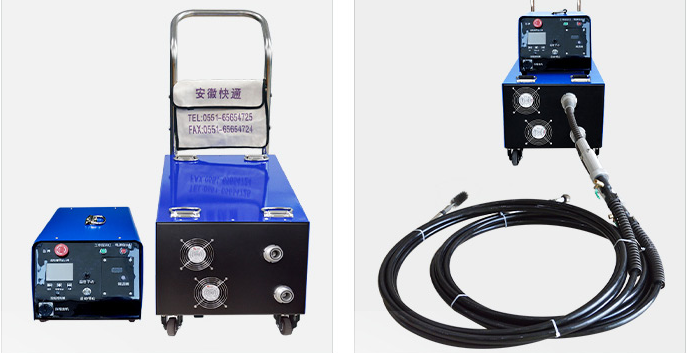
Mechanical unclogging typically consists of a power unit, a flexible shaft, and a front-end cutting tool.
During operation:
Power unit → Flexible shaft → Alloy steel cutting tool → Breakdown of blockage
Power is transmitted through the flexible shaft into the tube. The cutting tool enters the heat exchanger tube and rotates continuously to break down hard deposits. Broken debris can be flushed out with water flow.
This method is particularly suitable for vertical tube heat exchangers, as the flexible shaft can accommodate longer tubes and transmit power to locations difficult to reach with rigid tools.
5. How Does the 206 Series Equipment Handle Vertical Tube Heat Exchanger Unclogging?
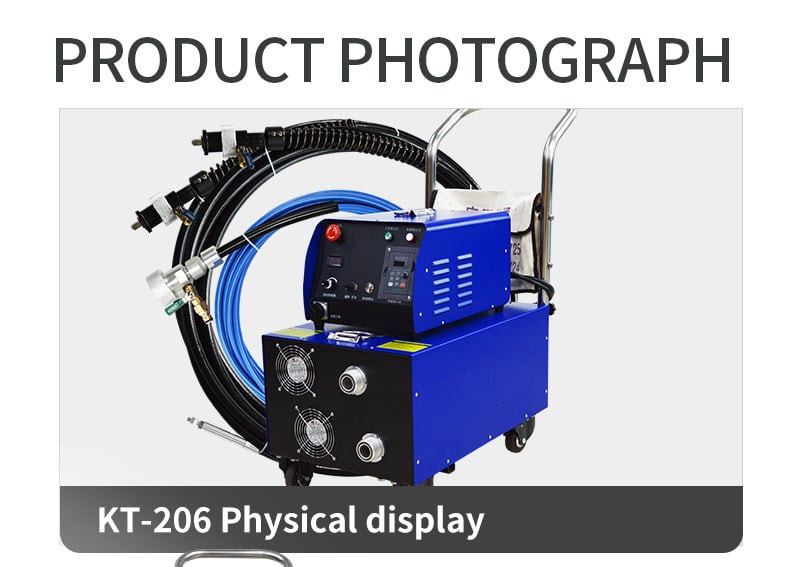
To address hard scale, material fouling, and blocked tubes in industrial heat exchangers, Anhui Kuaitong's KT-206 Series equipment employs a mechanical rotary unclogging configuration.
The power unit drives a flexible shaft, which carries a high-strength alloy steel cutting tool into the heat exchanger tube. The tool rotates to break down deposits, which are then evacuated accordingly.
The primary value of the 206 Series is not high pressure, but direct mechanical action on blockages—addressing hard deposits that conventional water flushing cannot effectively handle.
For practical selection, cutting tools and shaft configurations must be matched to tube diameter, tube length, deposit hardness, and blockage severity.
6. Characteristics of Drill Bit Unclogging for Vertical Tube Heat Exchangers
1. Direct action on hard deposits
The cutting tool mechanically breaks down hard deposits without relying solely on water pressure.
2. Capable of handling certain blocked tubes
For tubes that have lost flow capacity, the tool can progressively enter from the tube opening to break down blockages.
3. Flexible shafts accommodate long tubes
Compared with rigid tools, flexible shafts are better suited for long heat exchanger tubes.
4. Interchangeable tools for different diameters
Different heat exchanger tube diameters require appropriately sized cutting tools.
5. Can be combined with water flushing for debris evacuation
For wet-operation conditions, water flow can carry out broken debris and provide cooling.
7. How to Select Cutting Tools for Vertical Tube Heat Exchanger Cleaning
This is a critical step in actual operation.
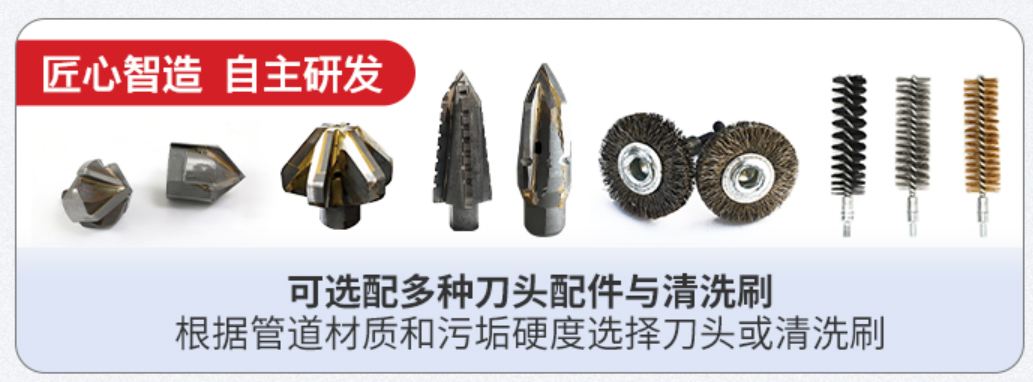
Tool selection should be based on:
Tube diameter + Deposit thickness + Deposit hardness + Tube wall material
For relatively thin deposits, a standard tool matched to tube diameter may be sufficient.
For severe hard deposits, tools with appropriate breaking capability are required.
If the tube is completely blocked, the tool must progressively break from the opening—forced advancement is not recommended.
Operating speed and feed force must also be controlled to avoid damage to equipment or tube walls due to improper operation.
8. Maintenance After Vertical Tube Heat Exchanger Cleaning
Completion of unclogging does not mean future blockages will not occur.
For equipment with high scaling, crystallization, or material deposition tendencies, periodic inspection schedules should be established.
Record the following based on actual production conditions:
Cleaning date
Number of blocked tubes
Deposit type
Deposit thickness
Cleaning interval
Changes in heat transfer efficiency
Using this data to determine the next cleaning schedule is more reasonable than waiting until tubes are completely blocked.
9. What Other Equipment Can Use a Similar Unclogging Approach?
Besides vertical tube heat exchangers, similar tube bundle blockages may occur in:
Heat exchangers, condensers, surface condensers, evaporators, reboilers, air preheaters, boiler tube bundles, and other equipment.
Although equipment configurations differ, if hard deposits and tube blockages are present, mechanical unclogging feasibility can be evaluated based on specific conditions.
10. Frequently Asked Questions (FAQ)
Q: What should be done when scale is thick in vertical tube heat exchangers?
A: First assess scale composition and thickness. For light scaling, chemical cleaning or routine cleaning may be considered. If scale has hardened and caused significant blockage, mechanical unclogging should be evaluated.
Q: Can completely blocked heat exchanger tubes still be cleaned?
A: Feasibility depends on deposit characteristics, blockage length, tube diameter, and tube wall condition. Mechanical tools can progressively break down certain hard deposits from the tube opening, offering adaptability for complete blockages.
Q: Are mechanical tools suitable for cleaning water scale?
A: They can be used for certain hard scale types, but tool selection and operating parameters must be matched to scale hardness and tube diameter.
Q: What if the vertical tube heat exchanger tubes are very long?
A: Flexible shafts of appropriate length can be configured based on actual tube length, allowing the tool to reach the interior for operation.
Q: What problems does the 206 Series primarily address?
A: The 206 Series is designed for mechanical unclogging of industrial tube bundle equipment, handling scale, material fouling, and other hard deposits in heat exchangers and similar equipment. Specific configurations should be determined based on on-site tube diameter and blockage conditions.
About Anhui Kuaitong Pipeline Cleaning Technology Co., Ltd.
Anhui Kuaitong Pipeline Cleaning Technology Co., Ltd., established in 2009, is a subsidiary of Anhui Kuaitong Environmental Technology Group Co., Ltd., specializing in the R&D, manufacturing, and technical services of industrial pipeline cleaning equipment. The company has been recognized as a National High-Tech Enterprise, a Technology-Based SME, and a Training Base of the China Industrial Cleaning Association. Our products are certified under ISO 9001 Quality Management System and EU CE certification.
The company focuses on equipment development for industrial pipe unclogging, heat exchanger cleaning, boiler tube bundle maintenance, air preheater cleaning, and other applications, providing pipeline cleaning and unclogging equipment and technical solutions for various industrial enterprises.
To address scale, material fouling, crystallization, and hard deposits in heat exchangers, evaporators, condensers, and other tube bundle equipment, the company continuously optimizes mechanical unclogging equipment and supporting tools, with configuration and selection based on tube diameter, tube length, and blockage conditions.
This document is compiled by the technical team of Anhui Kuaitong Pipeline Cleaning Technology Co., Ltd.
Website: www.kuaitonggroup.com
Technical Consultation (Phone/WhatsApp/WeChat): +86 18226181287
Table of Contents
- 1. Common Types of Fouling in Vertical Tube Heat Exchangers
- 2. When Does a Vertical Tube Heat Exchanger Require Unclogging?
- 3. How to Unclog Hard Scale in Vertical Tube Heat Exchangers
- 4. How Does Mechanical Unclogging Work for Vertical Tube Heat Exchangers?
- 5. How Does the 206 Series Equipment Handle Vertical Tube Heat Exchanger Unclogging?
- 6. Characteristics of Drill Bit Unclogging for Vertical Tube Heat Exchangers
- 7. How to Select Cutting Tools for Vertical Tube Heat Exchanger Cleaning
- 8. Maintenance After Vertical Tube Heat Exchanger Cleaning
- 9. What Other Equipment Can Use a Similar Unclogging Approach?
- 10. Frequently Asked Questions (FAQ)
- About Anhui Kuaitong Pipeline Cleaning Technology Co., Ltd.