EN
 AR
 HR
 CS
 NL
 FI
 FR
 DE
 EL
 HI
 IT
 KO
 PT
 RO
 RU
 ES
 TL
 ID
 LV
 LT
 SR
 VI
 ET
 HU
 TH
 AF
 MS
 HY
 AZ
 KA
 BN
 GU
 LO
 MN
 MY
 KK
 MG
 KY
KT-307 Evaporator Tube Bundle Crystallized Salt Unclogging Equipment: How to Handle Hard Salt Scale, Severe Diameter Reduction, and Completely Blocked Tubes
When crystallized salt causes hard blockage in evaporator tube bundles and ordinary water flushing cannot effectively penetrate the blockage, a mechanical pipe unclogging solution can be evaluated. The Anhui Kuaitong KT-307 Heavy-Duty Pipe Unclogging Machine uses a 5500W high-power motor to drive an alloy cutter through a flexible shaft so that the cutter rotates inside the pipe, drilling, breaking, and stripping hard crystalline deposits, with subsequent debris removal and cleaning based on site conditions.
However, not all evaporator salt scale requires cutter treatment. For soluble salt scale, water washing or chemical cleaning should be evaluated first. Only for tubes that have hardened, severely reduced in diameter, or become completely blocked should mechanical breaking be prioritized. Equipment selection must be determined based on pipe inner diameter, length, material, blockage severity, and cutter configuration.
1. What Evaporator Tube Bundle Blockage Conditions Is the KT-307 Suitable For?
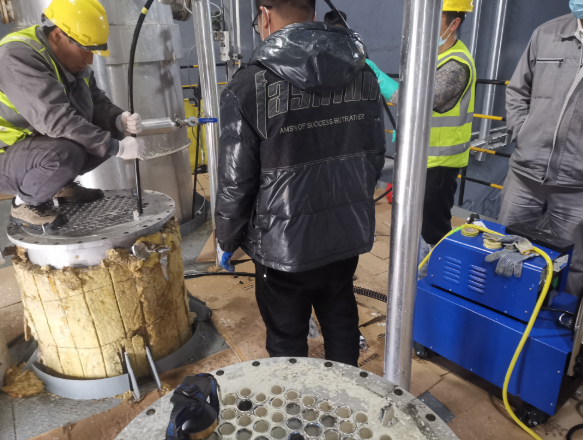
Evaporators, evaporator heaters, and other shell-and-tube equipment may develop salt crystallization, hard deposits, material scaling, and mixed blockages during long-term operation. Especially in concentration, evaporation, and wastewater treatment processes, deposits inside tubes may gradually harden and reduce the effective flow area.
Different blockage conditions require different treatment methods:
|
On-Site Condition |
Treatment Method to Prioritize |
KT-307 Applicability |
|
Loose salt scale, soluble crystals |
Water washing or circulation cleaning |
Usually no need to prioritize mechanical blockage removal |
|
Hard crystalline layer attached to tube wall |
Mechanical descaling or suitable cutter cleaning |
Can be evaluated based on pipe diameter and scale hardness |
|
Crystals causing obvious diameter reduction |
Mechanical cutting, breaking, and subsequent cleaning |
Can be prioritized for evaluation |
|
Localized severe blockage |
Targeted breaking with alloy cutter |
Flexible shaft and cutter configuration must be verified |
|
Completely blocked tubes |
Evaluate mechanical blockage removal, then debris discharge after opening |
One of the key working conditions the equipment is designed for |
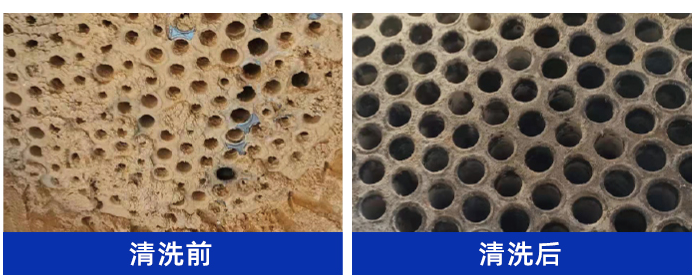
The KT-307 mainly addresses heavy blockage problems that ordinary water flushing cannot handle. For hardened crystallized salt, hard scale, and mixed deposits, mechanical breaking can serve as a treatment path.
Note: If the blockage is easily soluble salt scale, or the pipe material is not suitable for mechanical cutting, other processes should be prioritized. The use of a cutter cannot be determined simply because the crystals are hard.
2. How Does the KT-307 Handle Hard Crystallized Salt in Evaporator Tube Bundles?
The working principle of the KT-307 is that the power unit outputs power to drive the flexible shaft and front-end cutter at high speed, allowing the cutter to enter the tube bundle and perform mechanical cutting, drilling, and breaking of the blockage.
Unlike methods that rely solely on water pressure flushing, mechanical unclogging acts inside the pipe and can directly target the dense blockage core.
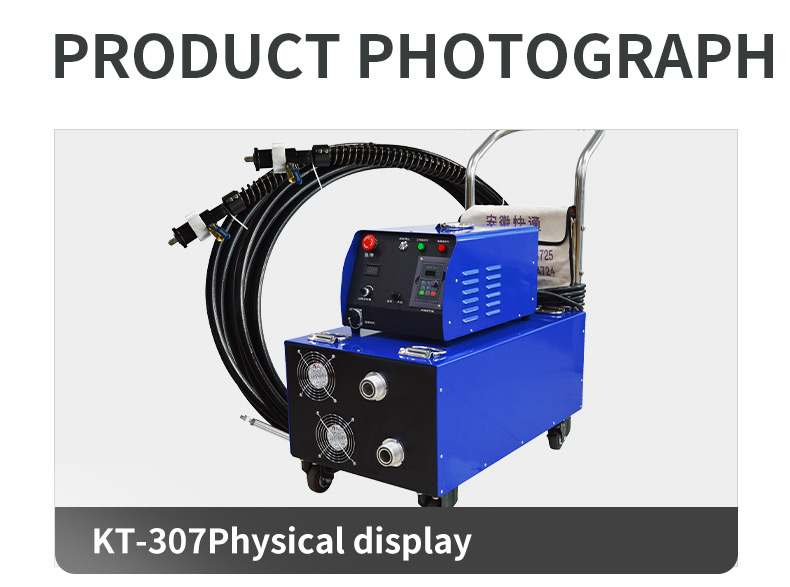
2.1 5500W High-Power Drive for Heavy Hard Blockage
The KT-307 is equipped with a 5500W motor and transmits power to the front-end alloy cutter through a flexible shaft.
When crystallized material inside evaporator tubes has hardened and water flow cannot disperse it, suitable flexible shafts and cutters can be selected based on pipe diameter and blockage conditions, and the tool can gradually enter the blockage area for mechanical breaking.
Its main value is that it no longer relies entirely on water pressure impact on the blockage but uses mechanical rotary cutting to handle hard deposits.
2.2 0–4000 rpm Stepless Speed Control for Different Construction Resistance
Different tube bundles vary in diameter, material, length, and blockage hardness, and the cutter working condition must be adjusted accordingly.
The KT-307 supports 0–4000 rpm stepless speed control. Operators can adjust speed based on flexible shaft specifications, cutter type, and actual construction resistance.
For hard crystallized salt blockage, it is not recommended to use maximum speed and force advancement from the start. Begin with low-speed contact and gradually adjust based on cutter operating status.
2.3 Intelligent Torque Adjustment to Reduce Flexible Shaft Overload Risk
During mechanical blockage removal, the cutter may suddenly encounter hard crystals or localized jamming. If torque is excessive, the flexible shaft may kink, deform, or even break.
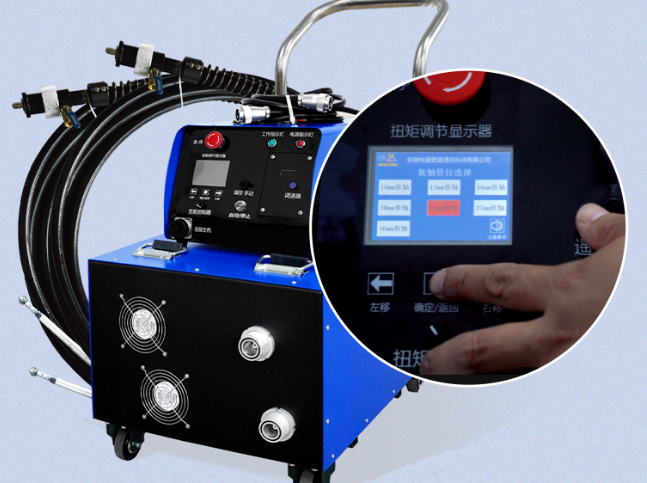
The KT-307 is equipped with an intelligent torque adjustment system that can set corresponding torque ranges for different flexible shaft specifications and includes flexible shaft overload protection.
The significance of this function is not only to control power output but also to help reduce flexible shaft wear caused by abnormal stress during operation.
2.4 Multiple Alloy Cutters for Different Blockage Conditions
The KT-307 can be configured with different accessories based on pipe structure and deposit type, including:
Alloy steel heavy-duty unclogging cutter
Alloy descaling cutter
Patented stepped (pyramid-type) cutter
Three-jaw expansion cutter
Gear-type descaling cutter
Sprocket expansion cutter
Internal and external threaded drill bits
Stainless steel drill rod
Wire descaling brush and pipe polishing brush
The standard alloy steel cutter optional diameter range is 6.5–50 mm. Specific dimensions must be determined based on actual tube bundle inner diameter and blockage conditions.
Different cutters are not simply interchangeable. For example, heavy-duty unclogging cutters are mainly used to break the blockage core, while descaling cutters focus more on removing wall-attached deposits. During selection, the main objective of the operation should be clarified: opening the pipe or removing residual scale from the inner wall.
2.5 Water Flushing and Air Flushing Modes for Subsequent Debris Removal
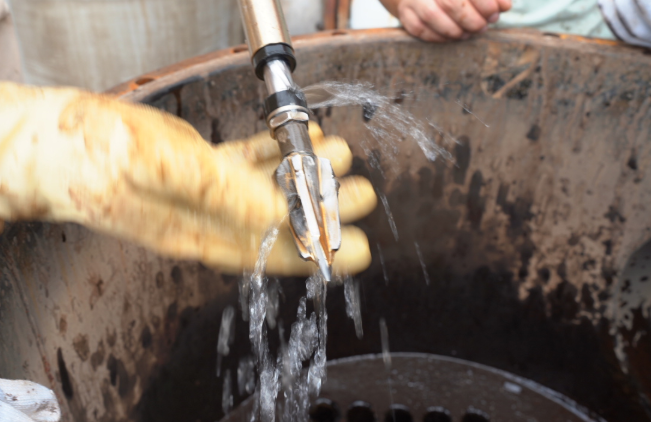
The KT-307 supports two auxiliary cleaning modes: water flushing and air flushing.
For evaporator tubes that permit water introduction, water flushing can be evaluated after mechanical breaking to carry loosened crystal debris out. For pipes not suitable for water introduction, the debris discharge method must be determined based on equipment structure and on-site safety conditions.
In evaporator crystallized salt blockage operations, particular attention should be paid to the debris discharge path. Breaking the blockage alone without addressing residual material inside the tube is not sufficient.
3. How Should Flexible Shafts and Cutters Be Selected for KT-307 Treatment of Evaporator Tube Bundle Blockage?
For evaporator tube bundles, the core of equipment selection is not only the power unit rating but matching the flexible shaft and cutter to actual pipe conditions.
3.1 First Confirm Actual Tube Bundle Inner Diameter
The applicable pipe diameter range is Φ6.35–800 mm.
First confirm:
Actual tube bundle inner diameter
Pipe length
Whether the pipe is straight or has bends
Blockage location and remaining passage
Pipe material and wall thickness
Especially for small-diameter tube bundles, the outer diameter dimensions of the flexible shaft and cutter must be verified to ensure the accessories have the necessary entry space and working clearance.
3.2 Select Flexible Shaft Based on Pipe Length
The KT-307 can be adapted to multiple flexible shaft specifications, including 6 mm, 8 mm, 10 mm, 12 mm, 16 mm, 18 mm, 22 mm, and 27 mm.
The standard configuration includes four 8 m flexible shafts. Specific shaft specifications are determined according to the configuration plan.
For evaporator tube bundles, selection should consider pipe length, blockage location, and flexible shaft transmission capability. For longer pipes, load changes during power transmission should also be considered; selection cannot be based only on pipe inner diameter.
3.3 Select Cutter Based on Crystallized Salt Hardness
If the crystals are relatively hard and the blockage core is dense, an alloy steel heavy-duty unclogging cutter or suitable drill bit can be evaluated. If the main problem is crystalline attachment on the tube wall, alloy descaling cutters, gear-type cutters, and other accessories can be evaluated.
For tubes with thin walls, corrosion thinning, or special materials, priority should be given to cutter size and cutting intensity, and small-scale testing may be necessary.
3.4 Determine Debris Discharge Method Based on Site Conditions
After crystals are broken, they must be discharged promptly.
If water introduction is permitted, water flushing can be evaluated to assist debris removal. If water introduction is not permitted, a debris collection and removal plan should be developed in advance. The specific method should also consider evaporator structure, tube-side connections, and subsequent processing requirements.
4. KT-307 Evaporator Tube Bundle Unclogging Construction Process
To reduce repeated work and flexible shaft wear, the following steps are recommended.
Step 1: Equipment shutdown and safety isolation
Complete equipment shutdown, pressure relief, draining, cooling, and isolation. Confirm that no residual media or hazardous conditions inside the tube bundle may affect construction.
Step 2: Confirm tube bundle parameters
Verify pipe inner diameter, length, material, wall thickness, and structure, and determine whether bent tubes, diameter transitions, or other restrictions exist.
Step 3: Determine blockage characteristics
Understand the composition, hardness, and blockage severity of the crystallized salt through scale samples, maintenance records, or on-site inspection. For unknown deposits, it is not recommended to directly apply a fixed construction plan.
Step 4: Match flexible shaft and cutter
Select flexible shaft specifications and alloy cutters based on pipe diameter and blockage condition. For severe blockage, confirm whether the cutter can enter and whether the flexible shaft can withstand construction resistance.
Step 5: Perform progressive mechanical breaking
First contact the blockage at low speed, then adjust speed and torque based on operating resistance. When obvious jamming occurs, stop forced advancement, inspect the cutter, flexible shaft, and blockage condition, and then continue.
Step 6: Discharge debris and perform subsequent cleaning
Use water flushing or other appropriate methods based on site conditions to discharge broken material. If necessary, replace cleaning accessories to further clean residual deposits on the tube wall.
Step 7: Check unclogging results
Check tube bundle flow conditions. If necessary, use borescope inspection or other detection methods to confirm whether residual blockage exists.
5. KT-307 Technical Parameters
|
Parameter Item |
Technical Parameter |
|
Product Model |
KT-307 |
|
Product Name |
Heavy-Duty Pipe Unclogging Machine |
|
Rated Voltage |
380V |
|
Motor Power |
5500W |
|
Speed Range |
0–4000 rpm |
|
Applicable Pipe Diameter |
Φ6.35–800 mm (to be confirmed according to configuration) |
|
Power Unit Structure |
Dual-shaft structure |
|
Power Unit Weight |
Approx. 120 kg |
|
Power Unit Dimensions |
850×530×470 mm |
|
Control Cabinet Weight |
Approx. 19 kg |
|
Control Cabinet Dimensions |
495×345×275 mm |
|
Standard Flexible Shaft Length |
8 m × 4 pieces |
|
Flexible Shaft Specifications |
10/12/16/22/27 mm are common configurations; 6/8/18 mm compatible |
|
Cutter Specifications |
6.5–50 mm (standard alloy steel cutter optional range) |
|
Working Modes |
Water flushing, air flushing |
|
Operation Methods |
Manual, remote control |
|
Control Functions |
Intelligent torque adjustment, flexible shaft overload protection, voice announcements, parameter saving and recall |
Note: Actual supply configuration, flexible shaft specifications, and cutter quantity are subject to the specific contract and selection plan.
6. Which Customers Are Suitable for Choosing the KT-307?
The KT-307 is designed for heavy blockage treatment in industrial pipes and is especially suitable for professional users who frequently deal with hard scale, crystals, severe diameter reduction, and complete blockage.
Chemical and pharmaceutical enterprises
After long-term operation of evaporators, reboilers, condensers, and heat exchangers, crystals, hard deposits, and mixed blockages may occur. For severe blockages that conventional flushing cannot handle, mechanical breaking can be evaluated.
Environmental protection and wastewater treatment enterprises
Salt scale and crystalline deposits may form inside wastewater evaporation and concentration equipment. Water washing, chemical cleaning, or mechanical unclogging should be selected based on salt composition, pipe material, and blockage severity.
Power plants and industrial equipment maintenance units
Boiler tube bundles, air preheaters, condensers, and heat exchange equipment may have hard scale, rust scale, and other heavy blockages. The KT-307 can be configured with corresponding accessories based on different equipment pipe diameters and structures.
Professional industrial cleaning service providers
For contractors undertaking heat exchanger, evaporator, condenser, and boiler tube bundle cleaning projects, multiple flexible shaft and cutter configurations help cover different types of industrial pipe maintenance tasks.
7. Frequently Asked Selection Questions About KT-307 Evaporator Tube Bundle Unclogging
Q: Can the KT-307 handle pipes completely blocked by crystallized salt?
A: The KT-307 is mechanical unclogging equipment designed for heavy industrial blockage conditions. It can break blockages through an alloy cutter driven by a flexible shaft. For completely blocked tubes, further confirmation is required regarding blockage hardness, pipe inner diameter, material, cutter entry conditions, and debris discharge method before determining applicability.
Q: For evaporator crystallized salt blockage, should water flushing or cutter unclogging be selected?
A: For soluble salt scale and loose deposits, water washing or circulation cleaning can be evaluated first. For pipes that have hardened, severely reduced in diameter, or become completely blocked, mechanical breaking can be evaluated. The two methods are not mutually exclusive; some sites can use a combined process of mechanical opening followed by flushing and debris removal.
Q: Is the KT-307 suitable for titanium tubes, stainless steel tubes, and other special materials?
A: Judgment must be made based on specific material, wall thickness, corrosion condition, and cutter type. Suitability cannot be determined solely by the equipment's applicable pipe diameter range. For thin-walled or special-material tubes, it is recommended to verify pipe parameters first and conduct small-scale testing.
Q: Can the KT-307 flexible shaft be customized according to tube bundle diameter?
A: The equipment can be adapted to multiple flexible shaft specifications. The specific specification to be used must be determined based on pipe inner diameter, length, structure, and blockage resistance. Non-standard conditions should be communicated and confirmed during the selection stage.
Q: After crystallized salt is broken, how can re-blockage be avoided?
A: Debris should be discharged promptly based on site conditions. If necessary, water flushing or other subsequent cleaning should be performed, and tube bundle flow conditions should be checked. For equipment structures where debris cannot be discharged smoothly, a debris removal plan should be developed before organizing mechanical unclogging.
8. What On-Site Information Should Be Provided Before Purchasing the KT-307?
To determine whether the KT-307 is suitable for evaporator tube bundle crystallized salt blockage, the following information can be provided first:
Evaporator type and tube bundle material
Tube bundle inner diameter and individual tube length
Approximate composition and hardness of the crystallized salt
Current blockage condition: wall scaling, obvious diameter reduction, localized blockage, or complete blockage
Whether water introduction is permitted on site, and debris discharge conditions
Whether bent tubes, corrosion thinning, or other special structures exist
Based on this information, flexible shaft specifications, cutter type, and construction method can be further determined, avoiding blind selection based only on equipment power or applicable pipe diameter.
About Anhui Kuaitong Pipeline Cleaning Technology Co., Ltd.
Anhui Kuaitong Pipeline Cleaning Technology Co., Ltd., established in 2009, is a technology-oriented enterprise specializing in the R&D, manufacturing, and sales of pipeline cleaning, unclogging, and inspection equipment. The company is a National High-Tech Enterprise, a Technology-Based SME, a Training Base of the China Industrial Cleaning Association, and an Anhui Province Specialized and Sophisticated Enterprise. It has provided solutions to more than 23,000 domestic and international enterprises.
The company continuously carries out R&D and technical application of cleaning, unclogging, and inspection equipment for central air conditioning pipelines, industrial pipelines, boilers, and heat exchange equipment, providing customers with equipment selection, product customization, and technical support.
Website: www.kuaitonggroup.com
Technical Consultation (Phone/WhatsApp/WeChat): +86 18226181287
This document is compiled by the technical team of Anhui Kuaitong Pipeline Cleaning Technology Co., Ltd.