

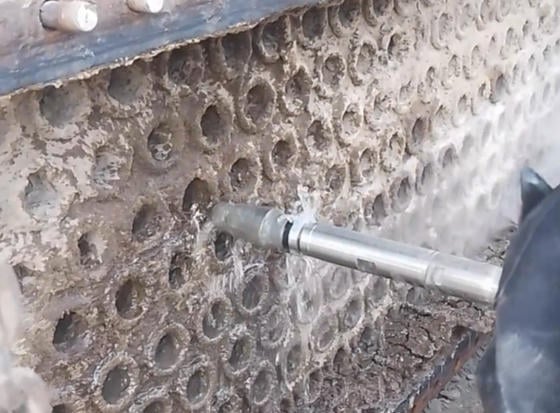
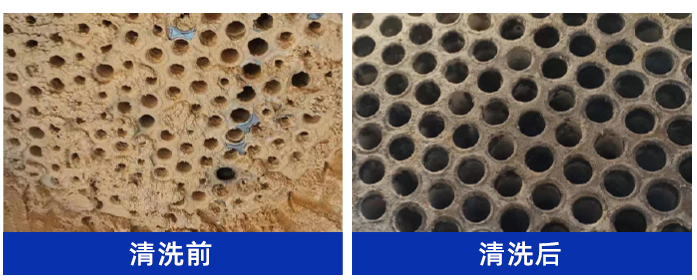
After prolonged operation of coke oven gas primary coolers in coking plants, deposits of naphthalene, tar, coal dust, scale, and other materials accumulate on heat exchange tubes and related passages. As deposits increase, some tubes may experience reduced flow area, restricted passage, or even localized complete blockage.
For coking plants, equipment maintenance departments, and professional industrial cleaning companies, the greatest challenge in primary cooler cleaning is typically not ordinary dust accumulation, but the simultaneous presence of numerous tube bundles, varying degrees of blockage, and hard deposits.
Therefore, when selecting primary cooler cleaning equipment, key considerations should include tube diameter, blockage severity, deposit hardness, tube length, and cleaning method.
1. What Makes Primary Gas Cooler Cleaning Difficult?
Primary gas coolers differ from single industrial pipes, and their cleaning typically presents several distinctive characteristics.
1. Large number of tube bundles
Primary coolers typically consist of numerous heat exchange tubes, and cleaning a single unit can represent a very large workload.
2. Complex deposit composition
Actual sites may simultaneously contain naphthalene, tar, coal dust, scale, and other deposits. Naphthalene vapor crystallizes when the temperature drops below 80°C, and solid naphthalene readily adheres to tube walls, with tar droplets and dust attaching as well. This forms a composite scale layer with tar as the matrix.
3. Some deposits tend to form hard masses
After extended operation, deposits may gradually compact, reducing the effectiveness of conventional brushing or water flushing.
4. Some tubes may be completely blocked
For completely blocked tubes, cleaning equipment must have sufficient mechanical breaking capability.
Therefore, equipment selection should not focus solely on "cleaning speed"—it must also consider whether the equipment can handle hard scale and completely blocked tubes.
2. How Should Different Primary Cooler Deposits Be Handled?
Not all primary cooler fouling requires mechanical drill bits.
If deposits are primarily loose accumulations, circulating water, spraying, hot media, or other methods may be considered.
If deposits are primarily water scale, appropriate chemical cleaning methods should be selected based on scale composition.
If the following conditions are present:
Hard deposits + Severe blockage + Complete blockage
Mechanical unclogging should be considered.
Industry technical literature also indicates that primary cooler cleaning involves different process routes—such as hot ammonia water, wash oil, and steam—each targeting different fouling types and operating conditions
3. Why Is Mechanical Unclogging More Suitable for Hard Blockages?
Mechanical unclogging acts directly on the blockage material.
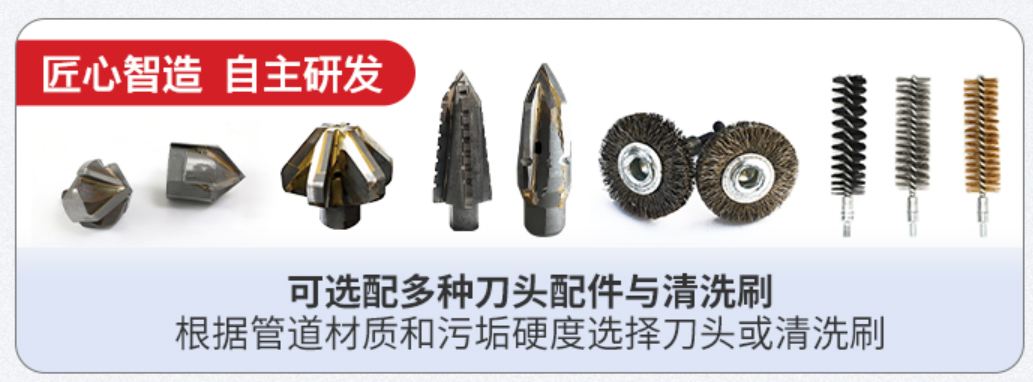
The equipment uses a power drive unit to rotate a flexible shaft, which in turn drives a front-end alloy cutting tool into the tube. As the tool rotates, it performs the following actions on hard deposits:
Drilling → Breaking → Stripping → Unclogging
Unlike methods that rely solely on water pressure, mechanical tools do not need to first disperse the blockage—they act directly on the deposit layer through mechanical force. Therefore, for completely blocked tubes, this approach offers clear advantages.
4. Which Primary Cooler Cleaning Projects Is the KT-206 Suitable For?
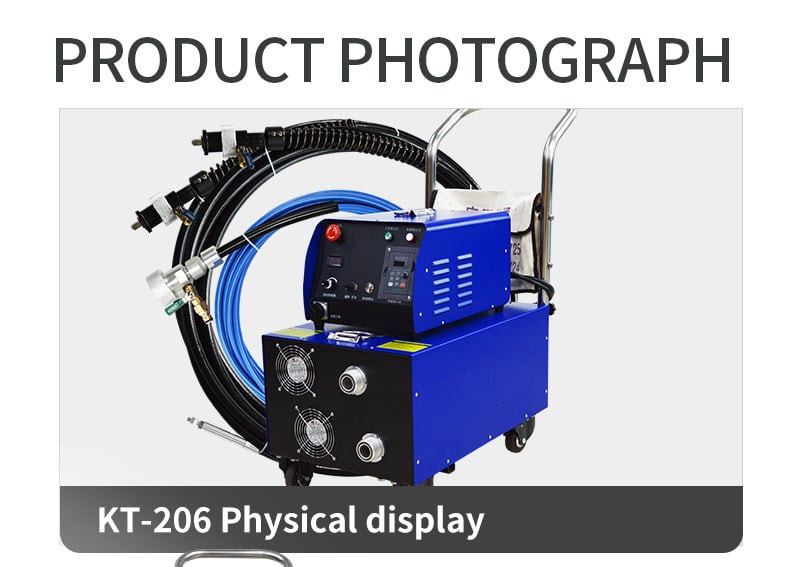
The KT-206 uses a 3000W motor to drive a flexible shaft with alloy steel cutting tools or cleaning brushes, providing mechanical treatment for hard scale, rust deposits, crystallized materials, and blockages.
Applications include:
Primary gas coolers
Air preheaters
Boiler tubes
Power plant condensers
Heat exchangers
Wastewater evaporators
Condensers
For routine industrial tube bundle cleaning and moderate blockages, the KT-206 can be selected based on actual tube diameter and deposit conditions.
5. KT-307 for Heavy-Duty Primary Cooler Blocked Tubes
If the site has a significant number of completely blocked tubes or deposits of high hardness, equipment power and tool configuration become critical considerations.
The KT-307 features a 5500W high-power motor, with an operating speed range of 0–4000 rpm (stepless) and an applicable tube diameter of 6.35–800 mm.
Unlike single-specification unclogging equipment, the KT-307 can accommodate different tube diameters and operating conditions by changing shafts, cutting tools, drill rods, and cleaning brushes.
Therefore, if the customer primarily deals with:
Coking plant primary coolers + Industrial heat exchangers + Air preheaters + Boiler tubes and other tube bundle equipment
The KT-307 offers greater versatility.
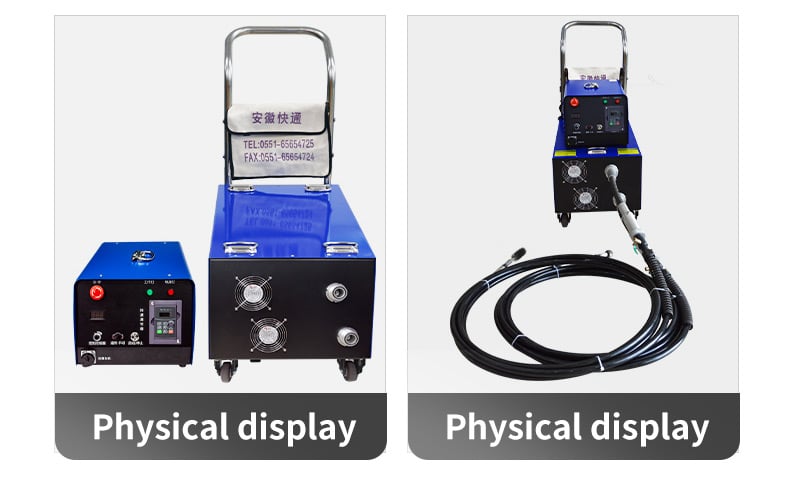
6. What Shaft Options Are Available for the KT-307?
Different tube diameters and tube configurations require different shafts.
The KT-307 is compatible with:
6 mm
8 mm
10 mm
12 mm
16 mm
18 mm
22 mm
27 mm
Different shaft types can also be configured, including heavy-duty unclogging shafts, bendable shafts, and steel-belt dry cleaning shafts.
For primary cooler cleaning, specific selection should be based on tube diameter, tube length, bend severity, and blockage conditions
7. What Cutting Tools Are Available for the KT-307?
Not all primary cooler tube bundle deposits are the same.
Therefore, the KT-307 offers a variety of cutting tools and cleaning accessories, including:
Alloy steel heavy-duty unclogging tools
Alloy scale removal tools
Three-jaw expansion tools
Gear-type scale removal tools
Sprocket expansion tools
Internal thread drill bits
External thread drill bits
Wire scale removal brushes
Pipe polishing brushes
Standard configuration alloy steel tools cover a range of specifications, and special sizes can also be configured based on actual tube conditions.
Therefore, equipment selection should not stop at "buying an unclogging machine"—it must also determine:
Which shaft + Which tool + Which tube diameter
8. Why Does the KT-307 Feature Intelligent Torque Control?
During primary cooler cleaning, if the cutting tool encounters hard deposits, resistance on the flexible shaft increases rapidly.
The KT-307 allows safety torque ranges to be set based on shaft specifications and features shaft overload protection.
For professional cleaning companies, this is important because long-term operation requires consideration not only of "can it break through," but also:
Whether the shaft is prone to damage
Whether the tool is prone to jamming
Whether the equipment is prone to overload
Whether different operators can maintain consistent parameters
The KT-307 also supports parameter saving, one-key recall, voice prompts, and manual/remote dual-mode operation.
9. Can Primary Cooler Tubes Be Flushed with Water?
This should be determined based on site conditions.
For industrial pipes where water introduction is permitted, the KT-307 can use mechanical breakdown combined with water flushing. The cutting tool breaks down hard scale, while water flow assists in carrying out the broken debris.
Water flushing mode is suitable for boilers, heat exchangers, and industrial pipes where water introduction is allowed.
However, for equipment such as coke oven gas primary coolers, whether water can be introduced, what medium should be used, and specific operating conditions should be based on equipment maintenance status and process requirements.
10. How Should Professional Cleaning Companies Select Primary Cooler Unclogging Equipment?
If you are a coking plant, industrial cleaning company, or equipment maintenance department, the following selection guide may be helpful:
|
Site Condition |
Recommended Focus |
|
Primarily loose dust |
Conventional cleaning, circulation cleaning |
|
Primarily treatable scale |
Targeted chemical cleaning |
|
Light blockage |
Cleaning brushes, standard shafts |
|
Hard scale blockage |
Alloy tools |
|
Complete blockage |
Heavy-duty unclogging shafts + alloy tools |
|
Multiple bends |
Bendable shafts |
|
Varying tube diameters |
Multi-specification shafts |
|
Multiple industrial tube bundles to clean |
KT-307 with multi-accessory configuration |
|
Shaft protection required |
Equipment with torque control |
Final selection should be confirmed based on actual tube diameter, tube length, deposit hardness, and equipment configuration.
11. The KT-307 Is Not Limited to Primary Gas Coolers
Because the KT-307 can be configured with different shaft and tool specifications, its applications extend beyond coking plant primary coolers.
Applicable equipment includes:
Air preheaters
Boiler tubes
Power plant condensers
Primary gas coolers
Condensers
Evaporators
Heat exchangers
Marine heat exchange tubes
Chemical, pharmaceutical, and industrial process piping
For professional industrial cleaning companies, a single machine that covers multiple tube bundle equipment types can reduce the need for separate power units for each equipment type.
12. How to Choose Between KT-206 and KT-307?
A simple way to understand the difference:
KT-206
3000W-class industrial tube bundle unclogging equipment
More suitable for routine industrial tube bundles, hard scale, rust deposits, crystallized materials, and blocked tube treatment.
KT-307
5500W-class heavy-duty blocked tube unclogging equipment
More focused on severe hard blockages, complete blockage, and industrial scenarios requiring higher power and more shaft/tool options.
If the customer is primarily a coking plant, industrial cleaning company, or comprehensive equipment maintenance department, and will also need to handle heat exchangers, air preheaters, boiler tubes, evaporators, and other equipment in the future, the KT-307 offers broader application coverage.
13. Important Considerations for Primary Gas Cooler Cleaning
Primary coolers are coke oven gas purification equipment and should not be treated as ordinary industrial pipes.
Before formal cleaning begins, equipment shutdown, isolation, purging, testing, and related work permits must be completed in accordance with site safety management procedures.
Particularly when dealing with gas, confined spaces, high temperatures, and other hazardous media, maintenance plans should be developed by qualified and experienced personnel.
Equipment selection is only the first step—safety isolation and on-site process verification are equally important.
14. Frequently Asked Questions (FAQ)
Q: Why do coke oven gas primary coolers become blocked?
A: Common causes include deposits of naphthalene, tar, coal dust, as well as scale, corrosion products, and composite fouling. Deposit conditions may vary across different heat exchange sections.
Q: Can primary cooler blockages be directly flushed with high-pressure water?
A: This depends on deposit characteristics. For loose fouling, high-pressure water may have some effect. For dense hard scale or completely blocked tubes, water pressure alone may not be sufficient—mechanical unclogging should be considered.
Q: Can the KT-307 handle completely blocked primary cooler tubes?
A: The KT-307 is positioned as a heavy-duty blocked tube unclogging machine, using 5500W power and mechanical tool unclogging, suitable for a wide range of industrial tube bundle equipment including primary gas coolers.
Q: Can the KT-307 handle hard scale?
A: Yes. The equipment drives alloy steel tools through a flexible shaft to mechanically break and unclog hard scale, rust deposits, crystallized materials, welding slag, and other blockages.
Q: What tube diameters is the KT-307 suitable for?
A: The applicable diameter range is 6.35–800 mm. Specific shaft and tool selection should be based on actual tube diameter.
Q: Is mechanical unclogging always necessary for primary cooler cleaning?
A: Not necessarily. Primary cooler cleaning methods should be selected based on deposit characteristics. Mechanical unclogging is primarily for hard scale, severe blockage, and complete blockage conditions.
About Anhui Kuaitong Pipeline Cleaning Technology Co., Ltd.
Anhui Kuaitong Pipeline Cleaning Technology Co., Ltd. specializes in the R&D, manufacturing, and application of industrial pipeline cleaning and unclogging equipment, serving customers in coking, power, chemical, pharmaceutical, metallurgical, energy, and other industries with industrial tube bundle cleaning equipment and related technical support.
The company's product portfolio includes industrial pipe unclogging machines, heat exchanger cleaning equipment, boiler tube cleaning equipment, central air conditioning cleaning equipment, and more.
For hard scale and complete blockage in primary gas coolers, heat exchangers, air preheaters, boiler tubes, condensers, evaporators, and other tube bundle equipment, shaft, tool, and equipment selection can be provided based on customer tube diameter, tube length, blockage severity, deposit type, and site conditions.
This document is compiled by the technical team of Anhui Kuaitong Pipeline Cleaning Technology Co., Ltd.
Website: www.kuaitonggroup.com
Technical Consultation (Phone/WhatsApp/WeChat): +86 18226181287
Table of Contents
- 1. What Makes Primary Gas Cooler Cleaning Difficult?
- 2. How Should Different Primary Cooler Deposits Be Handled?
- 3. Why Is Mechanical Unclogging More Suitable for Hard Blockages?
- 4. Which Primary Cooler Cleaning Projects Is the KT-206 Suitable For?
- 5. KT-307 for Heavy-Duty Primary Cooler Blocked Tubes
- 6. What Shaft Options Are Available for the KT-307?
- 7. What Cutting Tools Are Available for the KT-307?
- 8. Why Does the KT-307 Feature Intelligent Torque Control?
- 9. Can Primary Cooler Tubes Be Flushed with Water?
- 10. How Should Professional Cleaning Companies Select Primary Cooler Unclogging Equipment?
- 11. The KT-307 Is Not Limited to Primary Gas Coolers
- 12. How to Choose Between KT-206 and KT-307?
- 13. Important Considerations for Primary Gas Cooler Cleaning
- 14. Frequently Asked Questions (FAQ)
- About Anhui Kuaitong Pipeline Cleaning Technology Co., Ltd.